Why Yuma’s desert heat makes standard oil changes risky for diesel engines
Why Yuma’s Desert Heat Makes Standard Oil Changes Risky for Diesel Engines
If you live and drive in Yuma, Arizona, you already know that our environment isn’t just “warm” – it’s a localized oven that tests the limits of man and machine. Recently, we’ve seen weather patterns that defy historical norms, including record-breaking March heat waves that saw temperatures climbing into the triple digits earlier than ever before. For diesel owners, these aren’t just uncomfortable days; they are a direct threat to the longevity of your engine. My name is Russ Clark, and as the General Manager at Precision Automotive Diesel & Transmission, I’ve seen exactly what happens when “standard” maintenance meets the reality of the Sonoran Desert.
The problem we face in Yuma is a fundamental disconnect between what your vehicle’s owner manual says and what the thermometer on your dashboard says. A “standard” oil change interval, often designed for the mild climates of the Midwest or the Pacific Northwest, will absolutely fail a diesel engine in the Southwest. When the ambient temperature exceeds 110°F or 115°F, your engine oil is no longer just a lubricant; it is a vital component under extreme thermal stress. Treating your heavy-duty truck like a standard commuter car in these conditions is a recipe for catastrophic engine failure. Understanding Why Regular Oil Changes Extend Your Car’s Lifespan is the first step, but for Yuma residents, we have to go much deeper into the science of heat.
The Science of Thermal Breakdown in Diesel Engines
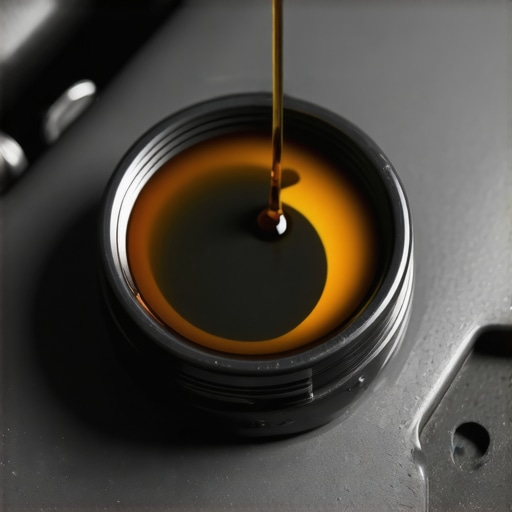
To understand why Yuma’s heat is so dangerous, we have to talk about thermodynamics. Engine oil has a specific operating range where it provides maximum protection. Once you push beyond that range, the molecular structure of the oil begins to change. This is known as thermal breakdown, and it primarily manifests as a loss of viscosity. Viscosity is the “thickness” of the oil – the property that allows it to maintain a protective film between moving metal parts like your crankshaft bearings and piston rings.
In a high-performance diesel repair shop, we often explain to customers that heat is an exponential enemy. For every 18°F (10°C) increase in oil temperature above 150°F, the rate of oil oxidation effectively doubles. Oxidation is a chemical reaction where oxygen molecules join with oil molecules, leading to a permanent chemical change. This process creates sludge, varnish, and corrosive acids that eat away at your engine from the inside out. In Yuma, where the air entering your radiator is already 115°F, your cooling system has to work twice as hard just to keep the oil from “cooking.”
Diesel engines are particularly susceptible to this because they operate under much higher compression ratios and internal pressures than gasoline engines. This inherent pressure generates massive internal heat. When you add the external heat of an Arizona summer, the oil can thin out so much that it fails to maintain that critical microscopic barrier between metal surfaces. Without that barrier, you get metal-on-metal contact, leading to accelerated wear that no amount of “standard” maintenance can fix later on.
Why “Standard” Intervals are a Desert Myth
If you open your truck’s manual, you might see a recommended oil change interval of 7,500 or even 10,000 miles. For a driver in Yuma, following that advice is a gamble you are likely to lose. Most manufacturers include a small section in the back of the manual titled “Severe Driving Conditions.” This section defines severe service as frequent idling, towing, driving in dusty environments, and – most importantly – driving in temperatures above 100°F. In Yuma, we aren’t just “sometimes” in severe conditions; we live in them six months out of the year.
When you visit auto repair shops yuma az, the first thing a qualified technician should ask is how you use your truck. Are you towing a trailer to the dunes? Are you idling with the A/C on max while waiting for a delivery? In the desert, oil serves as a primary coolant for the lower engine components that the radiator’s coolant can’t reach. If that oil is degraded by heat and time, your engine’s internal temperature will spike, leading to a vicious cycle of heat and wear. This is why we advocate for a “Desert-Ready” schedule, which often cuts those standard intervals in half to ensure the oil never reaches the point of total viscosity loss. Following Top Oil Change Tips for Safe Driving in 2025 means adapting to your environment, not just following a generic sticker on the windshield.
The Turbocharger Trap
Perhaps no component in your diesel engine suffers more from the Yuma heat than the turbocharger. Your turbo is a marvel of engineering, spinning at speeds upwards of 100,000 RPM. Because it is powered by exhaust gases, it is already the hottest part of your engine. It relies entirely on a steady flow of clean, high-viscosity oil to lubricate its bearings and carry away heat.
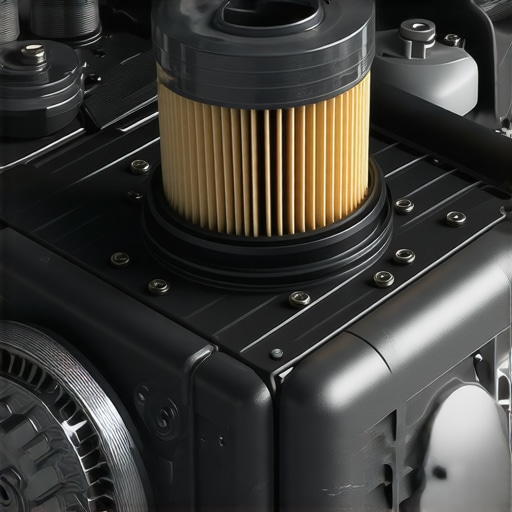
When oil breaks down due to extreme ambient temperatures, it can lead to a phenomenon called “coking.” This happens when the engine is shut off and the stagnant oil inside the hot turbo literally bakes onto the bearings, turning into hard carbon deposits. Over time, these deposits restrict oil flow, leading to turbo failure. This is often the specific reason your truck loses power under load but tests fine in the shop during a quick diagnostic. Furthermore, the quality of your filtration matters immensely in this environment. You need to know how to spot a counterfeit oil filter before it ruins your turbo, as poor-quality filters can collapse under the pressure of thickened, oxidized oil, bypassing the filter entirely and sending contaminants straight into those delicate turbo bearings.
Viscosity Wars: 15W-40 vs. 5W-40 in the Heat
Choosing the right oil weight is a constant debate at any diesel mechanic near me. In colder climates, a 5W-40 synthetic is often preferred for its ability to flow quickly during a freezing morning start. However, in Yuma, where a “cold start” in July happens at 95°F, the priorities shift. For many heavy-duty diesel applications in the desert, a high-quality 15W-40 oil is the gold standard.
The “15W” part of the rating is less critical here than the “40” rating, which represents the oil’s resistance to thinning at operating temperature. In 120°F weather, you need an oil with incredible “film strength.” This is the oil’s ability to resist being squeezed out from between high-pressure surfaces. Synthetic oils generally perform better in this regard because they are engineered to be more thermally stable, but even the best synthetic has a limit. If you’ve noticed your oil pressure dropping slightly when the truck is fully warmed up on a summer afternoon, that is a sign your oil’s viscosity is failing to meet the demands of the heat. It is a similar stress to what happens to your transmission; in fact, heat is the reason your transmission fluid turned brown in just six months if you’ve been towing through the Gila Mountains in mid-August.
Warning Signs Your Oil is Failing
As a vehicle owner, you don’t need a degree in chemistry to know when your oil is in trouble. You just need to know what to look for. One of the most common signs of heat-stressed oil is a distinct “burnt” smell when you pull the dipstick. If the oil looks exceptionally thin – dripping off the stick like water rather than clinging to it – your viscosity has been compromised.
Another red flag is the color and level of the oil. While diesel oil turns black almost immediately after an oil change due to soot, it should still look smooth. If it looks like “murky coffee,” you may have a coolant leak, which is a common byproduct of heat-warped gaskets (you can read more about why your engine coolant looks like murky coffee here). Additionally, keep an eye on your oil level. You might be surprised to find the level is actually going up. Understanding why your engine oil level is rising without you adding any is crucial; it often indicates fuel dilution, which further thins the oil and lowers its flashpoint, making it even more susceptible to the Yuma heat. If you hear a metallic “pinging” sound when accelerating, don’t ignore it. Learning how to stop your engine from pinging under load often starts with ensuring your oil and cooling systems are performing optimally. If you notice any of these signs, you should search for a Mechanic Shop Near Me immediately.
Conclusion: The Precision Solution
Living in Yuma means we have to play by a different set of rules. The Southwest is consistently ranked at the top of the “Summer Breakdown Index” for a reason. Our environment is a proving ground where only the best-maintained vehicles survive. A standard oil change might be enough for a sedan in a temperate climate, but for a diesel truck in the Arizona desert, it’s the bare minimum – and often, the bare minimum isn’t enough.
At Precision Automotive Diesel & Transmission, we don’t just change your oil; we provide a desert-hardened maintenance plan designed to keep your engine running through the hottest July days and the heaviest hauls. We understand the specific stresses that 115°F ambient air places on your turbo, your injectors, and your oil’s molecular integrity. Don’t wait for a warning light or a cloud of smoke to tell you that your oil has failed. If you are looking for an auto repair near me that understands the unique needs of Yuma diesels, come see us. We’ll make sure your truck is ready for whatever the desert throws at it.