How to spot a technician who truly knows how to handle a hybrid engine
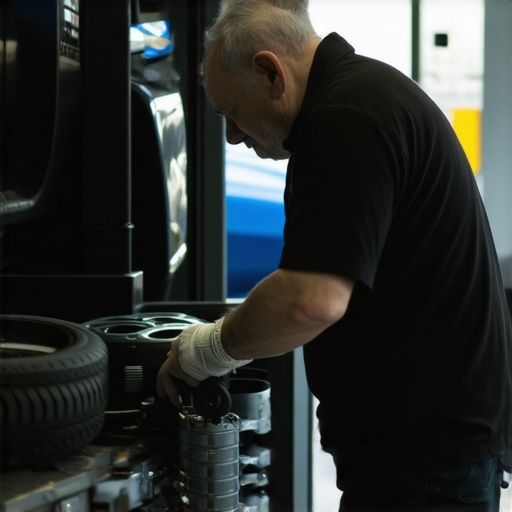
I’ll never forget the afternoon I stood in a dusty garage, watching a “pro” approach my Prius with a standard lead-acid battery charger and a look of pure confusion. He was hunting for a traditional alternator that didn’t exist. That was my wake-up call. I realized right then that a standard car service isn’t enough when you’re dealing with high-voltage lines and regenerative braking systems. If you’ve ever felt that pang of doubt when handing over your keys, you aren’t alone. Today, I want to share the hard-learned lessons I gathered after that near-disaster so you can find a tech who actually speaks “hybrid.” [image_placeholder_1]
The Day I Almost Let a “Generalist” Ruin My Battery
Early on, I made the mistake of assuming a wrench is a wrench. I took my car in for what I thought was a simple diagnostic after a sluggish start. The guy behind the counter was great with my old truck, but he clearly didn’t know why your engine feels sluggish after a simple battery replacement on a hybrid. He tried to “load test” the system in a way that could have spiked the sensitive electronics. It’s a scary reality: most shops are still playing catch-up with the technology under your hood.
Can’t Any Certified Mechanic Handle a Hybrid?
This is the big question I get all the time. People assume that if a shop has a sign out front, they’re good to go. But hybrid systems are a completely different beast. You need to verify what an ASE certification means for your car’s maintenance, specifically looking for the L3 Light Duty Hybrid/Electric Vehicle specialist credential. Without it, they might treat your transmission troubles like a standard gearbox, completely ignoring the complex motor-generators that live inside. According to the National Fire Protection Association, hybrid vehicle batteries can operate at levels exceeding 600 volts. That is not something you want a “learner” poking at with standard tools. Have you ever had a mechanic look confused when you asked about your hybrid’s specific inverter coolant?
Spotting the Real Experts in a Sea of Amateurs
A true hybrid pro doesn’t just do a top oil change; they understand how that oil change affects the internal combustion engine’s frequent start-stop cycles. They use scanners that can actually read the state of health (SOH) of individual battery cells, not just clear basic trouble codes. When I finally found “my guy,” he didn’t just talk about parts; he talked about “thermal management” and “voltage isolation.” If a technician doesn’t own a CAT III-rated multimeter or insulated tools, they aren’t ready for your car. I once saw a technician reach for a standard metal-handled screwdriver near the high-voltage disconnect, and I practically had to step in. Real experts treat the engine bay like a high-voltage substation, not just a greasy pit. Finding someone who respects the orange cables is the first step toward keeping your car on the road for another decade. Have you ever felt like your mechanic was just guessing when it came to your hybrid system?To stop the guessing game, you have to control the diagnostic process from the moment you step into the service bay. Think of your hybrid as a high-performance laptop mated to a tractor engine; you wouldn’t let a plumber fix your motherboard, and you shouldn’t let a standard tech poke at your inverter without the right gear.
Watch for the Orange High-Voltage Cables
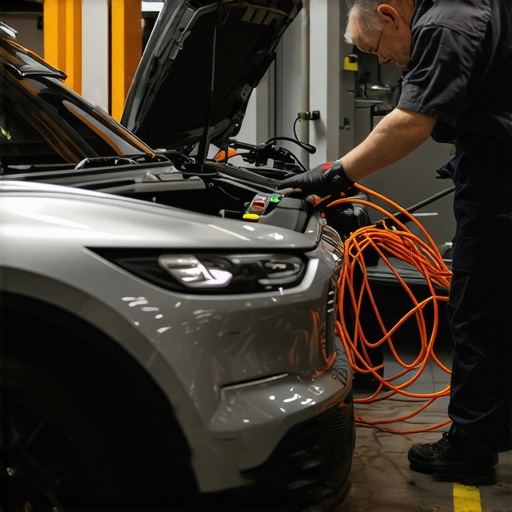
When you first pull in, pay attention to how the technician approaches the vehicle. A real pro knows that those orange cables represent enough DC current to be lethal. I always ask to see their CAT III-rated multimeter and their insulated glove kit. If they look at you like you are speaking a foreign language, get your keys back. A specialized technician knows that the specific engine glitches that stay hidden until you perform a live drive diagnostic are often tied to how the hybrid control module manages power distribution between the battery and the engine.
Request a Comprehensive Battery State of Health Report
Most shops will just scan for ‘P’ codes (Powertrain codes) and tell you everything is fine if the light is off. This is a trap. You need to see the State of Health (SOH) of the individual battery blocks. When I bought my second hybrid, a used Camry, it felt fine, but my tech showed me that while the overall voltage was okay, two internal blocks were significantly out of balance. This meant the battery was working overtime and would have failed within months. Demand a printout of the internal resistance and voltage delta for each module. If they can’t provide it, they aren’t using a high-level bidirectional scanner.
Look Beyond the Standard Oil Change
On a hybrid, the internal combustion engine (ICE) spends half its life stone-cold because the electric motor takes over. This creates a massive problem with moisture and fuel dilution. You cannot just follow top oil change tips for safe driving in 2025 meant for traditional cars; you need to ensure they are using a low-viscosity synthetic specifically formulated for frequent start-stop cycles. I once made the mistake of using a cheap bulk oil at a quick-lube place. Within three weeks, my fuel economy dropped by 5 MPG because the engine was struggling to reach operating temperature. Now, I always check for a high-quality filter because I know how to spot a counterfeit oil filter before it ruins your turbo or VVT solenoids.
Check the Inverter and Transmission Cooling Loops
Many owners don’t realize their car has two separate cooling systems. One for the engine and one for the inverter. If the inverter coolant pump fails, your car becomes an expensive paperweight. While they are at it, have them check the fluid in the transaxle. You need to know how to tell if your transmission fluid is actually burnt or just old, but with a hybrid e-CVT, it is even more critical because that fluid also acts as a coolant for the electric motor-generators. I remember a technician once trying to tell me my ‘transmission was slipping’ when the car was barely moving. In reality, it was just a dirty sensor. If he had known what your transmission fluid color is trying to tell you, he would have seen the fluid was perfectly pink and the problem was electrical, not mechanical. Trusting the data over a ‘gut feeling’ is what separates the experts from the amateurs.The biggest lie in modern automotive maintenance is the phrase “lifetime fluid.” If you open your owner’s manual and see that your transmission fluid never needs changing, you are looking at a ticking time bomb. In my experience, manufacturers often define “lifetime” as the duration of the powertrain warranty—usually 100,000 miles. But if you want to reach the 300,000-mile club, you need to ignore that advice. Hybrid e-CVTs, while simpler than traditional automatics, subject their fluid to intense thermal stress from the integrated electric motors. A study by the Society of Automotive Engineers (SAE) indicates that high-voltage motor heat can degrade lubricant additives much faster than purely mechanical friction. If you don’t know the secret to getting 300,000 miles out of a modern CVT, you’re essentially gambling with a $5,000 replacement. To ensure your car lives long enough to become a classic, you must look past the basic maintenance schedule.
Why Does My Hybrid Oil Level Seem to Increase on Its Own?
It sounds like a miracle—an engine that makes its own oil—but it’s actually a symptom of a serious “oops” factor: fuel dilution. Because hybrid engines cycle on and off constantly, they often fail to stay at operating temperature long enough to burn off unburnt fuel that seeps past the piston rings. You might notice why your engine oil level is rising without you adding any, which is a red flag that your lubrication is being thinned out by gasoline. This is why the danger of overfilling your engine oil by just one quart is even more pronounced in hybrids; that extra volume might actually be fuel, not oil, which destroys the protective film on your bearings. Professionals who understand this nuance will suggest more frequent oil changes specifically for drivers with short commutes where the engine never gets hot.Most owners are shocked to learn that their hybrid has an air filter they’ve never changed—and it isn’t under the hood. It’s the cooling fan filter for the high-voltage battery, usually hidden behind a rear seat panel or in the trunk area. A clogged filter leads to heat soak, which is the number one killer of NiMH and Lithium-ion cells. I’ve seen people pay for an entire battery replacement when all they needed was a $15 filter and a vacuum. This is exactly why choosing an Albuquerque auto repair shop based on hourly rate alone is a recipe for disaster; a cheap shop won’t even know that filter exists, while a pro will check it at every major service. Always ask your technician to confirm if your battery’s “breathability” is within spec. Have you ever fallen into this “lifetime” maintenance trap or ignored a hidden filter? Let me know in the comments below, because sharing these nuances is how we keep these complex machines running forever.To truly take control of your car’s lifespan, you have to move beyond the service manual and look at the data yourself. I don’t just rely on the dashboard lights because, by the time the ‘Check Hybrid System’ warning appears, you’re usually looking at a $3,000 repair bill. I personally swear by the Dr. Prius app paired with an OBDLink MX+ Bluetooth adapter. Unlike cheap $20 scanners, this setup lets me see the live voltage and internal resistance of all 28 modules in my pack. It’s the difference between blindly guessing and knowing exactly which cell is starting to sag. When I go in for a car service, I bring my own data logs. If you really want to be proactive, invest in a basic thermal imaging camera like a FLIR One. I use it to scan the high-voltage bus bars for ‘hot spots’ that indicate corrosion or loose connections—problems that a standard scan tool will never catch until it’s too late.
How can I make my hybrid battery last 15 years?
The secret isn’t just luck; it’s thermal management and ‘grid charging.’ Most people don’t realize that if a hybrid sits for too long, the battery cells can become imbalanced. I use a Prolong Battery Systems charger once every six months to ‘deep cycle’ and balance the pack. This process gently brings every cell up to the same state of charge, which significantly reduces the stress on the weaker ones. Beyond the battery, you need to realize that why regular oil changes extend your car’s lifespan is doubly true for hybrids. Because the engine is constantly stopping and starting, the oil has a much harder job managing heat spikes. I also suggest being paranoid about your transmission troubles. Even if the dealer says it’s ‘lifetime fluid,’ I drain and fill my e-CVT every 60,000 miles using only OEM-spec fluid.
The Diagnostic Edge of Modern Professionals
If you aren’t doing the work yourself, you must ensure your tech uses factory-level software like Toyota’s TIS Techstream or Ford’s IDS. According to the Toyota Technical Information System documentation, these programs allow for active tests—like forcing the inverter water pump to run while the car is off—to verify its health. It is also vital to confirm what an ASE certification means for your car’s maintenance when dealing with these systems. A technician with an L3 certification has spent hundreds of hours studying the specific electromagnetic interactions within your motors. This level of expertise prevents the ‘parts cannon’ approach where they just keep replacing expensive modules hoping for a fix.
Prepare for the Next Wave of High-Voltage Tech
Looking ahead, I predict we will see a massive shift toward software-defined battery management. We are moving away from simple hardware replacements and toward ‘re-flashing’ battery control modules to optimize aging cells. This means that in the future, the best tool in your garage won’t be a wrench; it will be a laptop. For now, focus on the basics: clean your battery fans, use top oil change tips for safe driving in 2025, and never ignore a subtle change in your MPG. My challenge to you this week: download a diagnostic app, plug in a scanner, and actually look at your battery’s internal resistance. You might be surprised at what your car is trying to tell you.
Lessons I Paid For in Sweat and Costly Repairs
After years of managing high-voltage systems, I’ve realized that the ‘Ready’ light is just the surface. One of my biggest lightbulb moments was discovering that humidity is just as dangerous as heat for a hybrid battery; keep your cabin dry and your rear-seat cooling intake free of pet hair. I also learned the hard way that OEM fluids aren’t just a suggestion; for a hybrid, they are often a chemical requirement for internal insulation. Finally, remember that your 12V auxiliary battery is the most common point of failure—if it’s weak, it can throw ‘ghost’ codes that make it look like your $3,000 hybrid battery is dead when it isn’t.
#IMAGE_PLACEHOLDER_E#
The Gear That Saved My Hybrid From an Early Grave
You don’t need a PhD in electrical engineering to monitor your car’s health, but you do need better tools than a standard wrench. I personally rely on the Dr. Prius app paired with an OBDLink MX+ adapter; it’s the only way to see if your cell voltages are drifting before they trigger a dashboard warning. For deep technical knowledge, I always turn to the WeberAuto YouTube channel—Professor John Kelly provides the most detailed teardowns of hybrid transaxles you’ll find anywhere. Lastly, I trust Prolong Battery Systems for grid chargers that can actually recondition a sagging pack, which is a much smarter move than waiting for total failure.
Take the Wheel of Your Hybrid’s Future
Owning a hybrid shouldn’t feel like walking on eggshells. Once you find a technician who is ASE certified in L3 systems, the mystery disappears. Whether you are scheduling a routine car service or addressing specific transmission troubles, having your own data puts the power back in your hands. Remember that why regular oil changes extend your car’s lifespan is especially true for these complex engines that face unique thermal cycles. You have the tools, the knowledge, and now the plan to keep your hybrid on the road for the next 200,000 miles.
Have you ever caught a ‘traditional’ mechanic trying to jump-start your hybrid from the wrong terminals or seen them baffled by your orange cables? Let’s hear your horror stories or success tips in the comments below!