
Why your fleet trucks are failing inspections even with regular maintenance
I remember standing in the cold morning air, clutching a clipboard that told me my best-performing box truck was officially grounded. I couldn’t believe it. I had just paid for a full car service and a fresh oil change. The transmission felt fine during the morning shift. The tires had plenty of tread. Yet, there it was: a “failed” status from the DOT inspector that felt more like a personal insult than a mechanical report. I had followed the manufacturer’s manual to a T, but the manual doesn’t live in the real world of stop-and-go traffic and heavy urban loads. It was a wake-up call that “regular” maintenance and “inspection-ready” maintenance are two very different things.
Stop Throwing Money at Your Maintenance Log
Most of us think that if we have ASE certified technicians turning wrenches, our fleet is invincible. I made that exact same mistake early on. I assumed that a stamp in a logbook equaled a safe, compliant vehicle. But here is the hard truth: standard maintenance intervals are designed for “ideal” conditions, and your fleet doesn’t live in an ideal world. Whether you are running high-mileage flyer distribution fleets or local delivery vans, the “standard” routine is often just the bare minimum needed to keep the engine turning, not the high bar required to pass a rigorous safety check. It is not just about the obvious stuff. It is the common electrical gremlin that flickers only on bumps or the way heavy traffic wears down your delivery fleet faster than a highway cruiser ever would. If you are failing inspections, it is usually because you are looking at what the truck should need according to a chart instead of what it is actually telling you it needs. According to the Commercial Vehicle Safety Alliance (CVSA), nearly one out of every five vehicles inspected during their major North American Roadcheck events is placed out-of-service due to mechanical issues—many of which were supposedly maintained just weeks prior.
Does Standard Maintenance Actually Mean Anything?
You might be wondering if your fleet needs a dedicated maintenance schedule for idle time or if you are just being overcharged by your local shop for unnecessary work. It is a fair question to be skeptical. Why keep spending if the results stay the same? I used to think a regular oil change was the holy grail of reliability. I was wrong. I once ignored a subtle shudder in a transmission because the fluid level was “fine” and the computer didn’t throw a code. Three days later, that truck was towed off the highway during rush hour. I also ignored the specific reason a truck loses power under load because it “tested fine” in the bay. The problem is that traditional schedules do not account for the vibration, heat, and stress of a working fleet. Have you ever had a truck fail a surprise inspection just days after it left the shop? I would love to hear your story—it is a frustration we all share in this industry. Today, I am going to show you how to look past the logbook and spot the “ghost” failures that inspectors love to find, so you can finally keep your trucks on the road and your business moving.
Stop Relying on Static Bay Inspections
The biggest lie in the trucking world is the “clean bill of health” given while a truck is sitting still. I learned this the hard way with a delivery van that hummed like a bird in the garage but coughed like a chain smoker the moment it hit 45 mph. Your ASE certified tech might be the best in the business, but they cannot see how a frame flexes or how a sensor misfires under heat while the truck is on a lift. You have to implement a “Live Drive” protocol. This isn’t just a lap around the block; it’s a loaded stress test where specific engine glitches stay hidden until the coolant hits operating temperature and the turbo starts whistling. Using a live drive is the only way to catch intermittent engine hesitations that standard scanners miss during a stationary car service check. 
Identify if Your Transmission Slip is a Ghost or a Gear
When a driver tells you the transmission is “acting funny,” do not just check the fluid and call it a day. Think of your transmission like a marathon runner; they might look great at the starting line, but you won’t know if they have a heart condition until the fifth mile. You need to distinguish between a physical gear failure and a software glitch. I once spent three grand on a rebuild only to find out that knowing how to tell if your transmission slip is mechanical or electronic could have saved me two weeks of downtime. Often, the delay in your upshift might just be a dirty sensor coated in road grime or old fluid. Do not ignore it when your transmission bangs into gear only when the engine is hot, as this is a major red flag for DOT inspectors.
Look for the Wear That Doesn’t Leave a Leak
Inspectors love to find worn-out suspension components because they are safety hazards that do not always leak fluid. I remember a specific box truck that felt “floaty” on the highway. We checked for oil on the shocks—nothing. We checked the bushings—they looked solid. It wasn’t until we learned how to tell if your shock absorbers are worn out without any leaks that we realized the internal valves had collapsed. This kind of “silent” failure is what leads to uneven tire wear and, eventually, a failed inspection that costs you a repair fee plus the price of new rubber. If your steering wheel shakes only when you hit the brakes at 60 mph, you have a rotor or hub issue that a stationary inspection might pass but a road test will fail.
Protect the Engine Internally Between Intervals
A standard oil change is a great start, but for high-use fleets, it is like brushing your teeth once a week. You need to focus on the secret to keeping your engine clean internally between changes. Sludge is a slow killer. I have seen engines that looked pristine on the outside but had oil that looked like coffee grounds because the internal temperatures were consistently too high during summer idle times. If you want to avoid the hidden cost of using non-oem oil filters, stick to high-quality components that can actually handle the soot load of a working diesel. This is how you move from simply fixing things to truly managing a fleet.
Why an ASE Patch Isn’t a Magic Wand
Most fleet owners treat an ASE certification like a suit of armor that protects them from all mechanical liability. But here is the contrarian truth: a certification is a baseline, not a specialty. I have seen master techs who can rebuild a classic engine with their eyes closed but struggle to troubleshoot the common electrical gremlin on a 2024 multiplexed wiring system. You shouldn’t just look for the patch; you need to find someone who treats choosing the right car service as a diagnostic challenge rather than a checklist. If your mechanic relies solely on what the computer says without verifying with a physical test, they are a parts-changer, not a technician. I once fell into this trap myself, believing that a ‘certified’ shop meant my transmission issues were solved, only to find they hadn’t even checked the adaptive learning software. Have you ever fallen into this trap where a ‘certified’ repair failed you within a week? Let me know in the comments. 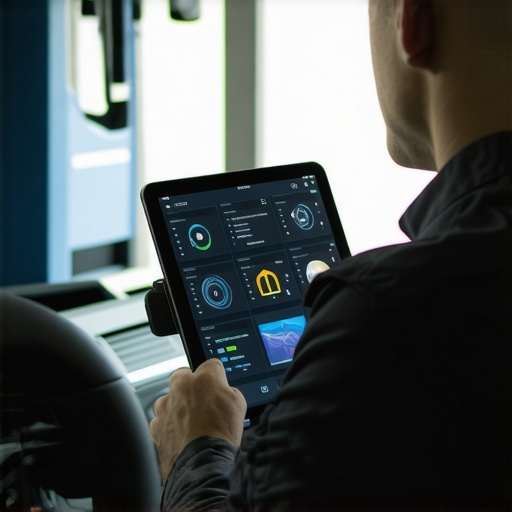
When Your Oil Level Rises Without Your Help
Everyone knows that low oil is bad, but fewer people realize that ‘too much’ oil is often a death sentence for a hard-working engine. If you check your dipstick and see that your engine oil level is rising, you aren’t getting a free refill from the universe. This is a massive ‘oops’ factor for fleet managers. It usually means fuel or coolant is diluting your lubricant, which can happen if you are overfilling your engine oil by just one quart or if your injectors are leaking. According to a study by the Society of Automotive Engineers (SAE), even a 5% fuel dilution can reduce oil viscosity by half, leading to catastrophic bearing failure. This is why a standard oil change isn’t enough; you need to look at the health of the fluid itself. If you notice your engine oil smells like raw gasoline, stop the truck immediately. Do not trust the ‘full’ mark if the color or smell is off, especially if the oil looks like coffee grounds.
Can You Trust a Stationary Scan for Intermittent Faults?
The answer is almost always no. Advanced fleet maintenance requires understanding that the bay is a lie. If you are trying to figure out how to tell if your transmission slip is mechanical or electronic, you cannot do it while the truck is in park. You might find that your transmission won’t shift until the engine warms up, which is a classic sign of internal seal hardening that a scanner won’t catch until it’s too late. I’ve seen managers waste thousands because they didn’t know how to spot a counterfeit oil filter that looked identical to the OEM version but lacked the proper bypass valve, causing a turbo failure under load. Always insist on a ‘Live Drive’ to ensure safe driving in 2025 standards are actually met, not just simulated.
Invest in the Hardware That Actually Talks Back
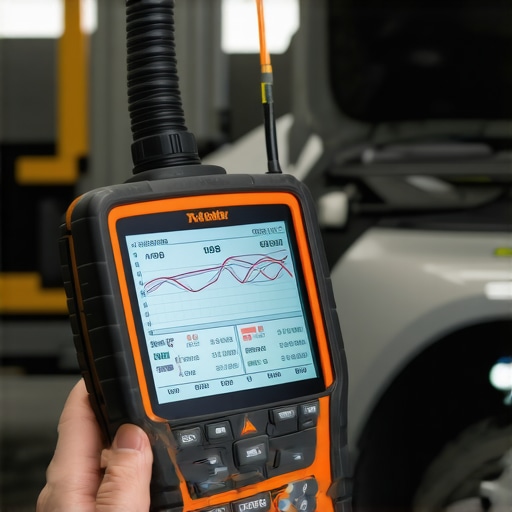
If you are serious about scaling your operations, you need to stop buying cheap OBD-II dongles from the bargain bin. I have spent thousands on diagnostic gear, and I can tell you that why viper tools are the only way to reset your cars steering angle sensor is a lesson you don’t want to learn while a driver is stuck 200 miles away with a limp-mode error. These high-end systems don’t just read codes; they perform active bi-directional tests. This allows you to command the transmission to shift or the fuel pump to prime while the vehicle is stationary, helping you isolate the specific reason your truck loses power under load but tests fine in the shop. You need tools that act as a bridge between the ASE certified expertise of your lead tech and the complex computer architecture of modern trucks.
How do I maintain my fleet’s transmission over time?
Long-term results come from consistency and the right fluids. I’ve seen too many managers save fifty bucks on a generic brand only to wonder about the reason your transmission fluid turned brown in just six months. According to technical bulletins from the Automatic Transmission Service Group (ATSG), thermal breakdown is the primary catalyst for 90% of early failures. To prevent this, you should focus on how to get more miles out of your fleets transmission by installing auxiliary coolers and strictly following how to properly break in a newly rebuilt transmission protocols. It’s about the details—knowing how to tell if your transmission fluid is actually burnt or just old can be the difference between a simple flush and a fifteen-thousand-dollar overhaul during peak season.
The Future of Fleet Health is Predictive
We are moving toward an era where the truck tells us it’s sick before the driver even feels a shudder. Predictive telematics is the next frontier. Imagine a system that monitors your oil change quality in real-time, alerting you to fuel dilution before it kills your bearings. I predict that within five years, manual dipstick checks will be a secondary verification for AI-driven oil sensors. This transition makes choosing the right car service provider even more critical. You cannot afford a shop that works in the past. Avoid why choosing an albuquerque auto repair shop based on hourly rate alone is a recipe for disaster; look for those investing in the 5 diagnostic practice questions that act like an shsat exam prep for your mechanic to stay sharp. My advice? Start logging your ‘Live Drive’ data today. Don’t wait for a failure—analyze the trends in your shift times and oil temperatures now to catch the ‘ghosts’ before they ground your fleet. Try this: The next time you perform a routine service, ask for a copy of the diagnostic ‘freeze frame’ data; it’s a goldmine of info on how your trucks are actually being treated on the road, well beyond what a standard oil change record will show.
The Brutal Truths About Maintenance I Had to Learn the Hard Way
After years in the trenches, I’ve realized that a certificate on the wall doesn’t always prevent a breakdown on the highway. Here is what I wish I knew before that first inspection failure. First, if your engine oil smells like raw gasoline, you aren’t just looking at a bad sensor; you are looking at a ticking clock on your bearings that no standard oil change can fix on its own. Second, never assume a clear fluid is a healthy fluid. I have learned that the reason your transmission fluid turned brown in just six months is almost always localized overheating, regardless of what the factory manual says about service intervals. Finally, your best tool isn’t a high-end wrench—it is your driver’s ears. If they report a skip or a groan, trust that intuition over a clean computer scan every single time.
Tools and Sources That I Personally Vouch For
I don’t recommend products or resources unless they have saved me from a midnight tow. To truly master your operation, you need the right diagnostic partners. I rely on ATSG Technical Manuals for any deep transmission work; they are the gold standard for understanding how to tell if your transmission fluid is actually burnt or just old. I also suggest keeping a Viper Reset Tool in your shop to handle complex steering angle recalibrations that generic scanners fail to process. For parts, I stick strictly to OEM filters because choosing the right car service means using components that actually meet the micron filtering requirements of your turbocharger. Finally, Blackstone Labs for periodic oil analysis is the only way to know if your high-mileage engines are wearing internally.
#IMAGE_PLACEHOLDER_E#
Take Control of Your Fleet’s Longevity Today
Managing a fleet is a high-stakes marathon, not a simple sprint between service intervals. It is about building a professional culture where your ASE certified technicians are encouraged to look past the surface and perform live-drive diagnostics. By shifting your mindset from reactive fixing to proactive management, you are doing more than just protecting your bottom line—you are ensuring that every one of your drivers stays safe on the road. Focus on learning how to get more miles out of your fleets transmission and stay relentless with your fluid quality checks. Your business reputation is only as strong as the vehicles carrying it. Have you ever had a DOT inspector find a safety issue that your shop swore was perfectly fine? Let me know in the comments below.