Why Your Car Battery Dies Every Time it Gets Cold
It was freezing—a biting wind howling through my driveway as I reached for my keys, only to watch my car stubbornly refuse to start. That sinking feeling hit me hard: my battery was dead again, just like every cold snap. It’s a frustration many drivers share, especially during winter. One day, I finally had my lightbulb moment and realized I wasn’t alone in this struggle; cold weather was secretly sabotaging my car’s heartbeat.
Why Does Cold Weather Kill Car Batteries So Fast?
Chilling Facts About Battery Chemistry
Cold temperatures slow down the chemical reactions inside your car battery, reducing its ability to produce the power needed to start your engine. Essentially, the battery becomes less efficient, and if it’s already a bit weak, the cold will push it over the edge. I learned this the hard way early on when my mechanic explained how winter drains batteries faster than any other season. According to a study by AAA, a battery can lose about 35% of its capacity at 0°F (-18°C), which explains why starting problems become so prevalent during winter months. Check out this article for more insights into this phenomenon.
Have you faced that daunting moment when your car refuses to start right as the temperature drops? If so, you’re not alone—and I’ve got some practical fixes to help you out. But first, let’s address the most common fears and misconceptions about cold-weather car issues.
Check Your Transmission Fluid Regularly
Understanding your transmission system is crucial, especially in cold weather. Think of transmission fluid as the lifeblood that ensures smooth gear shifts — like oil in a machine. To avoid sluggish shifting or slipping, park on a flat surface, open the hood, and locate the transmission dipstick (consult your vehicle’s manual if needed). Pull it out, wipe it clean, reinsert, and then pull it out again to check the level and color. If the fluid appears dark or smells burnt, a replacement is necessary, which you can learn more about at this guide. Regular checks help prevent costly repairs and improve cold-start performance.
Change Your Oil Properly
Fresh oil ensures your engine runs smoothly, especially when cold temperatures thicken old, contaminated oil. Think of oil as blood — clean and properly circulated keeps everything functioning. To perform an oil change: warm up the engine briefly, then park and turn off the vehicle. Using a jack or lift, access the drain plug beneath the oil pan, place a container underneath, and carefully remove the plug. Allow the oil to drain completely (this might take a few minutes). Replace the drain plug and then remove the old oil filter, installing a new one. Fill with the recommended oil type and amount, checking the level with the dipstick. Regular oil changes, especially in winter, keep the engine responsive and extend lifespan.
Inspect and Replace the Battery
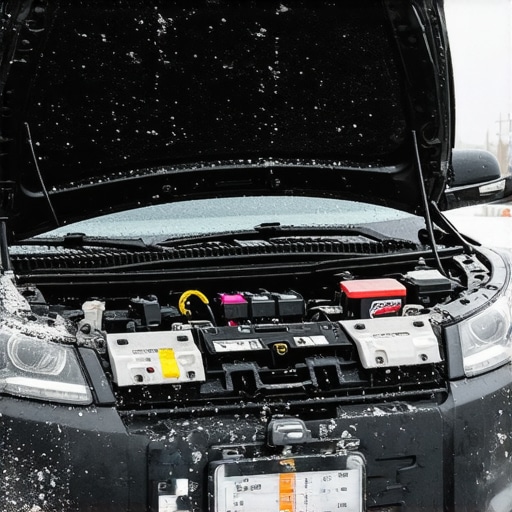
Your car’s battery is a powerhouse, but cold weather saps its strength. Think of the battery as a battery of soldiers — if they’re exhausted or frozen, they can’t perform. To test your battery, use a multimeter or have it checked at an ASE-certified shop. Look for corrosion on terminals; if present, disconnect cables and clean terminals with a mixture of baking soda and water using a wire brush. Ensure cable clamps are tight. If your battery is more than three years old or shows signs of weakness, consider replacing it before winter fully hits. A reliable battery prevents engine starting issues during freezing mornings.
Monitor Brake System Performance
Brakes are vital for safety, and their performance can degrade with exposure to road salt and cold. Regularly check for unusual noises or soft pedals. Test brake response at low speeds on a safe surface. If brakes feel spongy or the pedal sinks, it might indicate air in the lines or brake fluid contamination. In cold weather, brake fluid can absorb moisture, lowering its boiling point. Flushing and replacing brake fluid with a fresh batch ensures optimal responsiveness, reducing stopping distances during icy conditions. For detailed brake maintenance tips, visit this article.
Ensure Proper Tire Pressure and Tread
Underinflated tires reduce traction, increasing the risk of slips on icy roads. Use a reliable tire pressure gauge to check your tires’ PSI, aiming for the manufacturer’s recommended levels found in the owner’s manual or on the driver’s door frame. Cold air contracts, causing pressure to drop; check pressure when the tires are cold for an accurate reading. Additionally, inspect tread depth; shallow treads can’t grip snow and ice effectively. If tread is worn beyond safe limits, replacement is urgent. For complex tire issues arising after hitting curbs or potholes, consult this troubleshooting guide.
Maintain Proper Lighting and Visibility
Shorter days and winter storms demand reliable lights. Regularly test all bulbs and replace any burnt-out ones. Keep headlights clean and clear of snow and dirt to maximize illumination. Consider upgrading to brighter or more contrast-enhancing bulbs, especially if your system isn’t ATS-certified. Clear windshield wipers and plenty of washer fluid ensure you see hazards early, preventing accidents. Proper lighting is your first line of defense during winter driving.
Many car owners operate under misconceptions about transmission care, servicing, and the value of ASE certification. For instance, a prevalent myth is that merely following the manufacturer’s recommended service intervals ensures optimal vehicle performance. While adhering to schedules is important, it overlooks the critical nuances that can make or break your car’s longevity and smooth operation. For example, experts emphasize that understanding the specific conditions your vehicle faces—like frequent stop-and-go traffic or harsh winter climates—requires more tailored maintenance. Over-reliance on generalized advice can lead you into costly pitfalls, such as neglecting to monitor transmission fluid acidity or assuming all oil changes are equally beneficial regardless of driving patterns.
Why does every ASE certification claim seem the same, but the actual service quality varies widely?
The quick answer is that ASE certification primarily assesses a technician’s baseline knowledge, not necessarily their specialization or dedication to ongoing training. A study published by the National Institute for Automotive Service Excellence reveals that shops with ASE-certified technicians tend to deliver better service, but the certification alone doesn’t guarantee superior repairs if technicians aren’t continually updating their skills or if shop management prioritizes speed over quality. Therefore, asking, “Is ASE certification enough?” should prompt a deeper investigation into the shop’s reputation and ongoing staff education. Check out this article to learn how to evaluate the true competence behind those certificates.
Another common mistake is equating regular oil changes with complete engine health. Many owners think that changing oil every 3,000 miles suffices, but modern synthetic oils may extend this interval significantly. The real nuance lies in how driving habits and local conditions influence oil degradation. For example, city dwellers with frequent idling may need more frequent oil and filter inspections, even if the mileage threshold hasn’t been reached. For deep insights, see this guide.
When it comes to transmissions, a common mistake is ignoring subtle signs of impending failure. Many drivers assume slipping or rough shifts are just quirks, not warnings. However, early symptoms like delayed engagement or unusual noises often point to deeper issues such as worn clutch packs or contaminated fluid. Regular diagnostics and proactive repairs can prevent catastrophic breakdowns. I recommend checking out this resource for comprehensive troubleshooting.
To truly master maintenance, you need to go beyond the basics and recognize these hidden intricacies. Recognizing that certification isn’t a guarantee of quality, or that oil change frequency depends on specific conditions, can save you from costly repairs and safety issues. Do you fall into the trap of oversimplifying car care? Share your experiences and questions below—I’d love to hear your stories!Maintaining your vehicle’s performance over the long term demands more than just basic knowledge; it requires the right tools and systems to diagnose, service, and optimize. One of my go-to tools is a high-quality OBD-II scanner, like the BlueDriver Bluetooth Pro, which allows me to read diagnostic trouble codes and monitor real-time data directly from my smartphone. This device helps me spot issues early—before they escalate—saving time and costly repairs. Additionally, I rely on an infrared thermometer to check engine and radiator temperatures during routine maintenance, ensuring components operate within optimal ranges. These tools have become indispensable in my toolkit, as they provide immediate insights without the need for a workshop visit.
Another crucial component is having access to reliable service manuals and software. I personally subscribe to a professional-grade service database, such as Alldata, which offers detailed repair guides, wiring diagrams, and manufacturer updates. This resource allows me to perform complex procedures—like transmission fluid changes or brake system repairs—with confidence, knowing I adhere to factory standards. For example, correctly servicing the transmission, as detailed in this guide, can prolong its life and improve shifting quality.
When it comes to fluid changes, I advocate for high-quality synthetic oils and OEM-approved filters. Using the correct products not only enhances engine longevity but also ensures compatibility with modern emission systems. Investing in a good oil filter extractor and a funnel with a built-in filter prevents mess and guarantees proper sealing—key to avoiding leaks and contamination.
Scaling your maintenance approach over time involves adopting a proactive schedule backed by digital reminders and logs. I recommend using maintenance tracking apps, like Carbide, which sync with your vehicle’s data and send alerts for upcoming oil changes or inspections. Regularly reviewing your vehicle’s history helps identify patterns and plan preventive measures—especially critical for fleet or long-haul vehicles.
Looking ahead, the trend is moving toward integrating IoT devices and telematics to monitor vehicle health remotely, providing real-time diagnostics and predictive maintenance. This technology can forecast failures based on data patterns, shifting the focus from reactive repairs to proactive care.
How do I keep my transmission in top shape over time? Regular transmission fluid checks and timely replacements are vital. Many fail to realize that contaminated or low fluid levels can cause slipping and harsh shifts. Investing in a quality transmission service kit and following manufacturer-specific procedures, as outlined in this article, can significantly extend your transmission’s lifespan. Don’t forget, working with an ASE-certified technician ensures your service aligns with industry standards, giving you peace of mind.
Boost your vehicle’s long-term health by adopting these tools and practices today. Choose a reliable diagnostic scanner and keep detailed logs of your maintenance routines—your car will thank you in the long run. Ready to take your vehicle care to the next level? Visit our contact page for personalized recommendations or professional service support.
How I Learned to Trust the Expert Behind the ASE Certification
Early in my automotive journey, I believed that ASE certification was a golden ticket to quality service. It wasn’t until I witnessed the subtle gaps in some shops claiming certification that I realized true expertise requires ongoing education and genuine passion, not just a badge. That lightbulb moment pushed me to seek out ASE-certified technicians who continuously hone their skills, learning that certification is a baseline, not a guarantee.
The Unexpected Power of Routine Oil Checks in Cold Climates
I used to think oil changes were a simple routine, but during my first harsh winter, I discovered that frequent inspections and using the right synthetic oils dramatically improved my vehicle’s responsiveness. The small investment of time in checking my oil level before winter storms saved me from costly repairs and breakdowns, reinforcing that proactive care beats reactive fixes every time.
Rolling Up My Sleeves on Transmission Troubles
One of the most eye-opening lessons came from understanding transmission health. I learned that contaminated or low transmission fluid isn’t just a minor issue—it’s a silent killer. Regularly inspecting, fluid testing, and following expert guidelines from this resource helped me prevent slipping gears and costly replacements, turning a once-angst-inducing problem into a manageable aspect of vehicle care.
Tools of the Trade That Saved My Budget
Investing in a quality OBD-II scanner, like the BlueDriver, and a reliable infrared thermometer revolutionized my maintenance routine. These tools provided instant insights into my vehicle’s health, enabling me to identify issues early and avoid unnecessary trips to the mechanic. I now see diagnostics as an empowering step rather than a mystery; it’s about taking control and learning what’s really happening under the hood.
Final Thoughts An Insider Perspective on Vehicle Longevity
From my personal experiences, the knowledge that long-lasting vehicle maintenance hinges on continuous learning and the right tools has been transformative. Challenges like winter battery struggles or brake wear taught me that the simplest habits—like checking tire pressure or inspecting fluid levels—can extend your car’s lifespan dramatically. Embrace ongoing education, leverage trustworthy resources, and never underestimate the power of proactive care. Your car will reward you with reliable performance and peace of mind.