The Real Reason Your Car’s AC Blows Hot Air Only While You’re Idling
The Real Reason Your Car’s AC Blows Hot Air Only While You’re Idling
It’s a scenario every driver in a warm climate dreads: the “Stoplight Sweat.” You’re cruising down the highway, and your air conditioning is so cold you’re considering turning the dial down. But the moment you take the off-ramp and come to a halt at a red light, the refreshing breeze transforms into a humid, lukewarm blast. By the time the light turns green, you’re wiping sweat from your forehead, wondering if your car is possessed. As the vehicle gains speed again, the frost returns. What gives?
I’m Bradley Hindman, Owner and ASE Certified Master Technician at Mission Auto Repair. With over 25 years in the trenches of automotive diagnostics, I’ve seen this specific complaint thousands of times. Many drivers assume their “Freon” is just low, but the reality is more nuanced. When your AC fails specifically at a stop, you aren’t just dealing with a cooling issue; you are dealing with a fundamental failure of airflow and pressure management. At idle, your car’s AC system is under its maximum stress, and any weak link in the chain will reveal itself the moment your speedometer hits zero.
The Science of the Chill: How Your AC Works at 0 MPH
To understand why your AC quits at a stoplight, you have to understand that your air conditioner doesn’t actually “create” cold; it removes heat. This happens through a continuous cycle of phase changes – refrigerant moving from a liquid to a gas and back again. The “radiator” for your AC system, known as the condenser, sits right at the front of your engine bay. Its job is to take the hot, high-pressure gaseous refrigerant from the compressor and cool it down so it condenses back into a liquid.
When you are driving 60 MPH, “ram air” is forced through the grille, naturally cooling the condenser. However, when you are stopped at a red light, there is no natural wind. The system must rely entirely on mechanical or electrical intervention to move air. If that intervention fails, the heat stays trapped in the refrigerant. This causes “head pressure” to skyrocket. According to technical data, high head pressure at idle forces the system to “back off” or blow warm air to prevent a catastrophic component failure or an explosion of a high-pressure hose. In short, your car is blowing hot air to save itself from a much more expensive repair.
As I often tell my customers, “At idle, the low side pressure is up and the high side is down; if the fan isn’t pulling air, the refrigerant can’t drop its heat load,” which is the primary reason for that sudden blast of heat while you wait for the light to turn green. This is also closely related to why your car’s air conditioning only works on the highway.
The #1 Culprit: Condenser Fan Failure
In the vast majority of cases I diagnose at our auto ac repair near me, the culprit is the condenser fan. Most modern vehicles use one or two electric fans to pull air through the condenser and radiator when the vehicle isn’t moving. Older trucks and SUVs might use a mechanical fan clutch that engages based on temperature.
If the electric fan motor burns out, or the fan clutch loses its fluid and starts “freewheeling,” the condenser becomes a heat soak. Without airflow, the refrigerant cannot shed the heat it gathered from your cabin. A common technical detail many DIYers miss is the “weak” motor. A fan might still be spinning, but if it isn’t spinning at the required RPM to move enough CFM (cubic feet per minute) of air, it’s just as useless as a dead motor. You might even notice why your engine fan never stops running after you park if the system is desperately trying to shed that excess heat.
You can safely check this yourself: with the engine running and the AC set to “Max,” pop the hood and look (don’t touch!) to see if the fans behind the grille are spinning rapidly. If they are stationary or barely moving while the AC is struggling, you’ve found your problem. This is a critical safety and comfort issue that requires a professional auto service and repair to ensure the electrical circuit – including the relay and fuse – is also intact.
Low Refrigerant and the “Pressure Gap”
While airflow is the leading suspect, a low refrigerant charge is a close second. This is where the “Pressure Gap” comes into play. Your AC compressor is driven by a belt connected to your engine. When you are driving on the highway, the engine is spinning at 2,000+ RPM, which means the compressor is also spinning fast and working at peak efficiency. It can often “overcome” a slight shortage of refrigerant by moving the small amount of gas very quickly.
However, when you drop to an idle (usually 600 – 800 RPM), the compressor slows down. If the system is low on refrigerant, the compressor can no longer create enough pressure differential to move the refrigerant through the expansion valve effectively. The result? A system that works “well enough” at speed but fails at a stop. If you suspect a leak, it is vital to visit a reputable auto repair shop rather than reaching for a DIY fix.
A word of warning: Avoid those “DIY cans” of refrigerant from big-box stores. These cans often contain “stop-leak” sealants that can gum up your internal components and they lack the precision gauges needed to measure the high-side pressure. Overcharging a system is just as dangerous as undercharging it, often leading to a completely seized compressor.
The Hidden Blockage: Debris and Bent Fins
Sometimes the problem isn’t mechanical or chemical; it’s physical. Because the condenser sits at the very front of the car, it acts like a giant vacuum cleaner for road debris. Over years of driving, the delicate aluminum fins can become clogged with leaves, plastic bags, dead bugs, and “fin rot” – a type of oxidation caused by road salt and moisture. This is especially common if you don’t know how to protect your car’s undercarriage from rust.
If the fins are flattened or the surface area is covered in grime, the air cannot pass through to cool the refrigerant. I’ve seen cases where a single plastic grocery bag sucked against the condenser caused the AC to blow 100-degree air at every stoplight. Furthermore, if your cabin filter is neglected, you might find why your cabin filter is making your AC smells like mildew, which further degrades the air quality inside your vehicle while you wait.
Electrical Gremlins: When Your Alternator Can’t Keep Up
This is a technical “real” reason that many general shops overlook. Your car’s AC system is a heavy electrical consumer. The compressor clutch, the high-speed condenser fans, and the interior blower motor all demand significant amperage. At highway speeds, your alternator is spinning fast enough to provide plenty of power. But at idle, an alternator’s output drops significantly.
If your alternator is weak or the voltage regulator is failing, the vehicle may not provide enough voltage to keep the AC compressor clutch firmly engaged or to run the cooling fans at their highest setting. If the voltage drops too low, the clutch may slip or disengage entirely to protect the car electrical system repair. If you’ve noticed other signs, like dimming headlights, you should learn how to spot a faulty alternator before your battery dies. A failing electrical system can also explain why your engine vibrates when you are stopped at a red light, as the load from the AC puts extra strain on a struggling idle.
Compressor Clutch and Control Valve Issues
In newer vehicles, we are seeing fewer traditional “on/off” clutches and more Variable Displacement Compressors. These compressors stay on all the time but use an internal electronic control valve (solenoid) to change how much refrigerant they pump based on demand. If this solenoid begins to fail, it often struggles to adjust for the low-speed, high-load requirements of idling.
This is a complex auto service and repair because the compressor might look like it’s working perfectly on a basic gauge set, but it isn’t “stroking” correctly to maintain pressure at low RPMs. Diagnosing this requires an experienced tech who understands how to read live data from the car’s computer. This is just one reason what an ASE Certification means for your car’s maintenance – it ensures your tech has the specialized training to handle these modern systems.
Diagnosis and Expected Repair Costs
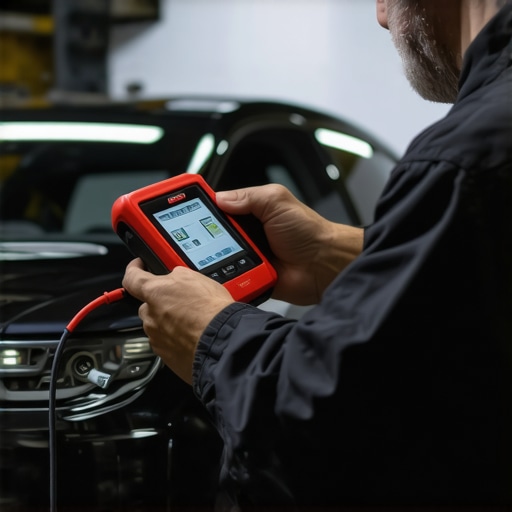
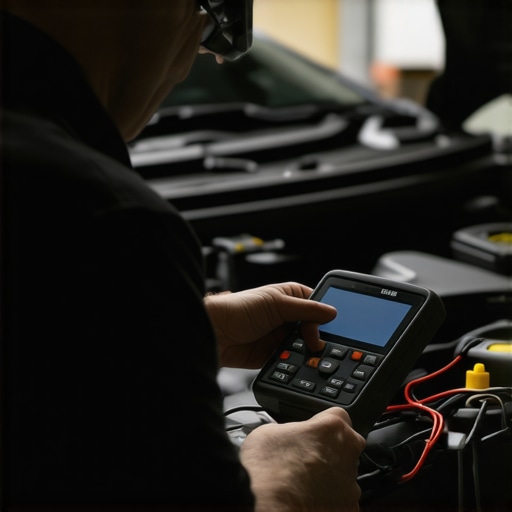
When you bring your vehicle to a professional auto repair center, we start with a performance test. This involves checking static and dynamic pressures, testing fan operation, and inspecting the electrical integrity of the system.
Repair costs can vary widely depending on the culprit:
- Refrigerant Recharge: Usually $150 – $300, depending on the type of gas (R134a vs. the newer, more expensive R1234yf).
- Electric Fan Replacement: Generally $300 – $600, including parts and labor.
- Alternator Repair: $400 – $800.
- Compressor Replacement: $800 – $1,500+, as this often requires replacing the dryer and orifice tube as well.
While these numbers might seem daunting, ignoring the “hot air at idle” warning sign usually leads to the compressor seizing, which can send metal shards throughout the entire system, doubling or tripling the final bill.
Conclusion & Call to Action
If your car’s AC is only giving you the cold shoulder when you’re stopped, don’t just roll down the windows and suffer. This symptom is a clear warning that your system is struggling with airflow, pressure, or electrical supply. Whether it’s a simple debris blockage or a failing condenser fan, catching the problem now will save you from a complete system meltdown in the middle of a summer heatwave.
Don’t wait until the heat becomes unbearable. Visit a professional auto ac repair near me today and let an ASE-certified technician get your “chill” back where it belongs – even at a red light.