How to tell if your struts are shot without taking them off the car
I’ll never forget the rainy Tuesday morning I almost ended up in a ditch. I was cruising down a backroad I’d driven a thousand times, doing maybe 45 mph. I hit a patch of uneven pavement—nothing major, just a typical dip—and my front end started oscillating like a bobblehead on a dashboard. My steering wheel felt light, disconnected, and for a terrifying three seconds, I wasn’t entirely sure which direction the tires were pointing. Back then, before I really understood the value of what an ASE certification means, I assumed “old car” just meant “bouncy ride.” I was dead wrong. That “character” was actually a dangerous suspension failure waiting to happen.
Why Your Car Feels Like a Boat on Rough Seas
[image_placeholder_1] Most people wait until they see a puddle of oil on the driveway before they think about their suspension. But here’s the kicker: your struts can be completely toasted even if they look bone-dry. I made the mistake early on of thinking that how to tell if your shock absorbers are worn out without any leaks was some kind of mechanical dark art. It’s not. It’s about paying attention to how the car speaks to you through your seat and the steering wheel. Today, I’m going to show you exactly how to play detective on your own driveway. No lift, no specialized spring compressors, and definitely no greasy knuckles required.
Is this just a way for shops to upcharge me?
I get it. You go in for a routine oil change and suddenly the mechanic is telling you that you need $1,200 in suspension work. It feels like a shakedown. However, the physics don’t lie. According to the Car Care Council, worn shocks and struts can increase your braking distance by up to 10 feet when traveling at 60 mph. That’s the difference between a close call and a trunk full of someone else’s bumper. We aren’t just talking about comfort; we’re talking about keeping your tires planted so your brakes can actually do their job. If your car has been diving forward every time you hit the brakes, or if you feel a weird shudder that isn’t a transmission slip, you’re in the right place. Have you ever felt like your car was still bouncing two blocks after you hit a speed bump? Tell me about that floaty feeling in the comments—I want to know if I’m the only one who used to ignore it.
You Can Spot Failing Struts Without Moving the Car
Knowing when to invest in your ride is half the battle of car ownership. You don’t need a degree to feel a failing part, you just need to know what a healthy car is supposed to do. Let’s look at the simple physical signs you can spot while your car is sitting right in front of your house.
Put Your Weight Into the Bounce Test
The most iconic way to check your suspension doesn’t require a single tool—just a bit of muscle. Think of your springs like a pogo stick; without the shocks or struts to dampen that energy, you’d just keep bouncing until gravity or a brick wall stopped you. To do this, go to one corner of your car and push down as hard as you can on the bumper or the frame. Give it a good heave, then let go. A healthy car should return to its original height and stop immediately. If it bounces more than once or twice, your struts have checked out. I remember doing this on my old ’98 Corolla after a rough winter. I pushed the front end down, and the car literally wobbled for five seconds like a bowl of Jell-O. It was a clear sign that I needed to be choosing the right car service for your vehicles needs before a simple commute turned into a disaster.

Read Your Tires Like a Mechanic’s Roadmap
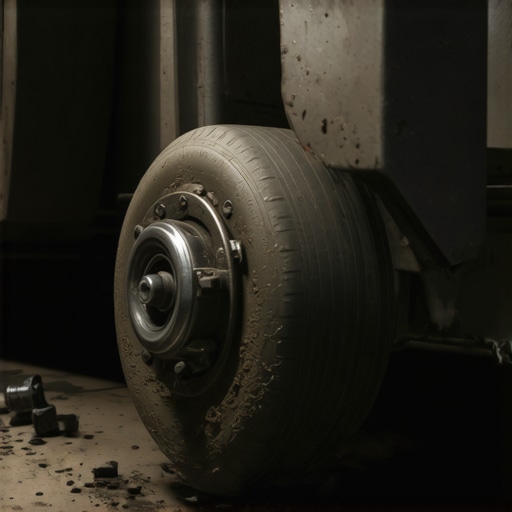
Your tires are the historians of your car’s suspension. When your shocks aren’t doing their job of keeping the rubber glued to the asphalt, the tire actually ‘jumps’ as you drive. This creates a specific wear pattern called ‘cupping’ or ‘scalloping’—smooth spots followed by rough patches around the tread. It’s like a tiny hammer hitting the tire a thousand times a minute. If you run your hand along the tread and it feels like a saw blade, you’re looking at a suspension issue, not just a bad alignment. This is often why your car shakes specifically at 55 miles per hour; the wheel is literally losing contact with the road. While you’re down there, check for oil residue on the strut body itself. A little ‘sweating’ is fine, but if it’s wet with fresh oil, the internal seals are blown. Even if you’ve been diligent with top oil change tips for safe driving in 2025, neglecting the hardware that connects you to the road is a recipe for a white-knuckle drive.
The Nose Dive and the Squat
Next time you’re out for a spin, pay attention to the ‘attitude’ of the car during transitions. When you hit the brakes, does the front end dip so hard it feels like you’re bowing to the car in front of you? That’s ‘nose-diving.’ Conversely, when you accelerate, does the rear end squat toward the pavement? These are signs that the internal valving in your struts has given up the ghost. It’s a similar feeling to transmission troubles where the car feels disconnected from your inputs. If you notice this, especially if you’ve already checked your fluid levels and wondered why your engine oil level is rising, you need to look at the mechanical stability of the chassis. A car that can’t maintain a level platform is a car that won’t handle predictably in an emergency maneuver. Understanding these dynamics is essentially what an ASE certification means in practice: knowing that every wiggle and dip has a physical cause and a specific solution.
Listen for the Tell-Tale Clunk
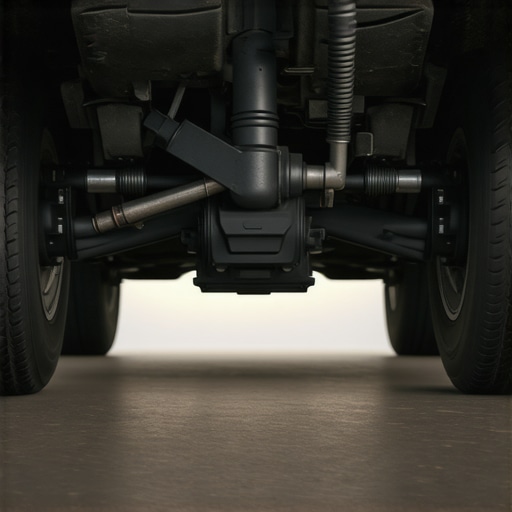
Suspension parts don’t always fail silently. Often, a failing strut mount—the part that connects the strut to the car’s frame—will make a distinct ‘clunk’ or ‘pop’ when you turn the wheel or hit a small bump. I spent weeks chasing a noise in my hatchback that sounded like a loose marble in a tin can. It turned out to be a dry, cracked bushing. If you ignore these sounds, you aren’t just dealing with a noisy ride; you’re letting the geometry of your steering drift. This can lead to situations why your steering wheel is off center while driving straight. Taking the time to perform a simple visual inspection under the wheel well—looking for cracked rubber or bent components—is the difference between a cheap part replacement and a full-blown collision repair later.
The ‘Lifetime’ Fluid Lie That Kills Gearboxes
I see it every single week: a frustrated owner in a late-model SUV with a transmission that’s slipping or banging into gear. They tell me, ‘But my manual says the transmission fluid is a lifetime fill!’ Here’s the hard truth from someone who’s seen the inside of those gearboxes: ‘lifetime’ usually just means the life of the manufacturer’s warranty—about 100,000 miles. By the time that fluid actually fails, you’re on the hook for a $5,000 replacement. If you’re looking for transmission troubles: expert insights for smooth shifting, the first rule is to ignore the ‘lifetime’ label. Real-world heat, especially in stop-and-go traffic, shears down the chemical additives in that fluid long before the car hits its first decade. According to SAE International, fluid degradation is the leading cause of internal component wear, yet many shops won’t suggest a change because they don’t want the liability if the unit is already failing.
Why does the car shift like garbage even after a fresh fluid flush?
This is a common trap. If you wait until the car is already acting up to change the fluid, you might actually make it worse. New fluid has high detergency, which can knock loose debris that was safely tucked away, clogging the tiny valves in the transmission body. You also have to wonder how to tell if your mechanic actually replaced the transmission filter or just did a ‘drain and fill.’ A filter clogged with clutch material will starve the pump of pressure, leading to a slow death regardless of how clean the oil looks on the dipstick. Have you ever fallen into this trap of believing ‘no maintenance needed’ only to pay for it later? Let me know in the comments.
The $10 Filter That Can Toast Your Turbo
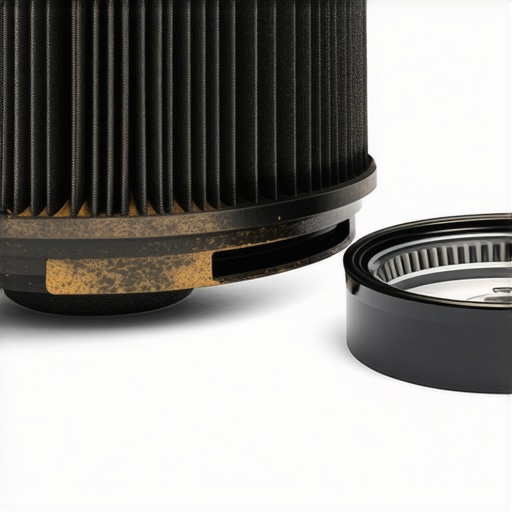
Another nuance that most DIYers (and even some general shops) miss is the quality of the oil filter on modern turbocharged engines. Many people think a filter is just a filter, but the hidden cost of using non-OEM oil filters on your turbo is often a destroyed bearing. Cheap filters sometimes lack the proper bypass valve pressure or the micron rating required to keep tiny particles out of the turbo’s high-speed oil feed. While you’re at it, be wary of the danger of overfilling your engine oil by just one quart. It sounds harmless, but it can lead to ‘foaming’—where the crankshaft whips air into the oil—turning your lubricant into a bubbly mess that doesn’t protect a thing. This is exactly what an ASE certification means: it’s the ability to see beyond the basic top oil change tips for safe driving in 2025 and understand the fluid dynamics happening at 5,000 RPM. If your engine oil smells like raw gasoline after a short trip, don’t just change the oil and hope for the best; you’ve got a fuel dilution issue that’s eating your bearings from the inside out.
I used to think my eyes and ears were enough to diagnose anything, but modern cars are essentially rolling computers with four wheels and a leather interior. If you want to dive deep into choosing the right car service for your vehicles needs, you need to realize that professional-grade results require professional-grade data. I eventually traded my basic code reader for a bidirectional scanner because I was tired of guessing which sensor was lying to me. This is exactly what an ASE certification means in the digital age: the ability to interpret live data streams while the vehicle is under load.
Stop Chasing Ghosts with Twenty Dollar Scanners
When I was dealing with a stuttering engine last year, my cheap scanner told me nothing. It wasn’t until I performed what professionals call a ‘live drive’ that I saw the fuel trim numbers spiking only during hard acceleration. This is often the intermittent transmission shudder that only surfaces during a live drive, and without a tool that can graph data in real-time, you’re just throwing parts at a problem. 
How do I maintain my gearbox performance over hundreds of thousands of miles?
The secret isn’t a magic additive; it’s consistency and the right hardware. According to technical service bulletins from ZF Friedrichshafen, the world’s leading transmission manufacturer, even so-called ‘sealed’ units should have their fluid and filters replaced every 50,000 to 75,000 miles to prevent solenoid failure. If you are wondering how to get more miles out of your fleets transmission, start by investing in a high-quality fluid extraction pump. It makes the job so clean you could do it in a tuxedo. This proactive approach prevents transmission troubles before they manifest as a $4,000 repair bill.
The One Tool That Saves Your Oil Pan
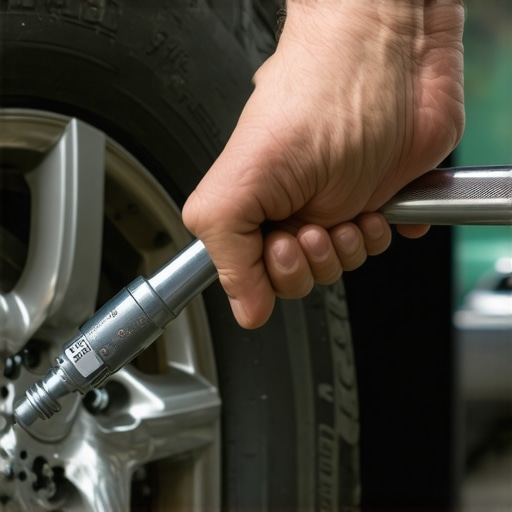
I’ve seen more DIYers ruin an afternoon by over-tightening a drain bolt than almost any other mistake. A simple click-type torque wrench is non-negotiable. If you’re following top oil change tips for safe driving in 2025, you need to realize that aluminum oil pans are unforgiving. Stripping those threads is why choosing an albuquerque auto repair shop based on hourly rate alone is a recipe for disaster, as rushed mechanics often skip the torque wrench entirely. Looking ahead, I suspect we will see more ‘over-the-air’ diagnostics where your car emails you a PDF of its own health report, but for now, the physical tools in your garage remain your best defense against mechanical entropy. My challenge to you is this: next time you change your oil, actually look up the manufacturer torque spec and use a real wrench to set it. You’ll be surprised how much lighter that ‘correct’ setting feels than what you’ve been doing by hand. If you’ve ever found why your engine oil level is rising, you know that precision matters more than muscle.
Why I Stopped Relying on My Dashboard Lights
After years of turning wrenches, I’ve realized that the most expensive repairs usually start with the smallest ‘maybe later’ decisions. I used to wait for a warning light, but true mechanical empathy means feeling the car before the computer does. Here are the core realizations that changed my approach:
- The Badge Represents Precision Over Speed: Understanding what an ASE certification means for a home mechanic is about the discipline to follow a torque spec even when you’re tired.
- Don’t Buy the ‘Lifetime’ Hype: To avoid catastrophic transmission troubles, you have to treat fluid like a consumable. If it’s brown, it’s done, regardless of the owner’s manual.
- Real Data Happens on the Road: I wasted months chasing ghosts until I learned why a live drive is the only way to catch intermittent engine hesitations. Seeing sensor data move in real-time is the only way to confirm a diagnosis.
- Your Eyes are the Best Diagnostic Tool: Simply knowing what your transmission fluid color is trying to tell you can save you a five-figure repair bill before the gears even start to slip.
The Precision Kit Every Driver Needs
You don’t need a hydraulic lift to get professional results in your own driveway. These are the items I consider non-negotiable for anyone serious about their car’s health. First, a Split-Beam Torque Wrench. It’s far more reliable than cheap alternatives and is the only way to follow top oil change tips for safe driving in 2025 without damaging aluminum components. Second, a Bidirectional OBDII Scanner. This tool lets you trigger components for testing, taking the guesswork out of the equation. Finally, a Fluid Syringe allows you to sample oils easily so you’re always choosing the right car service for your vehicles needs based on actual wear rather than just mileage.
Take Command of Your Machine’s Future
Maintenance isn’t just about preventing a breakdown; it’s about reclaiming the joy of a car that handles exactly how the engineers intended. When you take the time to understand the nuances of your chassis and drivetrain, you transition from a passenger to a true steward of your vehicle’s longevity. It might feel intimidating at first, but every master mechanic was once a beginner with a single wrench and a lot of curiosity. Start small, stay precise, and always prioritize the mechanical integrity of your ride. Your car will reward you with years of smooth, predictable performance. Have you ever caught a major mechanical issue just by listening to a weird sound or feeling a strange vibration? I’d love to hear your ‘save of the year’ stories in the comments below!