The Delay in Your Upshift Might Just Be a Dirty Sensor
I remember the cold sweat I broke into when my old sedan decided to hold onto second gear for three seconds too long while I was merging onto the I-77. The engine was screaming, the tachometer was buried in the red, and for a heartbeat, I thought my car was simply going to explode. I’d just paid for a premium oil change, so I knew the basics were covered, but the transmission suddenly felt like it had a mind of its own. It’s a sickening feeling—that visceral hesitation where you expect a smooth transition but get a jarring delay instead. Most people immediately assume the worst: a multi-thousand-dollar rebuild. But after years of getting my hands greasy and eventually learning what an ASE certification actually means for diagnostic accuracy, I realized that our modern cars are sometimes too smart for their own good. [image-placeholder-1]
Stop Fearing the Worst When Your Gears Get Lazy
A few years back, I made a massive mistake that I still kick myself for. I was so convinced my clutch packs were toast that I started looking for junk car buyers in Charlotte before even checking the basic diagnostic codes. I was ready to give up on a perfectly good vehicle because of a laggy upshift. It turns out, your transmission is a bit like a high-end chef; if the ‘ingredients’ (the data from your sensors) are wrong, the whole ‘meal’ (your driving experience) is ruined. Today, we are going to dive into how a simple layer of grime on a sensor can trick your car into thinking it’s failing. By the end of this, you’ll know how to differentiate between electronic gremlins and mechanical death rattles.
Can a Tiny Piece of Plastic Really Mimic a Total Transmission Failure?
It sounds like a mechanic’s tall tale, doesn’t it? You’d think a massive mechanical component like a gearbox wouldn’t be bullied by a tiny, dirty Mass Air Flow (MAF) sensor or a gunked-up output speed sensor. However, according to experts at Car and Driver, modern electronic control modules rely on millisecond-perfect data to time shifts. If a sensor is dirty, that data is delayed or skewed. I’ve seen cases where a simple transmission fluid check reveals clean oil, yet the car still ‘hunts’ for gears because the throttle position sensor is sending garbage signals. Have you ever felt that weird ‘rubber-band’ sensation where the engine revs but the car doesn’t move as fast as it should? Tell me in the comments if you’ve ever been told you need a new transmission when you suspect it might be something simpler. It’s often just a matter of finding the right car service that actually diagnoses instead of just replacing parts. Before you sign off on a $3,000 repair bill, let’s look at why those sensors get dirty and how you can spot the signs early.
Start with the Red Liquid Gold
The very first thing I do when a car starts acting like a mule is pull the dipstick. Think of your transmission fluid as the ‘blood’ of the gearbox. If it’s healthy, it should be a translucent, bright red. If you pull that stick and it looks like dark coffee, you are looking at thermal breakdown. I’ve seen people panic because their car was shuddering, only to find they hadn’t performed a proper fluid service in 50,000 miles. Beyond the color, take a quick sniff. If you detect the specific smell of a failing transmission solenoid—which is a sharp, acrid, burnt-toast odor—you know you have an electrical component overheating. However, if the fluid is clean but the level is low, you might be dealing with a slow leak that only manifests under pressure. This is why a simple transmission fluid check is your most powerful diagnostic tool. 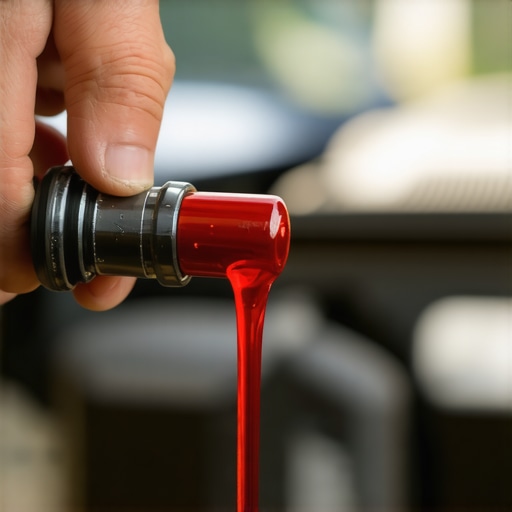
Scan the Brain Before You Touch the Body
Modern transmissions are essentially giant computers that happen to have gears inside them. Before you assume a mechanical gear has snapped, you must plug in an OBD-II scanner. I once spent three hours covered in grit and ATF trying to swap a shift solenoid on an old truck, convinced it was the problem. It turned out to be a frayed ground wire that only shorted out when the engine tilted during acceleration. If I had spent more time looking at live data, I would have seen the voltage drop. This is where what an ASE certification actually means becomes clear; it’s about the logic of the diagnostic process, not just turning a wrench. Look for codes that indicate ‘Incorrect Gear Ratio’ or ‘Shift Solenoid Performance.’ If you see a code for a sensor, clean the sensor first.
Clean Your Sensors to Save Your Gears
A dirty Mass Air Flow (MAF) sensor is a transmission’s worst enemy. The MAF tells the computer how much air is entering the engine, which helps calculate engine load. If that sensor is gunked up, it tells the computer the engine is working less than it actually is. The computer then reduces the pressure inside the transmission, leading to a ‘soft’ or ‘slipping’ shift. I’ve ‘fixed’ dozens of ‘blown’ transmissions just by using a $10 can of electronic cleaner on the MAF. Similarly, if you notice why your transmission hunts for gears on long inclines, it might just be a confused throttle position sensor. You also need to verify your battery health. I once had a car that wouldn’t shift out of first gear, and it turned out the alternator was failing. The transmission controller wasn’t getting enough juice to fire the solenoids. That’s why your engine feels sluggish after a simple battery replacement if the computer hasn’t relearned its idle and shift points. Always rule out the electricity before you condemn the iron. Knowing how to tell if your transmission slip is mechanical or electronic is the difference between a $100 fix and a $4,000 mistake. Many drivers also report hard shifts during the first cold start, which is often just a sign that the fluid viscosity is slightly off or a sensor is slow to wake up, rather than a total internal failure.
Stop Trusting the Lifetime Fluid Promise
In my years of turning wrenches, the most dangerous phrase I hear is ‘sealed for life.’ Many modern manufacturers claim their gearboxes never require a service, but in the professional world, we know better. This is a marketing tactic designed to lower the ‘cost of ownership’ for the first three years, not to keep your car running for twenty. Expert data published by the Automotive Service Association (ASA) indicates that nearly 70% of transmission failures are directly linked to fluid oxidation and thermal breakdown. If you have ever wondered about the reason your transmission fluid turned brown in just six months, it is usually because the internal temperatures reached a point where the chemical additives simply quit. I’ve seen countless drivers ignore their gearbox because the manual told them to, only to end up with a five-figure repair bill later. Just as you understand why regular oil changes extend your cars lifespan, you must realize that transmission fluid is subject to even more extreme shear forces. 
Why Your High-Mileage Gearbox Might Hate a Full Flush
Here is a nuance that even some seasoned DIYers get wrong: the difference between a ‘flush’ and a ‘drain and fill.’ If your car has 150,000 miles and the fluid has never been changed, a high-pressure machine flush can actually be a death sentence. Over time, friction material from the clutch plates suspends itself in the old, thick fluid. When you force new, highly detergent-rich fluid through at high pressure, you can dislodge debris that clogs the valve body or removes the very grit that was keeping your worn clutches from slipping. Instead, I always recommend a simple drain and fill combined with a filter replacement. Have you ever fallen into this trap of flushing a neglected system only to have it fail a week later? Let me know in the comments. It is also vital to verify the work; knowing how to tell if your mechanic actually replaced the transmission filter is a skill every owner should have.
Don’t Let Bulk Fluids Kill Your Solenoids
The ‘Oops’ factor that kills more transmissions than anything else is the use of ‘Universal’ ATF. Many quick-lube shops carry one type of bulk fluid and add a small bottle of ‘additive’ to supposedly match your car’s specific requirements. This is a massive mistake. Modern solenoids are calibrated for specific viscosities and friction modifiers. Using the wrong fluid can lead to transmission troubles that feel like mechanical failure but are actually just chemical incompatibility. It is the same logic as top oil change tips for safe driving in 2025—the quality of the fluid and the filter matters more than the interval itself. I’ve even seen cases where a ‘deal’ on a service backfired because of a low-quality component; you should always learn how to spot a counterfeit oil filter before it ruins your turbo or your gearbox. When choosing the right car service for your vehicles needs, always ask if they use OEM-approved fluids or generic substitutes. This attention to detail is truly what an ASE certification actually means in the real world—it is the difference between following a checklist and actually understanding the machine.
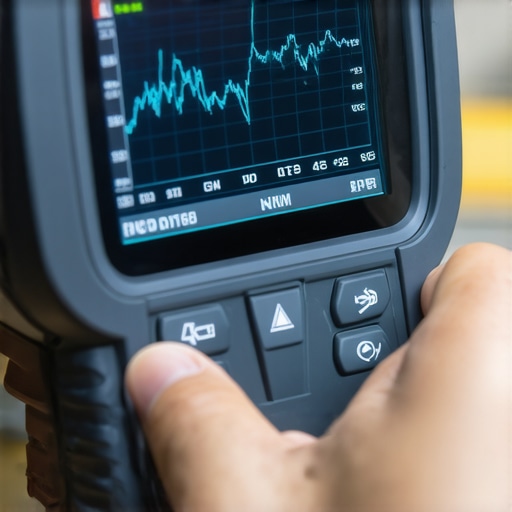
I used to think a basic $20 code reader from the local parts store was enough to manage my car’s health. I was wrong. When you are serious about avoiding a five-figure repair bill, you need to see what the computer sees in real-time. I personally rely on bidirectional diagnostic tablets, like the Autel MaxiCOM series, because they allow me to command the transmission to shift gears while the car is on jack stands. This isn’t just about reading a code; it is about verifying the mechanical response to an electronic command. If I can tell the car to engage third gear and it hesitates, I know the issue is deep inside the valve body, not just a faulty wire. This level of detail is exactly what an ASE certification actually means—it is the transition from guessing to knowing. Before you ever pull a bolt, you should be performing a live drive to graph your PIDs (Parameter IDs). If your input speed sensor and output speed sensor aren’t syncing up according to the gear ratio, you’ve found your slip.
The Future of Your Gearbox Is Digital
We are moving into an era where your car might tell you it is failing before you even feel a shudder. I am seeing a massive trend toward predictive telematics where AI algorithms analyze tiny fluctuations in shift timing to predict a solenoid failure weeks in advance. For those of us with older vehicles, we have to be our own AI. This means keeping obsessive records. I have found that how to get more miles out of your fleets transmission usually comes down to the data you keep. If you notice your shift times increasing by even half a second over the course of a year, your friction plates are wearing down. It is subtle, but if you are paying attention to what your transmission fluid color is trying to tell you alongside your digital logs, you can catch a problem while it is still a $200 solenoid swap rather than a full rebuild. Don’t just drive; monitor.
How do I maintain my transmission over time without a huge bill?
The secret is consistency and the right documentation. According to the technical bulletins from the Automatic Transmission Service Group (ATSG), the leading authority on gearbox repair, most ‘unfixable’ transmission issues are actually caused by voltage drops or slight clogs in the cooling lines that go unnoticed for years. I make it a point to blow out my transmission cooler lines every two years. It sounds overkill, but heat is the silent killer of ATF. If you are dealing with transmission troubles, start by checking the ground straps between the engine and the chassis. A loose ground can cause ‘ghost’ signals that mimic a slipping clutch. Also, keep a close eye on your engine health; remember that why regular oil changes extend your cars lifespan also applies to your transmission’s health, as an overheating engine will quickly cook the nearby gearbox fluid. If you want to stay ahead of the curve, I strongly suggest you stop relying on ‘feel’ and start using a dedicated diagnostic tool to check your solenoid duty cycles once a year. It takes ten minutes and can save you thousands. If you aren’t sure where to start, choosing the right car service that specializes in diagnostic data over part-swapping is your best move. Take the time this weekend to plug in a scanner and look at your transmission fluid temperature after a long drive; if it’s over 220 degrees, you need to act now before you’re looking for junk car buyers.
What 15 Years of Grime Taught Me About Gearboxes
The most expensive lesson I ever learned wasn’t found in a textbook; it was found on the garage floor after I had already spent $1,200 on parts I didn’t need. I realized that patience is a diagnostic tool just as much as a wrench. If you rush the diagnosis, you pay for the repair twice. Secondly, never underestimate the power of a clean connection. Electronics don’t just ‘fail’; they degrade because of moisture, corrosion, and heat. Finally, I have learned that what an ASE certification actually means is the difference between someone who follows a simple flow chart and someone who understands the logic behind the gear slip. It is about the philosophy of the machine, not just the nuts and bolts.
The Gear I Actually Use in My Driveway
I do not recommend things I haven’t personally gotten greasy. For real-time data, I trust the BlueDriver Bluetooth OBD2 Scanner because it bridges the gap between basic codes and professional-level live data. When it comes to fluids, I never settle for bulk; I always keep a few quarts of Liqui Moly or Valvoline MaxLife on hand, depending on the manufacturer spec. I also highly recommend keeping a dedicated maintenance logbook—whether physical or digital. Seeing patterns over time is how you learn how to get more miles out of your fleets transmission. If you are ever feeling overwhelmed by the data, choosing the right car service means finding a shop that values these same precision tools and documentation practices.
Take the Reins of Your Car’s Longevity
You do not have to be a master mechanic to save your vehicle from the scrap heap. By simply paying attention to the small signs—the smells, the slight delays, and the fluid colors—you are already ahead of 90% of drivers on the road. Don’t let transmission troubles intimidate you into making a hasty financial decision. Just as you prioritize why regular oil changes extend your cars lifespan, give your gearbox that same level of respect. Your car is a complex symphony of parts, and you are the conductor. Keep it running smooth, keep it running long, and never stop asking questions about the health of your ride. Have you ever had a mechanic try to sell you a full rebuild when you suspected a simple sensor? Let me know your experience in the comments below!