The truth about using stop-leak products in your radiator
I’ll never forget the afternoon my old truck decided it had finally had enough. I was halfway through a delivery, the sun was beating down, and suddenly, a plume of white steam erupted from the grille. I pulled over, my heart sinking. I knew I should have taken it in for a car service weeks ago when I first saw those tiny drops on the garage floor. Instead, I pulled a dusty bottle of stop-leak from behind the seat. I was desperate. I poured that thick, metallic-looking liquid into the radiator, thinking I was a genius. I wasn’t. In fact, that single decision nearly toasted my engine. We often treat our cars like they are indestructible, forgetting that a radiator is a precision-engineered component, not just a bucket for water. While I’m usually the first to advocate for a DIY oil change or basic maintenance, cooling systems are a different beast entirely.
Why a Quick Fix Often Leads to a Long Walk Home
It’s the siren song of the auto parts aisle: “Fixes leaks in minutes! Guaranteed!” When you’re staring at a potential $500 radiator replacement, a $15 bottle of chemicals feels like a gift from above. But here’s the truth your mechanic wishes you knew. Stop-leak products work by using additives that harden when they encounter air or the temperature change at a leak site. The problem? They don’t just stop at the leak. I’ve seen these products gum up a transmission cooler or completely plug a heater core, leaving the driver shivering in the winter. I once made the mistake of using a heavy-duty stop-leak in a project car, only to find it had coated the thermostat, causing it to stick shut. It’s a mess that requires hours of labor to clean out. This is why understanding the risk of using stop-leak additives in your cooling system is vital before you pop that cap.
Is stop-leak really as dangerous as people say?
The skepticism is well-founded. While these products might get you out of a pinch for a few miles, they are essentially a “last resort” for a car that’s already on its way to the scrapyard. If you value your vehicle’s longevity, you have to look at the big picture. According to a report by the Car Care Council, cooling system failure is the most common cause of engine failure, and many of these failures are made worse by debris in the coolant. When you use these additives, you are intentionally adding debris. It’s the opposite of a regular oil change where the goal is to remove contaminants. Instead of a permanent fix, you’re creating a ticking time bomb. If you suspect a leak—maybe because your car smells like maple syrup—don’t reach for the bottle. Reach for the phone and call someone who is ASE certified. They have the tools to pressure test the system and find the real culprit without clogging your engine’s arteries. Have you ever tried one of these quick fixes only to have it backfire? I’d love to hear your horror stories in the comments.
Find the Leak Before It Finds Your Wallet
To avoid the catastrophic damage of stop-leak additives, you have to become a bit of an automotive detective. Most people assume a puddle under the car means the radiator is toast, but the cooling system is a network of hoses, gaskets, and seals. I once spent three hours helping a neighbor who was convinced his engine was blown because of a massive leak. He was ready to pour in a bottle of ‘engine sealer’ and call it a day. Instead, we spent ten minutes looking around and found a loose hose clamp that cost exactly fifty cents to tighten. Had he used the additive, he would have eventually faced transmission troubles from a clogged external cooler. Always start with the simplest explanation first.
Grab a Flashlight and Follow the Sweet Smell
The first step is a visual inspection when the engine is stone-cold. Never, ever open a radiator cap when the engine is hot—it’s a pressurized volcano waiting to happen. Look for crusty white or green residue around hose connections and the water pump. If you can’t see a drip but you still smell that sugary aroma, you might be dealing with a slow seep that evaporates before it hits the ground. This is often how people end up wondering how to identify the source of various engine odors. Use a high-lumen flashlight to peer into the dark corners of the engine bay, specifically looking at the ‘weep hole’ on the water pump. If it’s damp, the internal seal is failing, and no amount of liquid fix-it will save that bearing.
Rent a Pressure Tester and Play Mechanic
If a visual check fails, you need to simulate the heat and pressure of a running engine without the danger. You can usually rent a cooling system pressure tester from a local parts store for a small deposit. You attach the pump to the radiator neck and slowly pump it up to the PSI rating listed on your radiator cap. I’ll never forget the time I did this on an old sedan; as soon as I hit 15 PSI, a tiny pinhole in the radiator side tank started spraying like a Super Soaker. It was a clean, easy-to-spot failure that saved the owner from a failed car service bill elsewhere.
Check Your Oil for Forbidden Milkshakes
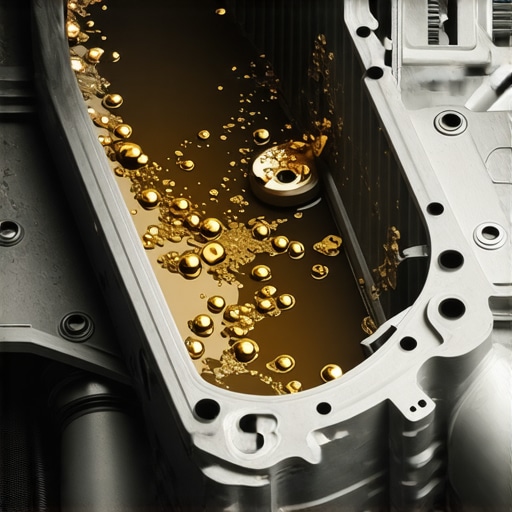
Sometimes the leak isn’t external. If you’re losing coolant but the driveway is bone dry, pull your dipstick. If the oil looks like a frothy chocolate milkshake, you have a internal leak, likely a head gasket. This is also a primary reason why your engine oil level is rising without you adding any—coolant is displacing the oil. Before you panic, remember that the specific gasket failure might be an intake manifold or a timing cover rather than the head gasket itself. If you aren’t sure, this is where a pro who is ASE certified earns their keep. They can perform a combustion leak test to see if exhaust gases are entering the coolant, providing a definitive answer before you start tearing the top of the engine off. Consistent maintenance, much like keeping up with a regular oil change, ensures these seals don’t dry out and fail prematurely.Let’s dig deeper into the psychology of the repair shop. Most drivers see that blue and white patch on a mechanic’s sleeve and think it’s just a marketing gimmick or a way to charge higher labor rates. In reality, thinking that any technician can handle a modern, sensor-heavy vehicle is one of the most expensive mistakes you can make. While a basic lube tech can follow top oil change tips for safe driving in 2025, they often lack the diagnostic depth to see the ‘why’ behind a failure. I’ve met plenty of ‘old-school’ guys who scoff at computers, but in my experience, what an ASE certification means for your car’s maintenance is the difference between replacing a $1,200 sensor and fixing a $5 frayed wire.
Stop Trusting the Piece of Paper and Start Trusting the Process
The nuance that most people miss is that certification isn’t just about passing a test; it’s about a commitment to a standard of logic. When you are choosing the right car service, you aren’t just paying for the fix; you’re paying for the elimination of variables. A common myth is that if the ‘Check Engine’ light isn’t on, the car is fine. This is a trap. I’ve seen dozens of vehicles with ‘pending’ codes that indicate transmission troubles long before the dashboard starts glowing. If you wait for the light, you’ve already waited too long.
The Dangerous Lie of Lifetime Fluids
Here is a contrarian view that often ruffles feathers: ‘Lifetime’ transmission fluid is a marketing term, not a mechanical reality. Manufacturers love to claim their fluids never need changing because it lowers the ‘total cost of ownership’ in brochures. However, a study by SAE International confirms that heat is the primary catalyst for lubricant oxidation, and no fluid is immune to the laws of thermodynamics. If you drive in stop-and-go traffic or tow a trailer, that ‘lifetime’ fluid is likely toasted by 60,000 miles. I’ve seen owners ignore their gearbox for a decade, only to face a total rebuild because they believed the manual.
Can Your Choice of Oil Filter Actually Kill Your Turbo?
This is a question I get from performance enthusiasts and commuters alike. Most people focus entirely on the oil brand, but the filter is the unsung hero—or the silent killer. There is a massive hidden cost of using non-OEM oil filters on your turbo. Modern turbochargers rely on a thin film of oil moving at incredible speeds. A cheap, ‘no-name’ filter can have a bypass valve that opens too easily or a media that restricts flow just enough to starve the turbo bearings. It won’t blow up today, but it will fail years earlier than it should. While regular oil changes extend your car’s lifespan, they only do so if the parts are up to the task. Have you ever fallen into this trap of ‘good enough’ parts? Let me know in the comments.
That trap of ‘good enough’ is exactly where many weekend warriors lose the battle against depreciation. If you want to move beyond the basics of a regular oil change, you have to upgrade your toolkit. I’m not talking about bigger wrenches; I’m talking about data. Most drivers rely on a cheap $20 code reader that only speaks the bare minimum of the vehicle’s language. To truly protect your investment, you need to see the specific engine glitches that stay hidden until you perform a live drive diagnostic. This is the secret sauce used by professionals to catch a failing sensor before it ruins a catalytic converter or causes a lean condition that melts a piston.
Stop Reading Codes and Start Talking Back to the Computer
The biggest leap in my own maintenance journey was moving to a bidirectional scan tool. Unlike a standard reader, a bidirectional tool allows you to command the car to do things—like turning on a cooling fan or cycling a transmission solenoid to see if it responds. For example, if you are working on a modern car, why Viper tools are the only way to reset your car’s steering angle sensor becomes clear once you realize that a simple battery swap can sometimes knock your safety systems out of alignment. According to technical documentation from the Society of Automotive Engineers (SAE) regarding the J1979 standard, while basic emissions data is mandated for all, the ‘enhanced’ manufacturer data is where the real health status lives. If you aren’t looking at fuel trims and transmission oil temperature in real-time, you’re just guessing.
How do I maintain my transmission and engine over time?
Consistency beats intensity every single time. To reach that elusive 300,000-mile mark, you have to ignore the ‘maintenance-free’ labels. For your gearbox, how to tell if your transmission slip is mechanical or electronic starts with regular fluid analysis. I recommend taking a small sample of your oil and transmission fluid every two years and sending it to a lab like Blackstone Laboratories. They can spot microscopic traces of copper or aluminum that signal a bearing is wearing out long before you hear a noise. Furthermore, don’t neglect the interior; learning how to keep your leather seats from cracking in the summer is just as important for the car’s resale value as the mechanical bits. A car that runs perfectly but has a shredded interior is still a car you’ll want to get rid of sooner than later.
The Future of the Garage is Connected
Looking ahead, the trend is moving toward ‘predictive maintenance’ powered by telematics. Within the next five years, expect your car to automatically schedule a car service by sending a diagnostic report directly to an ASE certified technician the moment a parameter falls out of its narrow ‘ideal’ range. We are moving away from fixed mileage intervals and toward ‘condition-based’ servicing. My advice? Don’t wait for the car to tell you it’s hurting. My top advanced tip is to perform a ‘dry-run’ diagnostic twice a year: hook up a scan tool and record your baseline data while the car is running perfectly. When a problem finally does crop up, you’ll have a map of what ‘healthy’ looks like for your specific engine, making the fix ten times faster. Go ahead and try recording your fuel trims this weekend during a steady highway cruise—you might be surprised by what your engine is trying to tell you.
Hard-Won Lessons from the Service Bay
I’ve spent years watching cars succumb to “minor” issues that were ignored for too long. One of the biggest takeaways is that your vehicle is a collection of integrated systems that rely on one another. When you ignore the risk of using stop-leak additives in your cooling system, you aren’t just patching a hole; you’re introducing a contaminant that can starve other components of necessary flow. True reliability comes from acknowledging that every shortcut eventually demands its due. I’ve learned that the most expensive repair is the one you tried to do for five dollars. Trusting a professional and knowing what an ASE certification means for your car’s maintenance is the first step in moving beyond basic DIY and toward true automotive stewardship. Most transmission troubles start as whispers—slight delays or soft shudders—long before they become expensive screams on the side of the highway.
The Toolkit Every Car Owner Actually Needs
To move from being a passive driver to an active owner, you need more than just a tire pressure gauge and a prayer. I recommend starting with a high-quality bidirectional scan tool to catch those hidden glitches. Additionally, I’ve found that keeping a dedicated maintenance logbook prevents the confusion that often leads to a missed car service. Finally, don’t just settle for any repair shop; focus on choosing a facility that values data over guesswork. This specialization often means they have the specific diagnostic software required to see things generic shops might miss, ensuring your vehicle stays in peak condition for the long haul.
Your Journey to a 300,000-Mile Odometer
Keeping a car for the long haul isn’t about luck; it’s about a series of intentional, proactive choices. Every time you follow top oil change tips for safe driving in 2025 or decide to investigate a strange noise instead of turning up the radio, you are adding miles to your engine’s life. Remember, the core reason why regular oil changes extend your car’s lifespan is because they prevent the slow build-up of sludge that chokes the life out of moving parts. Be patient with your repairs, be proactive with your maintenance, and your car will return the favor for years to come. Have you ever caught a major mechanical issue just by paying attention to a small change in how your car felt? I’d love to hear your “saved the day” stories in the comments below!