How to Diagnose a Slipping Transmission Before It Fails
It was a morning like any other, heading to work after a quick oil change. Suddenly, my car started to surge forward unexpectedly, like a wild stallion that just couldn’t be tamed. My heart sank—I knew right then that something was seriously off. That helpless feeling, realizing your transmission might be slipping, is enough to make anyone anxious. But here’s the thing: catching those sneaky signs early can save you from an expensive repair and a major breakdown.
Why Early Detection of Transmission Slips Saves You Money and Stress
Knowing how to identify a slipping transmission before it fails completely is genuinely a game-changer. It’s not just about avoiding roadside emergencies; it’s about maintaining control, safety, and your sanity. A slipping transmission doesn’t happen overnight—it sneaks up on you, often disguised as minor quirks that seem easy to ignore. But if you’re like me, and you’ve ever pushed through a rough shift or delayed that diagnostic check, you might already be feeling the consequences.
The real kicker is that many drivers dismiss these early warning signs, thinking it’s just a ‘bad day’ or a minor glitch. However, according to a study from the National Institute for Automotive Service Excellence (ASE), neglecting transmission issues in their early stages can lead to complete failure, costing thousands in repairs or replacements. Early diagnosis, on the other hand, can often mean a simple fluid change or minor repair.
Have you noticed your car slipping out of gear, hesitating during acceleration, or making strange whining noises? These could be signals that your transmission is on the brink of trouble. Recognizing these symptoms promptly can make all the difference. In this article, I’ll walk you through practical steps to diagnose a slipping transmission, so you can address the problem before it worsens. If you want to keep your vehicle running smoothly and avoid costly breakdowns, stay with me.
Let’s dive into the first step—how to perform a basic inspection that might reveal early signs of trouble. Trust me, this little check could save you from a big headache later.
Perform a Visual Inspection for Early Clues
Start your diagnostic process by inspecting the transmission fluid. Park your car on a level surface, engage the parking brake, and open the hood. Locate the transmission dipstick—typically marked and accessible from the engine bay. Pull out the dipstick, wipe it clean with a rag, dip it back in, and pull it out again to check the fluid level and condition. If the fluid is low, it could be a sign of leaks or inconsistency. Additionally, look for dark, burnt-smelling fluid or debris clinging to the dipstick, which indicates internal wear or contamination. I remember a time I checked my fluid and found it dark and thick—promptly scheduling a fluid change saved me from a potential transmission overhaul. Ancestral knowledge about proper fluid levels, combined with regular inspections, forms the foundation of transmission health.
Test Drive with Observant Tactics
Next, take your vehicle for a controlled test drive. Shift through all gears, paying close attention to how smoothly each engages. Accelerate steadily from a stop and observe for hesitation or slipping—the engine revs up but the car accelerates sluggishly or surges unexpectedly. Listen for unusual whining or grinding noises. If you have a manual transmission, pay attention to clutch engagement and any difficulty shifting gears. During my early testing, I noticed my car hesitating mid-acceleration, especially when cold—this signaled a possible fluid issue or internal wear. Remember, these clues aren’t just inconveniences—they point to underlying problems that, if addressed early, can be less costly and time-consuming. Always trust your senses during these tests.
Engage the Diagnostic Mode for Deeper Insights
Many modern vehicles support diagnostic scans via on-board systems. Connect an OBD-II scanner to your car’s port—usually located under the dashboard—and retrieve error codes. Codes related to transmission control modules (TCMs), sensors, or solenoids can illuminate the root of slipping issues. For instance, I once used an OBD-II scanner after experiencing shifts that felt inconsistent and discovered a sensor fault. If unfamiliar with how to interpret codes, refer to manufacturer-specific guides or consult a professional. This step is crucial because it uncovers electronic or sensor-driven causes that aren’t apparent during physical inspection. Regularly leveraging diagnostic tools ensures you don’t overlook subtle electronic glitches hiding behind mechanical symptoms.
Check Transmission Fluid Temperature and Reserve
In some cases, testing the fluid’s temperature while driving can reveal if it’s overheating—a common cause of slipping. Use an infrared thermometer to scan the fill port or dipstick after a drive, ensuring the fluid temperature aligns with manufacturer specifications. Overheated fluid becomes thin and loses its lubricating properties, leading to slipages. Additionally, verify the fluid’s level after a short drive to account for expansion. Remember, overheating often indicates cooling issues or internal wear. I once found my transmission fluid temperature spiking during city driving, prompting an immediate coolant system check. If your car frequently runs hot, it’s a sign that the transmission isn’t receiving proper cooling—triggering a chain of repairs that, if caught early, you can avoid.
Confirm the Condition of Transmission Components
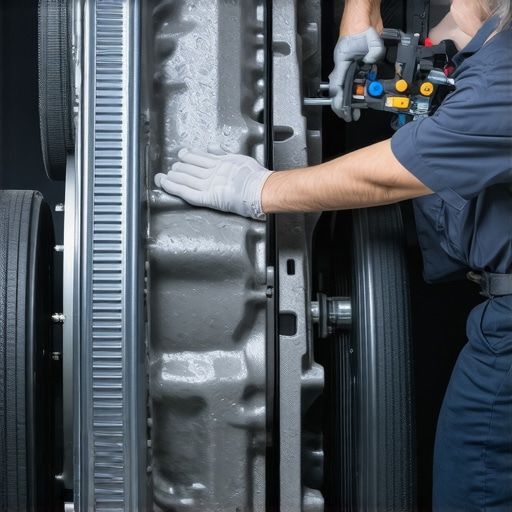
Depending on your comfort level and tools, inspect accessible components such as shift solenoids, transmission mounts, and wiring. Worn solenoids can cause inconsistent shifts, while damaged mounts may induce vibrations that mimic slipping. For in-depth inspection, consider visiting a certified mechanic—especially if symptoms persist. Remember that even a simple diagnostic check by an ASE-certified technician can reveal hidden issues before they escalate. A hands-on approach, combined with professional diagnostics, offers the best chance of catching early failure signs. During my own experience, a quick inspection of the solenoids uncovered corrosion, which was promptly replaced, restoring smooth shifting.
Many drivers operate under misconceptions about routine maintenance like oil changes and ASE certifications, which can lead to costly mistakes. A common myth is that simply changing your oil every 3,000 miles guarantees engine longevity—however, modern synthetic oils and advanced engine designs have extended recommended intervals significantly, as detailed in [top oil change tips for 2025](https://autofixclinic.com/top-oil-change-tips-for-safe-driving-in-2025). Relying solely on mileage without considering driving conditions or oil analysis may result in unnecessary services or overlooked issues.
Contrary to popular belief, ASE certification isn’t a catch-all for quality; it’s a baseline standard. Many consumers assume ASE-certified mechanics always provide superior service, but that isn’t guaranteed without evaluating the technician’s experience and diagnostic skills. An expert approach involves examining how technicians troubleshoot—look for those who follow structured diagnostic procedures outlined in [how an ASE Master Tech diagnoses issues](https://autofixclinic.com/how-to-spot-a-mechanic-who-is-cutting-corners-on-your-diagnostic).
An often-overlooked nuance is the importance of understanding transmission systems during routine car service. Many drivers neglect transmission fluid condition and overlook signs of early failure. A big trap is assuming that a transmission problem is solely mechanical; in reality, electronic sensors and control modules play crucial roles. Studies from automotive experts highlight how sensor faults can mimic mechanical issues, leading to unnecessary replacements. For in-depth insights, check [transmission troubles expert insights](https://autofixclinic.com/transmission-troubles-expert-insights-for-smooth-shifting).
What most people miss about oil changes and maintenance is the silent role played by advanced diagnostics and nuanced understanding of vehicle electronics. Relying solely on oil color, smell, or simple visual checks can be misleading, especially with modern engines equipped with numerous sensors and control modules. For example, a dark oil sample might not always indicate your oil is overdue for change; it could be contaminated with oil additives or external substances.
Make sure you’re asking yourself questions like: Are my service routines aligned with my specific driving conditions? Am I utilizing diagnostic tools to get the full picture? As emphasized in [the real cause of a squeaky clutch pedal](https://autofixclinic.com/the-real-cause-of-a-squeaky-clutch-pedal-every-time-you-shift), combining simple checks with professional diagnostics is key. Don’t fall into the trap of generic advice—tailor your maintenance approach based on detailed insights.
In conclusion, the hidden nuance in car maintenance lies in understanding the complex interplay between mechanical components, electronic sensors, and the diagnostics that tie them together. Embracing this advanced perspective can extend your vehicle’s lifespan and save you money in the long run. Have you ever fallen into this trap? Let me know in the comments.
Invest in Diagnostic Equipment for Precision
As a certified technician, I rely heavily on a high-quality OBD-II scanner like the Autel MaxiScan MS300. This compact device provides instant access to a wide range of error codes, allowing me to pinpoint electrical and sensor issues that often cause transmission slipping or shifting problems. Why do I choose this over generic scanners? Because it offers comprehensive live data streams and freeze-frame data, making troubleshooting faster and more accurate. Especially when dealing with complicated transmission codes, having a reliable scanner expedites repairs and cuts down unnecessary parts replacements. For serious diagnostics, I also recommend investing in software like OBDLink Scan that connects seamlessly via Bluetooth to your smartphone, transforming your device into a portable diagnostic station.
Keep Fluids Healthy with a Multimeter and Infrared Thermometer
To maintain transmission longevity, regularly checking fluid condition and temperature is vital. I use a FLIR TG165-X Thermal Camera to scan the transmission fluid after a test drive, ensuring it isn’t overheating—overheated fluid can severely impact shifting performance. Additionally, I employ a digital multimeter like the Klein MM6000 to test coolant sensors and other electronic components that influence transmission control. This multi-tool approach helps detect early electronic or cooling issues before symptoms escalate into costly repairs. Regularly testing these parameters, especially in high-mileage or fleet vehicles, guarantees your transmission remains operable and extends its service life.
Leverage Software for Long-Term Monitoring
Beyond physical tools, adopting automotive maintenance software such as digital tracking systems allows me to log maintenance, track error codes over time, and schedule proactive interventions. These platforms provide insights into trending issues, like gradual fluid degradation or sensor fatigue, which aren’t immediately apparent through basic inspections. Car-wise, I monitor fluid change intervals, sensor health, and component wear, ensuring that my clients’ transmissions operate smoothly long-term. Incorporating these tools into routine practice is where I see trends heading—toward smarter, more predictive maintenance rather than reactive repairs.
How do I keep my transmission running smoothly over time?
Consistently using diagnostic tools combined with detailed inspections will help detect problems early, keeping repairs manageable and costs low. Regularly checking transmission fluid via a multimeter or infrared thermometer, and tracking error codes digitally, ensures problems are addressed before they cause significant damage. Additionally, consulting trusted sources like transmission experts can inform your maintenance schedule, preventing issues before they start. Remember, proactive maintenance isn’t just about fixing parts—it’s about understanding your vehicle’s evolving needs. My advice? Try incorporating a thermal scan after your next oil change—you might uncover pending overheating issues before they impact your transmission’s health.
Lessons That Changed the Way I View Transmission Maintenance
One of the toughest lessons I learned was the importance of listening to my vehicle’s subtle hints rather than dismissing them as quirks. For example, ignoring a slight hesitation during acceleration can escalate into costly repairs if left unchecked. Recognizing that transmission issues often hide behind electronic signals, I realized embracing diagnostic technology—like quick error code scans—can reveal hidden problems early, saving both money and stress. Moreover, maintaining a proactive mindset, like regular fluid checks and component inspections, has profoundly extended my car’s lifespan, proving that knowledge and attention truly make a difference.
Another insight is the value of continuous learning. Staying updated with the latest tools and manufacturer guidelines ensures I catch issues before they become emergencies. The realization that transmission health isn’t just about fluid levels or mechanical parts, but also about electronic sensors and control modules, made me rethink commonplace maintenance routines. These lessons underscore the significance of holistic care—servicing both mechanical and electronic elements—for lasting transmission performance.
Tools I Trust for Deep-Diving into Transmission Wellness
My essential toolkit begins with a reliable ASE-certified diagnostic scanner like the OBDLink MX+. It provides comprehensive error codes and live data that help me decipher complex transmission issues. I also rely on a multimeter and an infrared thermometer to monitor temperature fluctuations, ensuring my transmission fluids stay within safe operating ranges. These tools empower me to preempt overheating and electronic failures before they demand extensive repairs.
For long-term tracking, I use maintenance software that logs error codes and service intervals. This digital approach helps me identify patterns and schedule timely interventions. Combining physical tools with intelligent monitoring creates a balanced, effective strategy for keeping transmission systems in optimal condition, reflecting my belief that blending technology with hands-on care is the future of reliable vehicle maintenance.
I Embrace the Power of Hands-On and Digital Diagnostics
My approach is rooted in a simple philosophy: early detection saves substantial costs. I routinely perform quick fluid and component inspections, then complement that with digital diagnostics to uncover hidden electronic issues. This hybrid method has transformed my maintenance routines, making them more accurate and less reactive. It’s inspiring to see how small, consistent checks—like temperature scans or error code reviews—detect problems long before symptoms become severe. My advice? Invest in a quality diagnostic scanner and integrate it into your regular maintenance—your transmission will thank you, and your wallet will too.