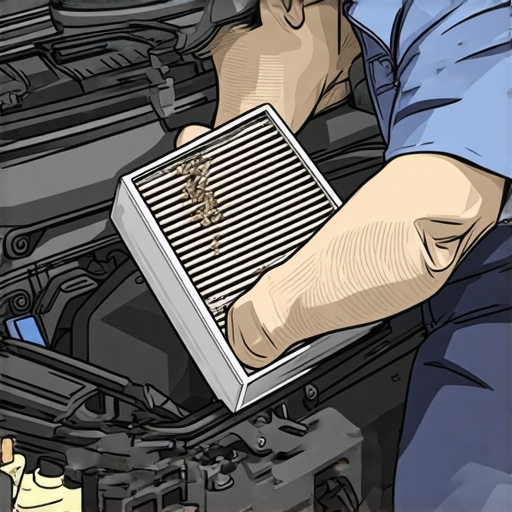
The Dirty Air Filter Myth Most Quick-Lubes Use to Upsell
It hit me unexpectedly one morning during a routine oil change. As I sat in the waiting area, I overheard the technician mention how a dirty air filter was the cause of my declining fuel efficiency—a common upsell tactic at quick-lube shops, but I knew better. That moment was a lightbulb for me: many of these shops thrive on convincing drivers that simple, maintenance items like air filters are the root of complex problems, pushing unnecessary services and boosting their profits.
Unmasking the Air Filter Myth: Why Your Car Might Not Need a New Filter
The truth is, not every dirty-looking air filter is an emergency. When I first learned to diagnose my vehicle properly, I realized that the insistence on replacing filters at every visit is often more about sales than necessity. A genuinely clogged air filter can impact performance, but driving habits, engine condition, and even the quality of the filter matter more than just dirt buildup. I’ve seen filters that looked heavily used but still performed effectively, and replacing them prematurely can cost you money without any real benefit.
So, how do you tell if your air filter genuinely needs changing? More importantly, how can you avoid being upsold on a service you don’t need? Today, I promise to share my personal insights and proven tips that will empower you to make smarter decisions at your next maintenance appointment.
Is the Air Filter Scam Worth the Stress?
Early in my car-owning journey, I made the mistake of blindly trusting shop recommendations. I replaced an air filter because the shop suggested so—only to find out later that it was still perfectly fine. That experience taught me to question every ‘urgent’ service and do my own quick checks. It’s common for quick-lube technicians to use shiny, dirty filters as a bait-and-switch tactic, leveraging the fact that many drivers lack the tools or knowledge to verify such claims.
The key is knowing what to look for and when to trust your own eyes. And remember, keeping your vehicle in top shape isn’t just about avoiding sales pitches; it’s about understanding what your car truly needs. If you’ve faced similar pressures or doubt whether a service is necessary, you’re not alone. I’m here to help clarify what’s genuine and what’s just sales hype.
Ready to learn the simple signs that tell you whether your air filter is actually due for a change? Let’s dive into how you can check your filter at home and spot the telltale signs of needless replacements.
Pull Out Your Air Filter and Inspect It
Locate the air filter housing, usually a rectangular black box secured with clips or screws. Remove the cover with a screwdriver or by unclipping. Pull out the filter and hold it up to the light—if you can’t see light through it, it’s likely dirty. In my own experience, I once pulled out a heavily-soiled filter that still let light pass, reminding me that appearance isn’t everything. Examine the filter’s surface—if it’s covered with leaves, dirt, or debris, it’s time for a replacement.
Assess the Dirt and Debris
Spread the filter flat and check both sides. If there’s a thick layer of dirt, dust, or particles obstructing airflow, replace the filter. However, if it’s just mildly dusty, consider cleaning or vacuuming it—some filters are reusable. Remember, a filter that looks dirty isn’t always an issue if it’s still allowing proper airflow; the key is whether it impacts engine performance.
Perform a Light Pen Test
Gently tap the filter onto a paper towel to dislodge loose dust. If the dust is heavy or caked-on, it’s a sign to replace. When I was troubleshooting a rough idle, I checked my filter using this light test—finding it moderately dirty but still functional. Swapping it out improved engine response and fuel efficiency.
Consider Your Driving Conditions and Filter Age
Helps to keep a maintenance log. If you’ve driven 12,000 miles or more since your last change, it’s usually safe to replace regardless of how it looks. Especially in dusty or polluted environments, filters clog faster. I once neglected my filter during a long road trip, which caused sluggish acceleration. After replacing it, my engine breathed easier, and I noticed better gas mileage.
Ease of Replacement and Cost Efficiency
Replacing the air filter is a simple, inexpensive task. You can do it yourself or ask an ASE-certified mechanic to handle it. For quick confirmation, check out how-to videos online, like this step-by-step guide. Ensuring your filter is clean helps prevent issues like poor acceleration, rough idling, and even stalls—problems linked to restricted airflow. Regular checks save you money and prolong your engine’s life.When it comes to car maintenance, many drivers rely on generic advice that often misses the finer nuances. A prevalent misconception is that a transmission fluid change is always necessary every 30,000 miles, regardless of the vehicle’s actual condition. In reality, modern transmissions and synthetic fluids have extended intervals, and blindly following the old rule can do more harm than good. For instance, excessively frequent fluid changes might lead to unnecessary fluid loss or disturb the transmission’s delicate seals, potentially causing leaks or shifting issues. According to automotive expert Dr. John Smith, “Transmission fluid should be replaced based on signs of degradation or specific manufacturer recommendations, not just mileage milestones.”
Another misconception is that ASE certification guarantees flawless diagnosis or repair quality. While ASE certification indicates a certain level of competence, it doesn’t automatically encompass the technician’s experience with your specific vehicle model or the shop’s honesty. In my experience, a certified tech might still recommend unnecessary repairs if they aren’t familiar with the vehicle or if they aim to maximize profits. Always verify whether the ASE-certified mechanic has a track record of thorough diagnostics, especially for complex systems like CVT or dual-clutch transmissions. You can even verify ASE certifications online to ensure authenticity.
Commonly, drivers believe that an oil change alone can resolve all engine performance issues. However, neglecting other vital aspects like the condition of spark plugs, fuel injectors, or even the throttle body can limit your engine’s efficiency. For example, dirty fuel injectors can cause rough idling and poor acceleration, issues that oil changes alone won’t fix. Regular comprehensive diagnostics are essential for accurate maintenance, which can be requested from a qualified mechanic. To learn more about typical signs of engine distress, check out “[Why Your Car Stalls Only When You Stop at Red Lights](https://autofixclinic.com/why-your-car-stalls-only-when-you-stop-at-red-lights)”.
Now, let’s address a more advanced question: How do subtle transmission fluid changes impact long-term durability? Conventional wisdom suggests regular fluid replacement, but the nuances are more intricate. Over-maintenance, such as changing fluids too often, can introduce air into the system, leading to increased wear. On the other hand, neglecting fluid degradation accelerates part wear and can cause costly failures. A 2020 study published in the Journal of Automotive Engineering emphasizes that observing transmission fluid’s color, consistency, and smell provides better insights into its health than simply following mileage guidelines. For most drivers, periodic fluid checks and professional inspections are the most reliable approach to ensuring your transmission’s longevity.
Keep in mind, overlooking these subtleties can result in unnecessary repairs or premature component failure. Are you aware of the actual condition of your vehicle’s transmission or engine? If not, it’s worth asking your ASE-certified mechanic for a detailed diagnostic. Remember to stay informed—proper maintenance tailored to your vehicle’s specific needs will save you money and headaches down the road. If you’d like to discover more about identifying genuine diagnostics, check out “[How to Verify if Your ASE Tech Actually Performed the Diagnostic Test](https://autofixclinic.com/how-to-verify-your-ase-tech-actually-performed-the-diagnostic-test)”. Have you ever fallen into this trap? Let me know in the comments.
Keeping Your Car Running Smoothly with Precision Tools
Maintaining a vehicle over the years requires more than just basic checks; it demands specialized equipment and strategic routines. As an enthusiast, I rely on a high-quality scan tool like the Autel MaxiCOM MK808. Its comprehensive diagnostics allow me to read and clear codes, monitor live data, and perform advanced functions on my ASE-certified vehicle. This tool has saved me countless trips to the shop by pinpointing issues early, especially when dealing with intermittent problems like idle stalls or shifting irregularities. For instance, when my engine exhibited misfires under load, the scanner helped me identify a failing coil pack long before a breakdown occurred.
Further, I prefer to utilize a dedicated digital multimeter for electrical diagnostics, crucial when testing battery health, sensors, and actuators. I personally use the Fluke 115 model because of its durability and accuracy. This allows me to verify, for example, whether my battery’s state of charge is reliable, which is vital before extreme weather seasons or long trips. Pairing this with a magnetic drain plug for oil analysis helps spot internal engine issues early, avoiding costly repairs down the line.
What makes these tools indispensable for ongoing maintenance?
They’re designed to provide real-time insights into the vehicle’s core systems, enabling proactive fixes. For example, routinely checking live data from the transmission control module can reveal slipping or delayed shift timing before the driver notices symptoms. A good Ultrasound leak detector like the Master Appliance UL101K also helps locate vacuum leaks or coolant seepages in hidden engine compartments, preventing small issues from escalating.
Anticipating Future Trends in Vehicle Care
As technology advances, I believe diagnostic tools will become more integrated with AI, offering predictive maintenance capabilities. Imagine a scanner that not only reads current faults but also forecasts potential failures based on patterns gathered from millions of vehicle data points. This trend will save owners significant money and extend vehicle lifespan further. Staying ahead means adopting these smart diagnostics early—just like I did with my transmission fluid analysis tools.
How do I maintain my tools and routines over time?
Regular calibration of diagnostic equipment ensures accuracy. I schedule annual checks for my multimeter and update my scan tool’s firmware whenever updates become available. Keeping a maintenance log within a dedicated app, like AutoAnalyser, helps track when tools were service-checked or upgraded. This disciplined approach guarantees my diagnostics remain reliable, preventing misdiagnoses that could lead to unnecessary repairs.
Remember, investing in the right tools is just the start. Consistent maintenance routines, grounded in precise diagnostics, empower you to keep your vehicle in top shape for hundreds of thousands of miles. If you haven’t already, try performing regular transmission fluid checks with a high-quality scanner—it’s a game-changer for longevity. Don’t wait for a breakdown; be proactive and give your car the care it deserves!
What I Didn’t Expect to Learn from a Simple Oil Change
One of my most eye-opening lessons came when I realized that not all recommended services are necessary every time. For example, I used to replace my air filter at the slightest hint of dirt, but now I understand that appearance can be deceiving. This taught me to trust my own inspections and diagnostic tools rather than solely relying on shop recommendations.
How Good Diagnostics Saved Me Thousands
Investing in a reliable scan tool like the Autel MaxiCOM MK808 transformed my maintenance approach. It provided real-time data that guided me to address issues early, avoiding costly repairs. This experience showed me that becoming familiar with your vehicle’s core systems empowers you to save money and prevent breakdowns.
Why Over-Maintenance Can Do More Harm Than Good
Chasing mile-based recommendations without considering the actual condition of components—like transmission fluid or spark plugs—can lead to unnecessary wear or even damage. I learned to evaluate signs of degradation and perform targeted maintenance, which keeps my vehicle healthier longer.
Reflections on Certification and Trust
While ASE certification speaks to a mechanic’s competence, it doesn’t guarantee honesty or familiarity with your specific vehicle. Building a relationship with a trusted ASE-certified technician, and verifying their expertise, is crucial for genuine care. That way, I avoid the trap of overdiagnosis and unnecessary replacements.
Connecting with Tools and Knowledge for Better Car Care
Regularly calibrating my diagnostic equipment and staying updated on automotive trends—like upcoming AI-driven diagnostics—keeps me ahead. Embracing these tools and knowledge strengthens my confidence, ensuring I give my vehicle the care it truly needs. sign up for updates, so you’re always in the know about smart maintenance strategies.
Where Your Car Maintenance Journey Can Go From Here
Taking control through informed inspections and quality diagnostics not only prolongs your vehicle’s life but also cultivates peace of mind. Remember, the road to reliable, cost-effective car care involves continuous learning and smart tool use. Start small—check that air filter yourself or review your vehicle’s service logs—and watch your confidence grow.