Why Your Diesel Truck Struggles on the Hottest Yuma Afternoons
Meta Description: Learn why Yuma’s 110°F+ heat causes diesel performance loss and engine failure. Expert tips from Russ Clark on protecting your truck in the desert heat.
Why Your Diesel Truck Struggles on the Hottest Yuma Afternoons
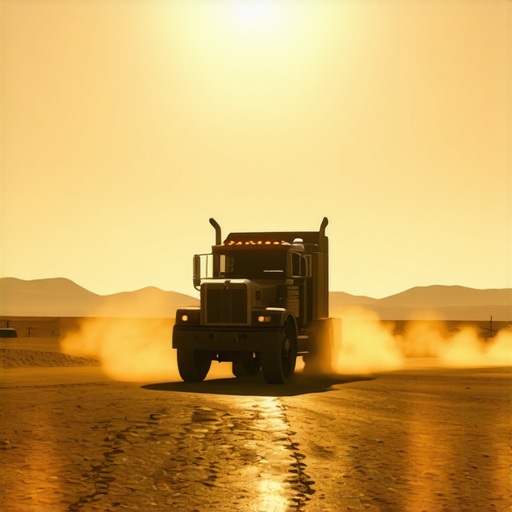
If you live in Yuma, Arizona, you know that summer isn’t just a season; it’s an endurance test for both man and machine. As the General Manager at Precision Automotive Diesel & Transmission, I’ve seen firsthand how our environment treats heavy-duty machinery. Yuma is officially one of the sunniest and hottest places on earth, frequently seeing temperatures soar past 110°F. In fact, data shows that nearby regions often endure upwards of 117 days per year where the mercury climbs over 100°F. This isn’t just “uncomfortable” weather – it is a localized climate extreme that forces even the U.S. Army Yuma Proving Ground to implement strict heat safety protocols for their equipment and personnel.
When you are searching for diesel mechanic near me or a reliable Mechanic Shop Near Me, it’s usually because the desert has finally taken its toll on your rig. Whether you are hauling a trailer to the Colorado River or commuting across the valley, the heat-driven vehicle wear we experience here is unlike anywhere else in the country. “Standard” maintenance schedules found in your owner’s manual simply aren’t enough for the desert southwest. To keep your truck running, you need a diesel repair shop that understands the unique stresses of Yuma. At the best auto repair shops yuma az has to offer, we don’t just change oil; we perform surgery on systems that are operating at the very edge of their physical limits. Finding quality auto repair near me means finding a team that respects the 115°F reality of a Yuma afternoon.
The Physics of Heat: Why Diesel Engines Hate 115°F Air
To understand why your truck feels sluggish when the bank sign says 118°F, we have to look at the physics of air density. Diesel engines are essentially giant air pumps. They rely on compressing oxygen to create combustion. However, hot air is significantly less dense than cool air. When the ambient temperature hits those triple digits, there are fewer oxygen molecules per cubic foot of air entering your intake.
This creates a cascade of performance issues. Your turbocharger, designed to cram as much air as possible into the cylinders, has to work significantly harder to achieve the same boost levels. This leads to a phenomenon known as “Thermal Throttling.” The Engine Control Unit (ECU) detects the high intake air temperatures and may actually de-rate the engine’s power output to prevent catastrophic damage. This is why your truck might feel like it’s lost 20% of its “get-up-and-go” during a July afternoon.
Furthermore, the intercooler – which is responsible for cooling the compressed air from the turbo before it enters the engine – becomes less effective. When the “cooling” air passing through the intercooler is already 115°F, it can’t pull much heat out of the charged air. This results in higher cylinder temperatures and increased stress on every internal component. When you search for a diesel mechanic near me, you need someone who can verify that your turbo and intercooler system are operating at peak efficiency to combat these density losses.
The Cooling System Under Siege
In the world of thermodynamics, we talk about “Delta-T” – the difference between the temperature of the object you’re trying to cool and the temperature of the cooling medium (in this case, the outside air). In Yuma, the Delta-T shrinks dangerously. If your engine is designed to run at 200°F and it’s 70°F outside, you have a 130-degree window to shed heat. When it’s 115°F outside, that window shrinks to just 85 degrees. Your radiator, fan clutch, and thermostat are suddenly under a state of siege.
This is why we see a massive spike in the “Summer Breakdown Index” in the southwest. The cooling system must work perfectly to prevent a total meltdown. If your fan clutch is even slightly worn, it won’t engage with the force necessary to pull air through the radiator at low speeds. This is often Why your oil pressure drops when the engine gets hot; as the engine temperature climbs, the oil thins out beyond its intended viscosity, leading to lower pressure and potential bearing wear.
In Yuma, we also deal with “Heat Soak.” This happens when you shut off your truck after a long drive. With no coolant flowing and no fan turning, the heat trapped in the iron block and head migrates outward, baking the rubber hoses, plastic connectors, and electrical wiring. Over time, this makes everything under the hood brittle and prone to failure.
Fuel Density and Lubrication Challenges
Most drivers don’t realize that diesel fuel serves two purposes: it’s a power source, and it’s a coolant for the fuel injectors. Diesel fuel is circulated constantly, with excess fuel returning to the tank. On a hot Yuma day, the fuel in your tank can easily reach 100°F or more just sitting there. As this hot fuel moves through the system, its ability to lubricate the high-pressure fuel pump and cool the injectors is compromised.
Hot fuel is also less dense, which can lead to a slight drop in fuel economy and power. But the bigger concern is the lubrication. When fuel and oil get too hot, they lose their film strength. This is closely related to The Reason Your Transmission Fluid Smells Like Burnt Toast – heat causes a chemical breakdown in the fluids that protect your most expensive components. If you are looking for a Mechanic Shop Near Me, ensure they are checking the health of your fluids, not just the levels.
In our climate, we often recommend moving to a slightly higher viscosity oil or a high-quality synthetic that can withstand higher operating temperatures without breaking down. Standard 10W-30 might work in the Midwest, but in Yuma, your engine needs the extra protection of a robust 15W-40 or a specialized synthetic blend to ensure the metal-on-metal components stay separated when the heat is on.
The DPF and Emissions System: A Hidden Victim
Modern diesel trucks are equipped with complex emissions systems, including the Diesel Particulate Filter (DPF). These systems are highly sensitive to temperature. Paradoxically, while the DPF needs heat to perform a “regen” (burning off trapped soot), excessive ambient heat can actually cause the system to malfunction.
When the engine is struggling with air density and running hotter than normal, it may produce more soot than usual. This leads to more frequent regeneration cycles. If you’ve noticed your truck is constantly in “regen” mode during the summer, it’s a sign that the engine is struggling to maintain an efficient burn. This is a common reason Why your fleet’s diesel particulate filter keeps clogging up.
The heat also stresses the sensors that monitor the DPF. Exhaust Gas Temperature (EGT) sensors are already exposed to extreme heat, but when you add 115°F ambient air and a heavy load, those sensors can reach their thermal limits and fail, sending your truck into “limp mode.” Finding a qualified diesel repair shop is essential for diagnosing whether a DPF issue is a hardware failure or simply a symptom of the engine being overwhelmed by the desert environment.
Transmission Stress and Towing in the Desert
Yuma is a gateway to outdoor recreation. Between hauling boats to the Colorado River and taking trailers up the grades toward San Diego or Phoenix, our transmissions take a beating. The transmission cooler is usually located right in front of the radiator, meaning it’s fighting for the same limited supply of “cool” 115°F air.
Transmission fluid is the lifeblood of your gearbox, but it is incredibly sensitive to heat. For every 20-degree increase in temperature above 200°F, the life of the fluid is cut in half. If you are towing, it is very easy for your trans temps to spike into the 230s or 240s. This is Why Your Transmission Overheats While Towing Up Small Grades even when the grade doesn’t seem that steep. The ambient heat leaves no “overhead” for the cooling system to handle the extra load of towing.
At Precision Automotive, we often see transmissions that have been literally cooked because the owner didn’t realize how quickly the fluid degrades in Yuma. Routine fluid exchanges are the cheapest insurance policy you can buy against a $5,000 transmission rebuild. If your fluid is dark or has a scorched odor, it’s already too late – the damage is being done.
How to Protect Your Rig: The Russ Clark Checklist
Surviving a Yuma summer requires a proactive approach. You cannot wait for a warning light to appear on your dash. By the time the light comes on, the metal has already expanded, and the seals have already begun to harden. Here is my personal checklist for keeping your diesel rig alive in the desert:
- Coolant Flush: Don’t just top it off. Ensure the pH balance is correct and the mixture is appropriate for high-heat dissipation. Old coolant loses its anti-corrosive properties and can lead to scale buildup in the radiator.
- Fan Clutch Inspection: If you can’t hear your fan “roar” when the engine gets hot, your clutch is likely failing. This is a critical component for Yuma drivers.
- Oil Viscosity: Talk to your mechanic about using a high-quality synthetic oil designed for high-temperature stability.
- Battery Test: Heat kills batteries faster than cold does. The chemical reaction inside the battery accelerates in 110°F heat, leading to internal corrosion.
- ASE Certification Matters: Diesel engines are complex. You need to know What Does an ASE Certification Mean for Your Car’s Maintenance? It means the technician has the verified knowledge to handle these high-stakes repairs.
When looking for auto repair shops yuma az, look for shops that employ ASE certified technicians who understand the specific nuances of the Duramax, Powerstroke, and Cummins platforms in desert conditions.
Conclusion: Yuma is the Ultimate Torture Test
Yuma isn’t just a place where it’s “hot” – it’s a place that challenges the very engineering of your diesel truck. From the reduced air density that starves your turbo to the shrinking Delta-T that cripples your cooling system, the desert is constantly trying to wear your vehicle down. But with the right maintenance and an understanding of the physics at play, your truck can survive and thrive even in the harshest conditions.
Don’t wait until you’re stranded on the side of I-10 with a steaming hood and a ruined vacation. Bring your rig into a shop that knows the local terrain. Whether you need a simple fluid check or a complex DPF diagnosis, we are here to help. Visit us at Precision Automotive Diesel & Transmission before the next heatwave hits and ensure your truck is ready for whatever the Yuma sun throws at it.