Why your car only acts up on the highway and how a Live Drive finds the cause
Why Your Car Only Acts Up on the Highway and How a Live Drive Finds the Cause
There is perhaps nothing more frustrating for a vehicle owner than a “ghost” problem. You know the scenario: your car idles perfectly in the driveway, crawls through suburban streets without a hitch, and starts up every morning like a dream. But the moment you merge onto the interstate and hit 70 MPH, the nightmare begins. The engine stutters, a faint vibration develops in the steering wheel, or the transmission hesitates during a high-speed overtake. You take it to a shop, they hook it up to a computer while it’s parked, and… nothing. No codes, no errors, no visible leaks.
This phenomenon occurs because many engine glitches stay hidden until the car is under load. When a vehicle is stationary, the demands on the fuel system, cooling system, and electrical sensors are minimal. To catch these elusive issues, professional technicians utilize a diagnostic technique known as a “Live Drive.” By monitoring data in real-time while the vehicle is actually performing on the road, mechanics can see exactly what happens when the “ghost” appears. As we will explore, this concept isn’t just limited to the garage; it is the exact same logic required to fix a stalling Google Business Profile.
The Mystery of the Highway Glitch: Why Load Matters
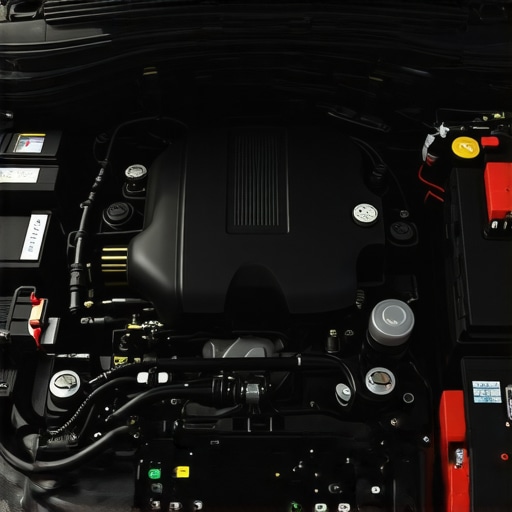
Physics changes when you move from a standstill to highway speeds. At 65 or 70 MPH, your engine is working significantly harder to overcome aerodynamic drag and maintain momentum. This increased load creates higher internal temperatures and demands a much more precise air-to-fuel ratio. Often, a component like a fuel pump or a Mass Airflow (MAF) sensor might be 90% functional – enough to handle city driving, but not enough to sustain the high-volume delivery required at high RPMs. This is often why your car feels like it is vibrating specifically at sixty miles per hour.
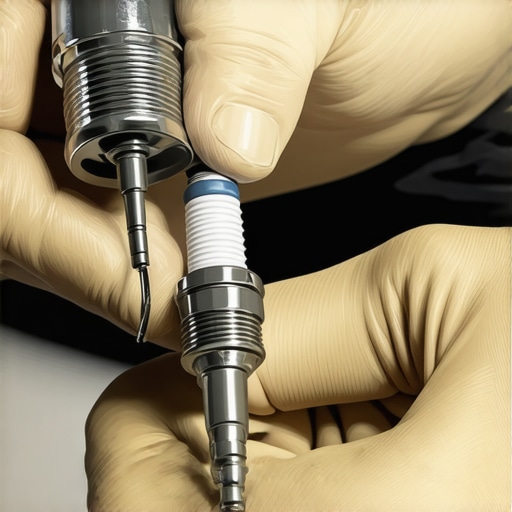
Intermittent engine hesitation at high speeds is frequently caused by “lazy” sensors. An Oxygen sensor might respond quickly enough for low-speed adjustments but fail to keep up with the rapid-fire data processing needed during highway acceleration. Similarly, ignition coils can develop hairline cracks that only begin to “arc” (leak electricity) when the engine bay reaches the high thermal thresholds associated with prolonged highway travel. Without the stress of the highway, these parts appear perfectly healthy. They are the ultimate “intermittent” problems that traditional, stationary diagnostics simply cannot recreate.
Furthermore, the transmission plays a huge role in highway performance. Overdrive gears and torque converter lock-up solenoids only engage at specific speeds. If a solenoid is failing intermittently, you won’t feel it until you’ve been cruising for ten minutes. This is why a static scan in a service bay is often a waste of time for these specific symptoms. You need to put the vehicle in its “natural habitat” – the open road – to see the data points deviate from the norm under pressure.
What is a Mechanic’s “Live Drive”?
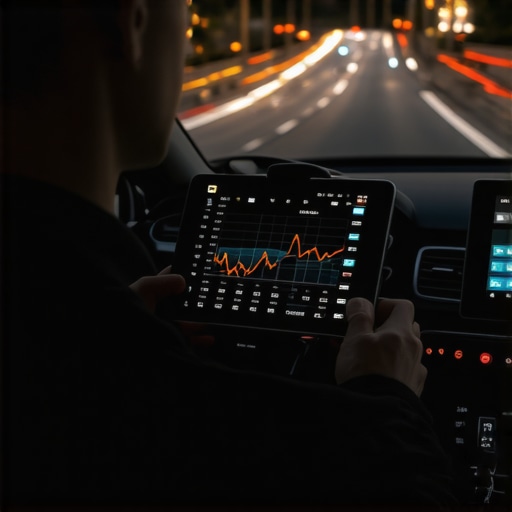
A “Live Drive” diagnostic is the process of a technician connecting a high-end OBD-II data logger or scanner to the vehicle’s computer and driving it under the exact conditions where the fault occurs. It is about capturing “real-time” telemetry rather than relying on stored “freeze frame” data, which may be incomplete or misleading. During this process, the technician watches “PIDs” (Parameter IDs) like fuel trim, spark advance, and transmission fluid pressure as they happen. This is how your mechanic uses a Live Drive to catch ghost problems in the fuel system that would otherwise remain invisible.
The goal is to catch the “glitch” in the act. For example, if the car stutters at 70 MPH, the technician can see if the fuel pressure drops for a split second or if a specific cylinder reports a misfire that didn’t trigger a permanent Check Engine Light. Identifying the specific engine glitches that stay hidden until you perform a Live Drive diagnostic requires a deep understanding of how these systems interact under load. It’s the difference between looking at a photo of a runner and watching a video of them running a marathon; the video tells you where the limp starts.
This level of diagnostic rigor is essential for modern vehicles, which are essentially rolling computers. When you are choosing the right car service for your vehicle’s needs, you should always ask if they perform road-test diagnostics for intermittent issues. Often, why a Live Drive is the only way to catch intermittent engine hesitations is because it provides the context that the engine control unit (ECU) needs to reveal its secrets. Even a highly skilled tech needs to see the intermittent transmission shudder that only surfaces during a Live Drive to accurately diagnose a failing torque converter rather than guessing and replacing expensive parts unnecessarily.
The Digital Highway: Why Your GMB Profile Stalls in “High Traffic”
Now, let’s pivot to a different kind of highway: the digital landscape of local search. Just as a car can look great in a driveway but fail on the interstate, a Google Business Profile (GMB) can look “optimized” on paper but fail to rank when the “traffic” (search volume) gets heavy. You might have filled out your description, added photos, and collected a few reviews, yet when a potential customer searches for a high-competition keyword, your business is nowhere to be found. You are stuck in the slow lane while your competitors zoom past.
In the world of digital marketing, a basic SEO audit is like a stationary diagnostic in a shop. It checks the basics – meta tags, keywords, and site speed – but it doesn’t account for how users actually interact with your brand in the real world. To break through the noise, you need seo tools for agencies that can simulate the “load” of a high-traffic environment. If your profile isn’t getting the right signals, Google assumes your “engine” isn’t strong enough for the first page. This is where a gmb ranking tool becomes the digital equivalent of a mechanic’s scanner, showing you exactly where your profile is losing power.
Small business owners often wonder why a competitor with fewer reviews is outranking them. The answer usually lies in the “live” interaction signals that Google’s algorithm prioritizes. Google Business Profile optimization is no longer just about static data; it’s about proving to the algorithm that your business is a “live” and relevant destination for users. Without the right tools, you’re just idling in the driveway while the rest of the world is on the highway.
Introducing the SEO Live Drive: CTR Manipulation Explained
Just as a car needs a real-world test to prove its reliability, a GMB profile needs “real-world” interaction signals to prove its relevance to Google. This is achieved through what is known as Click-Through Rate (CTR) manipulation. But this isn’t about “faking” clicks; it’s about providing the “signals of life” that Google’s modern algorithms, specifically NavBoost and Glue, are looking for. According to Google’s own Pandu Nayak, NavBoost and Glue act as “re-rankers” that sit on top of the standard search results, prioritizing listings based on how users actually interact with them.
Google doesn’t just look at raw CTR; it looks at “click probability.” This means Google compares your actual clicks to the *expected* rate for your specific query, position, and device. If your business is expected to get 5% of clicks but only gets 2%, Google’s “diagnostic” says your profile is failing under load. To fix this, sophisticated marketers use a ctr manipulation tool to send high-quality, geographically relevant signals to their profiles. This “SEO Live Drive” demonstrates to Google that users are actively choosing your business over others.
Effective ctr manipulation software mimics authentic user behavior. It’s not just about clicking a link; it’s about the journey – searching for a branded keyword, viewing photos, checking directions, and spending time on the profile. These signals tell Google that your business is a high-performance destination. When you increase your branded keyword volume, you are essentially “tuning” your digital engine to handle the high-speed demands of the Google Maps “highway.”
How Kraken and Mad Maxx AI Find the Cause of Ranking Drops
When a car’s performance drops, you use a scanner. When a GMB ranking drops, you use a gmb ranking tool like Kraken. Kraken allows agencies to visualize where their clients are ranking across a local grid, identifying exactly where the “stutter” occurs in the geographic “highway.” If you rank well in a 1-mile radius but drop off at 3 miles, you have a signal strength problem. You need to inject “live” signals into those dead zones to expand your reach.
This is where tools like Mad Maxx AI and the Live Drive feature come into play. These tools simulate the authentic movement and interaction of users within specific geofenced areas. By simulating a “Live Drive” of users interacting with your GMB profile from the very locations where you are currently “stalling,” you provide Google with the proof it needs to move you up the rankings. It’s the digital equivalent of taking the car out to the highway to prove the fuel pump can handle the pressure.
These advanced tools focus on GMB ranking signals that static SEO ignores. By increasing branded traffic and engagement, you are signaling to Google that your brand is a “NavBoost” favorite. This isn’t just about tricking an algorithm; it’s about providing the behavioral data that Google’s AI-driven search engine now requires to determine authority. In a world where every business has “optimized” their text, the “Live Drive” signals are what separate the winners from the also-rans.
Why Agencies are Moving Toward “Live” Diagnostics
The era of static SEO is effectively over. In the past, an agency could send a monthly report showing keyword densities and backlink counts, and that was enough. But today, Google’s algorithm is too dynamic for that. Modern seo tools for agencies must provide dynamic, real-time results that reflect the “live” nature of the web. This is why more agencies are moving toward “Live Drive” methodologies for their clients.
If you are a business owner, you should ensure your marketing partner understands the nuances of what does an ASE certification mean for your car’s maintenance – which is to say, they should have the “certification” and tools for high-level digital diagnostics. Just as you wouldn’t trust a mechanic who doesn’t own a scan tool, you shouldn’t trust an SEO agency that doesn’t utilize a seovipertools.com suite to monitor and manipulate real-world signals. Static audits are the “idling in the driveway” of the marketing world; they don’t tell you how you’ll perform when the competition gets fierce.
The shift toward “live” diagnostics is driven by the realization that “ghost problems” in SEO – like a sudden drop in rankings for no apparent reason – are usually caused by a lack of engagement signals. By utilizing seo tools for agencies, professionals can identify these “stalls” before they become catastrophic, keeping their clients in the fast lane of Google’s search results.
Conclusion: Don’t Let Your Business Stall in the Slow Lane
Whether it is a fuel pump failing at 60 MPH or a GMB profile stuck on page 4 of the search results, the solution is the same: you need a Live Drive to see the truth. Intermittent problems are the hardest to solve because they hide from standard tests. By putting your vehicle – or your business – under real-world “load,” you can identify the weak points and fix them before they lead to a total breakdown.
Don’t settle for “it looks fine in the shop” or “your website looks good to me.” Demand a diagnostic that looks at the data while the engine is actually running. Check your vehicle’s health with a professional technician who understands the value of a road test, and check your digital presence with tools that understand the value of a “Live Drive.” Take control of your performance today and ensure you’re always ready for the highway.