The high-pitched whistle in your engine that stops when you tap the brakes
I remember pulling into my driveway three years ago, feeling like my car was auditioning for a role as a teakettle. Every time I accelerated, a piercing high-pitched whistle echoed off the neighbor’s garage. I was convinced my transmission was toast. I even started looking up transmission troubles thinking I was in for a four-figure repair bill. But then, a weird thing happened. I tapped the brake pedal to slow down for a squirrel, and the sound vanished instantly. Lifted my foot? The whistle returned. It was maddening, confusing, and—as it turns out—a classic sign of a vacuum leak hiding in plain sight.
The Phantom Whistle That Disappears Under Pressure
If you’re hearing that tea-kettle hiss right now, you aren’t crazy. You’re likely dealing with a vacuum leak, specifically one tied to your power brake booster. I made the massive mistake of replacing my serpentine belt and three pulleys before I finally bothered to identify an engine vacuum leak with a simple piece of hose. I wasted a whole Saturday and sixty bucks because I didn’t understand how the brake system and the engine’s air intake were “talking” to each other. We’re going to stop that guesswork today. I’ll show you how to diagnose this without a fancy shop bill, ensuring your car service is actually targeting the right part.
Can a simple noise really lead to a total breakdown?
It’s easy to ignore a sound that goes away when you stop, but that’s the trap. According to the Car Care Council, unaddressed vacuum leaks can cause your engine to run lean, which eventually burns out your spark plugs and can even lead to catalytic converter issues over time. That’s a high price for a whistle. Beyond the engine, if that whistle is coming from the booster, you’re slowly losing the power in your power brakes. Have you ever noticed why your brake pedal feels rock hard on the first start of the day? That’s your first clue that the internal diaphragm is failing. When I first started wrenching, I didn’t realize that understanding what an ASE certification means for your car’s maintenance involves knowing these intricate relationships between vacuum pressure and braking force. I just thought brakes stop, engine goes. Simple, right? Wrong. If your engine is whistling but goes quiet the second you touch the pedal, your engine is literally sucking air through a hole in your brake booster’s diaphragm. Have you ever had a noise that seemed to play hide-and-seek with you like this? Let me know in the comments. Now, let’s get into the nitty-gritty of how to prove it’s the booster and not something more expensive.The first thing you have to do is separate the engine’s air intake from the braking system to see who is actually at fault. Think of your engine as a giant, thirsty vacuum cleaner; it is always trying to suck air in. The brake booster is like a large, round accessory drum that uses that suction to help you press the pedal with ease. When there is a hole in the internal diaphragm, the engine starts sucking air through the pedal assembly instead of the air filter. This is why you get that piercing tea-kettle whistle that vanishes when you apply pressure. To prove it, you need to starve the leak. Locate the thick rubber hose running from the back of your engine manifold to the booster drum.
Pinch the Hose to Hear the Truth
I remember doing this on my old 2008 sedan when I was first learning the ropes. I was so eager to find the leak that I grabbed a pair of heavy-duty pliers and clamped down hard on the main vacuum line. Snap. The hose didn’t just pinch; it shattered into three pieces. It was so heat-soaked and brittle from years of neglected maintenance that the rubber had basically turned into charcoal. I ended up having to walk three miles to the parts store. Lesson learned: always flex the hose gently first to see if it is still pliable. If the hose is soft, start the engine and wait for the whistle. While it’s whistling, use your pliers to firmly pinch that hose shut. If the noise stops instantly, you have found your culprit. This kind of logical deduction is exactly what they teach in diagnostic practice questions for mechanics because it isolates the problem without throwing money at new parts. 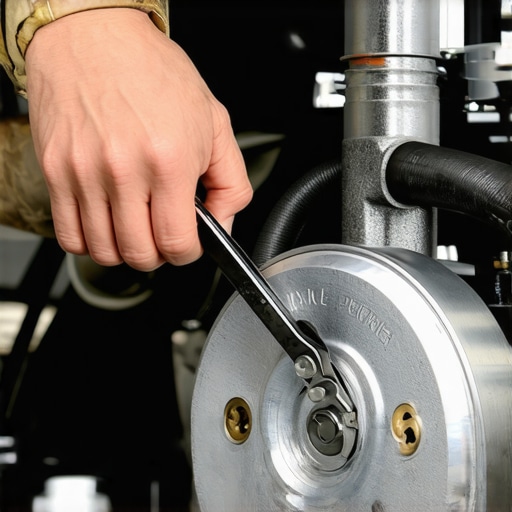
Why the Check Valve is Your Easiest Fix
Before you spend hundreds on a full booster replacement, check the little plastic 90-degree elbow where the hose enters the drum. That is your check valve. Its job is to keep vacuum inside the booster even when the engine is off. If it is cracked or the internal seal has failed, it will whistle like a bird. Pull it out—it should just pop out of a rubber grommet—and try to blow through it. You should only be able to blow air through it in one direction. If you can blow both ways, or if it is clogged with oily residue, that is your problem. Sometimes, drivers think they have transmission troubles because the car stumbles or idles roughly when they brake, but it is actually just the engine leaning out because of this tiny, ten-dollar plastic valve.
The System-Wide Impact of a Tiny Leak
It is tempting to think a noise is just a noise, but vacuum and fluids are the lifeblood of your car’s longevity. Just as regular oil changes extend your car’s lifespan by preventing friction, maintaining proper vacuum pressure prevents your engine from working too hard to compensate for air it did not expect. If you ignore the leak, your fuel trim goes out of balance. It is like trying to drink through a straw with a hole in the side; you have to suck twice as hard to get the same amount of liquid. You might also notice other weird symptoms, like transmission fluid levels that seem off or shifts that feel clunky because some older cars use vacuum modulators to time their gears. If the vacuum is weak, the transmission gets confused. This is why a thorough car service should always include a quick visual check of your vacuum lines. Understanding these intricate links is a core part of what an ASE certification means for a professional technician; they are trained to look at the entire system, not just the part that is making the noise.I’ve seen it a hundred times: a frantic driver pulls into a shop convinced their gears are shredding because of a high-pitched whine. The common wisdom in many online forums is that any noise tied to acceleration equals transmission troubles. But here is the nuance that separates a parts-changer from a real technician: a vacuum leak doesn’t just hiss; it can actually change the frequency of other mechanical vibrations. When I was studying for my exams, I realized that what an ASE certification means for your car’s maintenance is the ability to see how a hole in a $2 hose can cause a computer to spike transmission line pressure, making the whole car shudder.
Is your transmission slip actually a vacuum-induced electronic glitch?
It sounds like a stretch, but it’s a reality for many modern vehicles. According to the Society of Automotive Engineers (SAE), manifold pressure data is a primary input for the transmission control module. If a leak exists, the engine’s load calculation is wrong. This leads to harsh shifts or searching for gears. I’ve watched people spend $3,000 on a rebuild when they actually needed to identify an engine vacuum leak first. The oops factor here is huge—specifically the trap of using stop-leak chemicals. While it’s tempting to pour a bottle of magic juice into your reservoir, the risk of using stop-leak additives is that they often clog the small passages in your heater core or radiator before they ever touch the actual leak. It’s a temporary band-aid that creates a permanent headache. 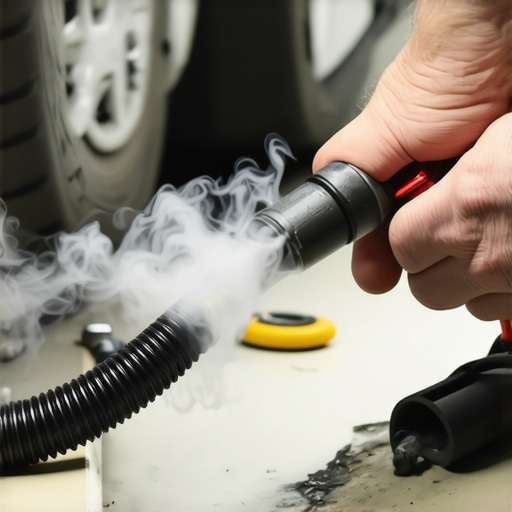 Even something as routine as an oil change has hidden traps. Everyone tells you to just go for the cheapest special, but they ignore the hidden cost of using non-OEM oil filters on your turbo. Cheap filters often lack a proper anti-drainback valve, meaning your engine starts dry every single morning, slowly eating away at your bearings. This is why regular oil changes extend your car’s lifespan only if the quality of the parts matches the frequency of the service. You have to look past the surface level. Have you ever fallen into this trap of fixing the symptom instead of the source? Let me know in the comments. If you’re still unsure where to start, choosing the right car service involves finding a shop that performs a live drive diagnostic. It’s the only way to catch the intermittent transmission shudder that hides when the car is up on a lift. Don’t let a simple whistle turn into a mechanical nightmare just because you missed the nuances.If you really want to stop being the victim of every weird rattle or whistle, you have to upgrade your toolkit. I’m not just talking about shiny wrenches; I’m talking about diagnostic intelligence. I’ve found that the single biggest difference between a DIYer who gets lucky and a pro is the use of live data. When I’m chasing down those elusive transmission troubles, I don’t just guess. I use a scanner that can graph the pressure solenoid cycles in real-time. This is where what an ASE certification means really shines—it’s the discipline to trust the data over your gut feeling.
Get a Tool That Actually Talks to Your Transmission
To truly understand what’s happening under the hood, you need a bidirectional scan tool. Most people buy the twenty-dollar dongles that just read codes, but those won’t help you when the intermittent transmission shudder happens. You need to see the ‘Commanded Gear’ versus the ‘Actual Gear.’ For years, I struggled with steering alignment issues after suspension work until I realized why Viper tools are the only way to reset your car’s steering angle sensor correctly. Using the right specialized equipment saves you from the ‘parts cannon’ approach where you just keep firing new components at a problem until it disappears.
How can I maintain my vehicle’s efficiency over several years?
Longevity isn’t about one big repair; it’s about the cumulative effect of small, precise actions. You need to master the secret to keeping your engine clean internally between changes. This involves more than just the oil; it’s about ensuring your PCV system is clear and your filters are high-quality. I’ve seen 300,000-mile engines that look brand new inside because the owner understood why regular oil changes extend your car’s lifespan and didn’t cut corners on the additive packages in their synthetic oil. For those managing multiple vehicles, how to get more miles out of your fleet’s transmission comes down to a rigid schedule—something I call the strict discipline of the Dominican order for maintenance. 
Look Beyond the Surface with Live Data
I predict that in the very near future, we will see ‘predictive diagnostics’ becoming the norm, where your car alerts your phone to a failing vacuum seal weeks before a whistle even develops. Until then, we rely on technical specs. For instance, the Gates Technical Bulletin on EPDM belt wear (TB001) notes that modern belts don’t crack like old ones; they lose material in the grooves, which you can only find with a specific wear gauge. This is why choosing the right car service is so vital; you want a shop that uses these precision measurements. If you’re serious about your car’s health, I challenge you to try a ‘live data log’ next time you drive. Watch your short-term fuel trims; if they spike when you’re idling but normalize when you rev, you’ve just confirmed that vacuum leak without turning a single bolt. If you find something confusing in your data, feel free to contact us or leave a comment below—I love geeking out over fuel trim numbers.
What I Learned After Wasting Four Hundred Dollars on the Wrong Parts
Looking back, my biggest diagnostic failure wasn’t a lack of tools; it was a lack of perspective. I spent a whole weekend chasing transmission troubles because I assumed a shifting glitch had to be internal. I learned the hard way that your car is a single, interconnected organism. A leak in the braking system is also a leak in the engine’s breathing system, which ultimately confuses the computer’s gear-change logic. If I had simply slowed down and used the ‘pinch test’ on that vacuum line first, I could have saved enough money for a year’s worth of premium synthetic oil. Another vital realization was that you should never trust a ‘code’ blindly; a sensor might report a fault, but the sensor is rarely the villain—it is usually just the messenger. This is why you must learn how to tell if your transmission slip is mechanical or electronic before you ever open your wallet. Finally, I’ve realized that sound is your car’s most honest language; if a whistle disappears when you brake, it is telling you exactly where the hole is. Don’t ignore the conversation your car is trying to have with you.
Building a Smarter Garage Toolbox
To move beyond simple guesswork, you need to rely on high-quality data and professional standards. I personally trust the guidelines set by the National Institute for Automotive Service Excellence because understanding what an ASE certification means for your car’s maintenance helps you distinguish between a ‘parts-changer’ and a diagnostic expert. For your own toolkit, I highly recommend investing in a dedicated vacuum gauge and a bidirectional scan tool; these are the only ways to see ‘invisible’ problems like a failing booster diaphragm or a sticking solenoid. Beyond tools, the best resource you have is a consistent maintenance log. Knowing exactly when you last performed a flush or a filter swap prevents you from being upsold on unnecessary work. If you find yourself in over your head, choosing the right car service means looking for a shop that values transparency and uses live-drive diagnostics to verify every claim.
Put an End to the Mechanical Mystery
You don’t have to be a master mechanic to take control of your vehicle’s health. By paying attention to those subtle whistles and ensuring that regular oil changes extend your car’s lifespan through proper sealing and lubrication, you are already ahead of 90% of drivers on the road. Don’t let a small vacuum leak turn into a major repair bill. Trust your senses, use the right tools, and never be afraid to dive under the hood to see for yourself. If you ever feel stuck or need a second opinion on a weird noise, feel free to contact us. Have you ever had a simple $10 part fix a problem that felt like a multi-thousand-dollar disaster? Let me know in the comments below!