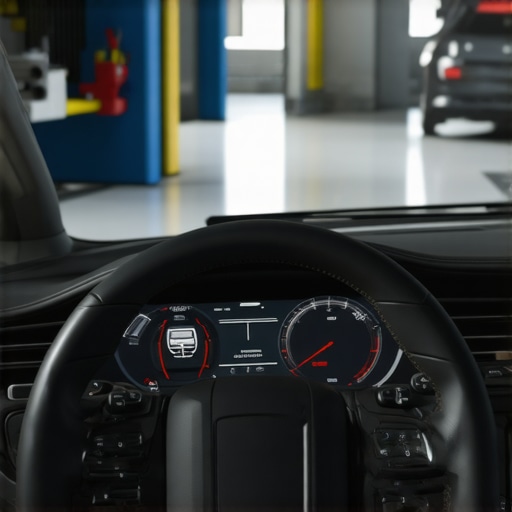
The reason your lane-keep assist acts glitchy after a standard wheel alignment
The Reason Your Lane-Keep Assist Acts Glitchy After a Standard Wheel Alignment
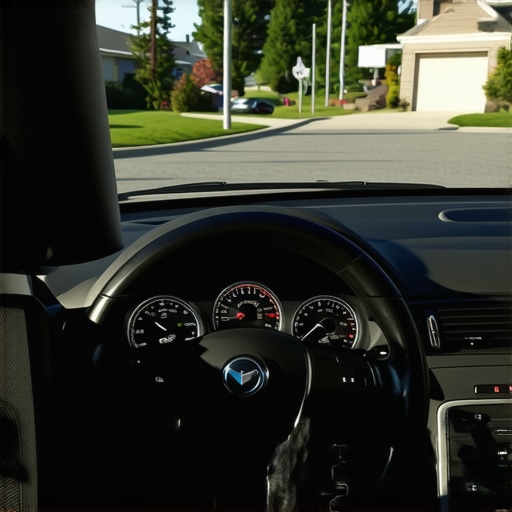
You’ve likely experienced the frustration: your car was pulling slightly to the right, so you took it in for a wheel alignment. You picked it up, the steering wheel was straight, and the pull was gone. But as soon as you hit the highway and engaged your Lane Keep Assist (LKA), things got weird. Instead of a smooth, centered ride, your car started “ping-ponging” between the lines, or perhaps it jerked the wheel toward an exit ramp you had no intention of taking. You might even see a “System Unavailable” message pop up on your dashboard for no apparent reason.
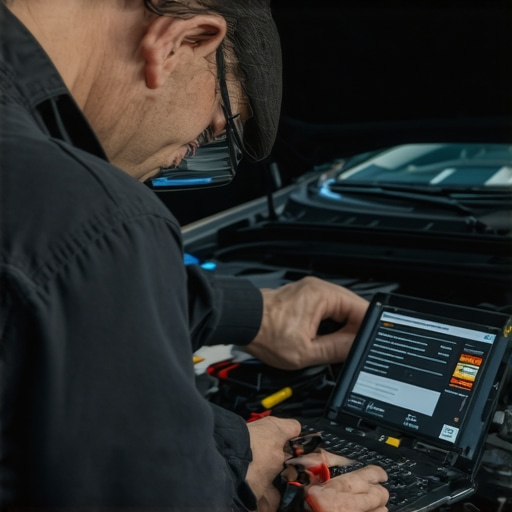
I’m Kevin Cortez, an ADAS specialist at Protech Automotive Solutions. I spend my days troubleshooting exactly these scenarios. The reality is that modern vehicles are no longer just mechanical machines; they are sophisticated “computers on wheels.” When you perform a mechanical adjustment like an alignment without a corresponding digital update – specifically an ADAS calibration – you create a communication breakdown between the car’s physical wheels and its digital eyes. If you are searching for a mechanic near me to fix these glitches, it is vital to understand that a standard alignment is only half the job in the modern era of automotive repair.
Understanding the “Thrust Angle”: The Invisible Link
To understand why your LKA is acting up, we have to look at a concept called the “thrust angle.” In the world of wheel alignment, the thrust angle is the direction the rear wheels are pointing in relation to the center line of the vehicle. Ideally, the rear wheels should be perfectly perpendicular to the axles and parallel to each other, pushing the car straight down the road. However, due to wear and tear or road hazards, this angle can shift.
When you take your car in for an alignment near me, the technician adjusts the suspension components to bring the wheels back into specification. This changes the thrust line. Here is the catch: your Advanced Driver Assistance Systems (ADAS) – including your front-facing camera and radar – use the vehicle’s thrust line as their primary reference point. They assume that “straight ahead” for the wheels is “straight ahead” for the sensors.
Research data and technical bulletins from organizations like I-CAR emphasize that even a tiny change in thrust angle during a mechanical alignment changes where the car is actually “aimed.” If the camera is still programmed to believe the old thrust line is the true center, but the wheels are now pushing the car along a new path, the ADAS will overcorrect. It “sees” the lane markers correctly, but its internal map of where the car is pointing is now skewed. This 0.1 or 0.2-degree difference might feel negligible to a human driver, but to a computer calculating trajectories at 70 mph, it is a massive discrepancy.
Why a “Standard” Alignment Isn’t Enough Anymore
For decades, a wheel alignment was a purely mechanical process. A technician would put the car on a rack, attach sensors to the wheels, and turn some wrenches until the numbers on the screen turned green. While this still happens, the definition of a “complete” service has changed. Many a local auto repair shop may have the hardware to straighten your wheels, but they often lack the specialized targets, level floor space, and diagnostic software required for a proper ADAS calibration.
The problem is one of “sensor orientation.” Your car’s forward-looking camera, usually mounted behind the rearview mirror, is responsible for identifying lane lines. If the alignment changes the vehicle’s frame of reference, the camera needs to be “re-taught” what straight looks like. Without this digital handshake, the mechanical and electronic systems are essentially speaking two different languages. A “standard” alignment fixes the tires’ contact with the road but leaves the “brain” of the car confused about its orientation in space. This is why it is essential to seek out an auto repair shop that understands the integrated nature of modern chassis and safety electronics.
Symptoms of a Misaligned ADAS System
When the mechanical alignment and the digital calibration are out of sync, the symptoms are often subtle at first but become glaringly obvious under specific driving conditions. As an ADAS specialist, I frequently hear clients describe these “glitchy” behaviors:
- Ping-ponging: This is the most common symptom. The car drifts toward the left lane marker, the LKA catches it and jerks it back, but it overshoots the center and drifts toward the right marker. The car “bounces” between the lines because the camera’s “center” doesn’t match the wheels’ “center.”
- Phantom Braking: This occurs when the front-facing radar is angled slightly off-center due to an alignment shift. The radar may “see” a vehicle in the adjacent lane and interpret it as being directly in your path, causing the car to slam on the brakes unexpectedly.
- Delayed or Missed Warnings: You might notice that the Lane Departure Warning only triggers after you have already crossed the line, or perhaps it doesn’t trigger at all when you drift to one side, but is hyper-sensitive on the other.
- System Disengagement: Modern ECUs (Electronic Control Units) are designed to cross-check data. If the steering angle sensor reports the wheel is straight, but the camera sees the car is veering, the computer may realize the data doesn’t add up and shut the system down entirely, displaying a warning light.
It is worth noting that these symptoms are distinct from mechanical issues. For instance, if you are wondering why your car pulls to one side even after an alignment, that is often a sign of a “radial pull” in the tires or a hanging brake caliper. However, if the car drives straight with your hands off the wheel but “freaks out” only when LKA is on, you are dealing with a calibration issue.
Static vs. Dynamic Calibration: What Happens Behind the Scenes
When you bring your vehicle to a specialist like me for ADAS calibration, we don’t just plug in a scanner and hit “reset.” There are two primary types of calibration, and depending on your vehicle’s make and model, you might need one or both.
Static Calibration
Static calibration is performed in a highly controlled shop environment. We use a series of physical targets – patterns of black and white shapes – that are placed at precise distances and heights from the vehicle. This requires a perfectly level bay; even a floor that slopes by one degree can ruin the calibration. We use lasers and digital measures to ensure the targets are aligned with the vehicle’s center line. The car’s computer then “looks” at these targets to calibrate its field of vision. This is common for brands like Honda, Toyota, and many European makes.
Dynamic Calibration
Dynamic calibration involves driving the vehicle on the road. However, it isn’t a normal Sunday drive. The technician must maintain specific speeds on roads with clearly defined lane markings and minimal traffic. The car’s computer “learns” the road environment in real-time. Brands like Ford and many General Motors vehicles often require dynamic procedures. If you take your car to a general mechanic near me, they may not have the time or the specific software to complete these rigorous road tests.
Some manufacturers, such as Audi and Mercedes-Benz, require incredibly complex setups involving specialized wheel stands and digital imaging systems. This is why a $79.99 alignment special at a high-volume tire shop often leads to ADAS glitches; they simply aren’t equipped for the technical depth of the job.
The Safety Risk of Ignoring Calibration
While a “glitchy” lane-keep assist is annoying, the underlying issue is a significant safety risk. ADAS features are designed to be life-saving interventions. Automatic Emergency Braking (AEB) and Lane Keep Assist rely on millisecond-perfect data to prevent collisions.
Consider this technical fact: a front-facing camera or radar sensor that is off by just 1 degree will be “looking” at an area several feet wide of the intended target at a distance of 100 yards. At highway speeds, that 1-degree error is the difference between your car seeing a stalled vehicle in your lane or “thinking” it is a signpost on the shoulder. If the system is miscalibrated, it may fail to intervene when a collision is imminent, or it may intervene violently when no danger exists.
According to I-CAR, a wheel alignment is one of the most common triggers for a required ADAS recalibration. Ignoring this step doesn’t just mean your car feels “off” – it means your safety net is compromised. This is a critical distinction to keep in mind when evaluating what does an ASE certification mean for your car’s maintenance. A certified professional knows that the job isn’t done until the digital safety systems are verified.
Questions to Ask Your Shop Before an Alignment
Because not every shop is equipped to handle modern vehicle electronics, you need to be your own advocate. Before you drop your keys off for an auto repair near me, ask the service advisor these three critical questions:
- “Does my specific year, make, and model require ADAS calibration after a wheel alignment?” (A knowledgeable shop will check the OEM repair procedures immediately.)
- “Do you have the in-house diagnostic tools and targets to perform a static or dynamic calibration?”
- “Will you provide a post-calibration report showing that the sensors are within factory specifications?”
If the shop tells you that “the car will just figure it out on its own” or that “calibrations aren’t necessary unless a warning light is on,” take your vehicle elsewhere. Many ADAS errors are “silent” – the system functions, but it functions incorrectly, without ever triggering a dashboard light. You might also want to check how to tell if your car’s computer is throwing false codes if you suspect the system is malfunctioning despite a “clean” dash.
Furthermore, if you’ve recently experienced a rough ride – perhaps why your car feels loose on the highway after hitting a pothole – your alignment and your sensor mounting brackets may both be affected. A professional inspection should cover both the mechanical and the digital components.
Conclusion
The “ping-ponging” and glitchy behavior of your Lane Keep Assist isn’t a ghost in the machine – it’s a predictable result of the gap between mechanical service and digital requirements. In the modern automotive landscape, a wheel alignment is no longer a standalone service; it is the first step in a multi-part process to ensure your vehicle travels safely and predictably.
Mechanical and digital alignment must go hand-in-hand. If your car feels “off” or your safety tech is acting erratically after a service, don’t ignore it. Visit a specialist who understands that “straight” is a concept that applies to both your tires and your sensors. Your safety, and the safety of everyone else on the road, depends on it.