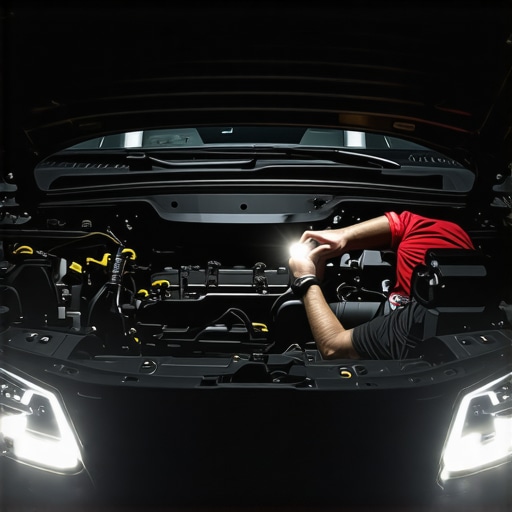
Why a dead battery is not always the culprit when your headlights suddenly dim
Why a Dead Battery is Not Always the Culprit When Your Headlights Suddenly Dim
Imagine you are driving down Independence Boulevard late on a humid Charlotte evening. You notice something unsettling: as you accelerate, your headlights seem bright, but when you come to a stop at a red light, the beams noticeably fade. Most drivers immediately jump to the same conclusion – the battery is dying. They pull into a local auto parts store, swap out the battery, and are baffled when the dimming persists three days later.
As a Wholesale Parts Advisor at Audi Charlotte, I’ve seen this scenario play out countless times. While the battery is a vital component of your vehicle’s electrical ecosystem, it is rarely the primary source of power once the engine is humming. Understanding the complex interplay between your alternator, your wiring, and your mechanical drive systems is essential for any car owner. In this guide, I’ll break down why your lights are actually losing their luster and how to determine if your vehicle is worth the repair or if it’s time to look into its scrap car valuation.
The Alternator: Your Car’s Real Power Plant
The most common misconception in automotive maintenance is that the battery “runs” the car. In reality, the battery is essentially a storage tank used primarily to provide the massive surge of amperage required by the starter motor to turn the engine over. Once that engine is running, the alternator takes over the heavy lifting. It is a miniature generator that converts mechanical energy from the engine into electrical energy to power your headlights, infotainment system, and fuel injectors, all while simultaneously recharging the battery.
Technical precision is key here. A healthy alternator should maintain a steady output. Under a full electrical load – meaning your lights, AC, and radio are all on – you should see a voltage reading between 14.40V and 14.46V. If your alternator’s output drops below 13.5V, your car begins to draw from the battery’s reserves to keep up. This is when you notice your headlights dimming at idle; the alternator simply isn’t spinning fast enough at low RPMs to meet the demand.
How do you know if the alternator is the specific culprit? Beyond the dimming lights, listen and smell. A failing internal bearing or a short-circuiting stator often produces a distinct scent. You might notice the specific metallic smell that signals your alternator is about to fail, which is often caused by the ozone produced by electrical arcing or the literal melting of the internal copper windings. If you smell “burning electrical” and see dimming lights, your alternator is likely on its last legs.
The “Silent Killers”: Ground Wires and Corrosion
Sometimes the components themselves are fine, but the “highway” they use to transport electricity is crumbling. In the automotive world, the “ground” is just as important as the “power.” Every electrical component in your car must complete a circuit back to the negative terminal of the battery, usually through the metal chassis of the vehicle.
This is where “The Silent Killer” comes in: corrosion. In the Charlotte, NC area, our high humidity combined with occasional winter road salt can accelerate the oxidation of copper ground straps. When a ground wire corrodes, it creates high resistance. Resistance turns electrical energy into heat, leaving less energy for your headlights. This results in flickering or dimming, especially when you hit a bump or when the engine vibrates.
Research into older vehicle platforms, such as the classic Ford 300 Straight 6, has shown that a failing ground connection can be incredibly deceptive. In some cases, simply wiggling the main alternator ground wire can cause the engine to stall immediately or cause the lights to flare and then dim. If your headlights dim specifically when you use another electrical component – like the power windows or the heater – you likely have a ground wire issue rather than a component failure. A poor ground path forces the electricity to find “alternate routes” through sensitive sensors, which can eventually lead to a total electronic meltdown.
Mechanical Failures: Slipping Belts and Overloaded Systems
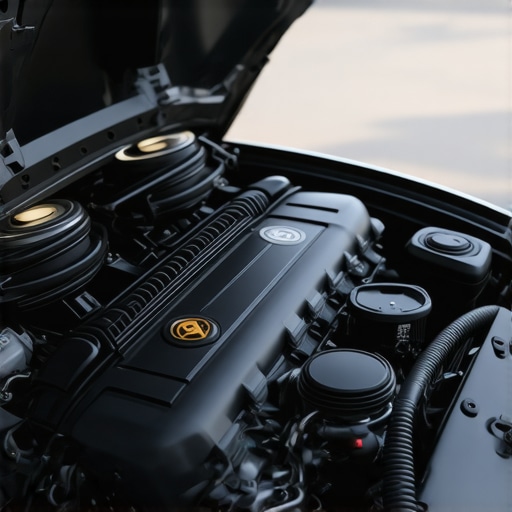
We often think of electrical issues as purely “electronic,” but they are frequently rooted in mechanical failure. Your alternator is driven by the serpentine belt. If this belt is worn, glazed, or if the automatic tensioner has lost its spring, the belt will slip. This slip is most common during high-torque moments or in wet weather. If the belt slips, the alternator pulley doesn’t spin at the required speed, leading to a sudden drop in voltage and, consequently, dimming headlights.
Furthermore, we must consider the “load” we put on our vehicles. Modern automotive enthusiasts often add aftermarket upgrades without upgrading the charging system. If you have installed high-draw LED light bars, a massive subwoofer, or a winch, you might be exceeding the “amperage budget” of your stock alternator. When the demand exceeds the supply, the system voltage drops, and your lights will dim as the car struggles to keep the engine running. This isn’t a “broken” car; it’s an overloaded one.
Diagnostic Checklist: Is it Time for a Repair or a Replacement?
Before you spend hundreds of dollars at a shop, you can perform a basic diagnostic check yourself. Use this list to narrow down the problem:
- Inspect the Terminals: Look for “white fuzz” or blue-green corrosion on your battery terminals. This adds resistance and prevents the alternator from charging the battery correctly.
- The Voltage Test: Use a multimeter. With the engine running, touch the probes to the battery terminals. If you aren’t seeing that 14.4V sweet spot, the alternator is likely failing.
- Listen for Clues: Does the car struggle to start? Pay attention to why your car makes a clicking sound when you try to turn the key. A clicking sound often points to a battery that hasn’t been charged properly by a failing alternator.
- Check the Belt: Look for cracks or a “shiny” appearance on the underside of the serpentine belt. If it looks like polished plastic, it’s slipping.
- The Dashboard Warning: Never ignore the red battery icon. That light doesn’t mean “bad battery”; it specifically means the charging system is failing to maintain voltage.
If you find yourself checking these items every other week, you are likely dealing with “electrical gremlins.” In older vehicles, these issues are rarely isolated. A bad alternator can fry a battery, and a bad ground can blow out an ECU. This is the point where the cost of repair begins to rival the actual value of the vehicle.
When Electrical Issues Become a Financial Burden
There comes a time in every car’s life when the “Check Engine” light becomes a permanent fixture of the dashboard. Electrical repairs are notoriously labor-intensive. A mechanic might spend four hours just tracing a single broken wire in a harness – labor costs that can easily exceed $500 before a single part is even purchased. When you add the cost of a high-quality alternator and a new battery, you could be looking at a $1,200 bill for a car that might only be worth $2,000 on the open market.
This is when you need to realistically assess the junk value of car. If your vehicle is over 15 years old and starting to exhibit systemic electrical failures, it may be more financially sound to look for cash for cars nc. Many owners are surprised by how much is junk cars worth in today’s market. Instead of pouring money into a failing alternator, you could be putting that cash toward a down payment on a more reliable vehicle.
Determining what is a scrap car worth involves looking at the current price of metals and the demand for used parts. In North Carolina, the market for charlotte junk cars for cash is robust because of the high demand for recycled automotive components. If your car still has its original catalytic converter and a functioning (though dim) engine, you might be sitting on more money than you realize.
Navigating the Charlotte Junk Car Market
If you’ve decided that the dimming headlights are just the tip of the iceberg, you’ll want to navigate the local market carefully. The Queen City has plenty of options, but they aren’t all created equal. Many people make the mistake of calling the first number they see on a telephone pole, but why the first Charlotte junk car buyer you find online is rarely the best deal comes down to overhead and middleman fees.
When searching for cash for junk cars in charlotte nc, keep these tips in mind:
- Compare Offers: Get at least three quotes for scrap car valuation. Prices can vary by hundreds of dollars based on who has a buyer for your specific model’s parts.
- Understand the Value: Remember that why your scrap car valuation depends on more than just the current price of steel – valuable components like the transmission and aluminum wheels add to the bottom line.
- Know the Thresholds: There are the 3 specific conditions your car must meet to actually get $1000 from Charlotte junk buyers, including having a complete engine and relatively intact bodywork.
- Title Issues: If you’ve lost your paperwork, don’t worry. You can still find how to find a Charlotte buyer who pays cash for junk cars without a title, provided you have proper identification and proof of ownership.
Whether you are looking for we buy junk cars charlotte nc or cash for cars charlotte nc, the goal is to find a reputable buyer who offers free towing and immediate payment. In the competitive charlotte junk cars market, you should never have to pay someone to take your car away.
Conclusion: Making the Smart Choice for Your Wallet
A dimming headlight is a symptom, not a diagnosis. While a simple battery swap is the “easy” answer, the reality often involves the alternator, the serpentine belt, or the underlying wiring. As an expert who handles parts daily, I recommend getting a proper voltage test before spending a dime. However, if that test reveals a cascading series of electrical failures in an aging vehicle, don’t be afraid to walk away. Sometimes, the smartest mechanical “fix” is trading in the headache for a stack of cash from a local junk car buyer. By understanding the junk value of car and the scrap car valuation, you can turn a dimming light into a bright financial future.