How to stop your dashboard from cracking in the summer heat
I still remember the exact moment I heard it—a sharp, sickening pop that sounded like a dry twig snapping under a heavy boot. It was mid-August, and my old sedan had been sitting in the driveway for three hours under a sun so intense it felt personal. I climbed in, reached for the radio, and there it was: a jagged, four-inch canyon running right through the center of my dashboard. I’d spent so much time worrying about whether I needed a regular oil change that I completely ignored the fact that my interior was literally baking to death. It was a rookie mistake, and honestly, a heartbreaking one because it was so preventable. Today, I want to make sure you never have to look at a spiderweb of cracks while you’re stuck in traffic. We’re going to dive into the simple, low-cost habits that actually work to keep your vinyl and plastic from becoming as brittle as a potato chip.
Your Car Interior is Basically a Greenhouse
The physics of it are actually pretty terrifying. You might think it’s just ‘hot’ outside, but your car is an expert at trapping thermal energy. Research from organizations like State Farm has shown that interior temperatures can soar to 172°F when the sun is beating down. At those levels, the oils in your dashboard’s materials start to evaporate, leaving the surface dry, stiff, and prone to splitting at the slightest vibration or temperature shift. When I first started working on cars, I thought I could just ‘condition’ my way out of a crack that had already started. I was wrong. Once the material structural integrity is gone, you’re just putting a bandage on a gunshot wound. That’s why we have to focus on prevention. If you’ve ever wondered how to keep your leather seats from cracking alongside your dash, the answer starts with blocking the light before it even hits the surface. Have you ever noticed a tiny hairline fracture starting near your windshield vents and wondered if it was too late to save it?
Is a Sunshade Actually Worth the Hassle?
I used to be the guy who threw those silver folding shades into the backseat because they were ‘too much work’ for a five-minute grocery run. That laziness cost me a thousand dollars in resale value. A high-quality reflective shade is the single most effective tool in your arsenal. It’s not just about keeping the steering wheel cool enough to touch; it’s about creating a literal shield for the most vulnerable plastic in your vehicle. Combine that with a windshield that’s been treated or even just a bit of strategic parking, and you’re already ahead of 90% of drivers. Just like you wouldn’t trust a shop without checking if they are ASE certified for your engine repairs, you shouldn’t trust the sun to be kind to your interior without a proper barrier.
Ditch the Greasy Shines and Go for Real UV Protection
The biggest mistake I ever made was thinking that if the dashboard looked ‘wet,’ it was protected. I once slathered a cheap, silicone-based spray over my dash right before a road trip. Within two days, the surface was a magnet for every piece of lint and cat hair in a five-mile radius. If you’ve ever dealt with the nightmare of removing pet hair from car carpets, imagine that same mess stuck to a sticky, reflective dashboard. Worse, the glare off the windshield was so blinding I almost went off the road. Real protection isn’t about the shine; it’s about the UV blockers. Look for products specifically labeled as ‘UV Inhibitors’ or ‘Aerospace Protectants.’ These aren’t just for show. Think of it as the secret to keeping your engine clean but for your plastic pores. You want a matte or satin finish that actually sinks into the vinyl rather than sitting on top like a layer of lard. 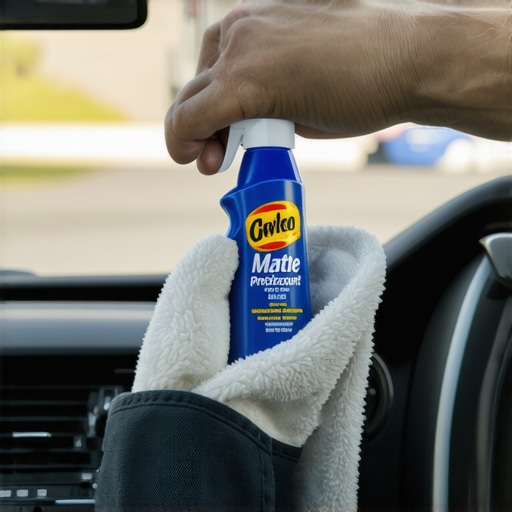
The Deep Clean Before the Shield
You wouldn’t put new oil in an engine without changing the filter, right? In the same way, never apply a protectant to a dirty surface. Use a mild soap and a microfiber cloth to lift the grime first. If you skip this, you’re just sealing the abrasive dirt into the material, which accelerates the cracking. This meticulousness is the same reason you’d look for an ASE certified technician for your mechanical work—details matter. Every bit of dust acts like sandpaper under the heat of the sun.
Strategic Cooling and Window Tinting
If you are serious about saving your interior, you have to talk about window film. High-quality ceramic tint can block up to 99% of UV rays. It’s a game-changer. I used to think tinting was just for aesthetics, but after seeing how it kept a black interior at a manageable temperature, I’m a convert. Just like choosing the right car service is essential for your transmission’s health, finding a reputable tinter is vital. If they use cheap film, it will bubble and turn purple within a year, making your car look like a DIY project gone wrong.
Crack the Windows Just a Hair
It sounds counterintuitive, but letting the hot air escape prevents the ‘pressure cooker’ effect. You only need a quarter-inch gap. This prevents the heat from building up to those 170-degree extremes that cook the plasticizers out of your dash. This is just basic physics, much like how smooth shifting requires the right fluid pressure; your interior needs a way to vent the thermal load. Even if you have the best oil change routine in the world, a melted, split dashboard will make your car feel like a junker and destroy your trade-in value. Focus on the airflow and the barriers, and the plastic will stay pliable for decades.It’s easy to get hyper-focused on the things we see every day, like that pristine dashboard, while neglecting the invisible fluids that keep the heart of the machine beating. I’ve seen car owners spend hours detailing their trim only to hand their keys to a lube tech who doesn’t know a torque wrench from a tire iron. Most drivers believe that as long as they get a frequent service, the car is bulletproof. But in my experience, the quality of the parts matters far more than the frequency of the work. For instance, many people think they are saving money with a generic filter, but the hidden cost of using non-OEM oil filters on your turbo can lead to oil starvation and a five-figure repair bill. It isn’t just about showing up; it’s about choosing the right car service that understands these microscopic tolerances.
Stop Trusting the Color of Your Transmission Fluid
One of the biggest myths I encounter is that ‘brown fluid means a dead transmission.’ I’ve seen people panic and spend thousands on a rebuild they didn’t need. The truth is that modern synthetic fluids often darken due to heat cycles without losing their lubricating properties. Instead of guessing, you need to learn how to tell if your transmission fluid is actually burnt or just aged. If it smells like charred toast, you have a problem; if it’s just dark, you might just need a simple drain and fill. This is where what-does-an-ase-certification-mean-for-your-cars-maintenance becomes vital. An ASE-certified technician is trained to look for friction material in the pan rather than just judging by the color on a dipstick. 
Does Your Mechanic Use a Live Drive Diagnostic for Ghost Problems?
Most shops just plug in an OBD-II scanner and hope a code pops up. But the real pros—the ones who can catch an intermittent transmission shudder—know that sensors don’t always tell the whole story. According to the National Institute for Automotive Service Excellence (ASE), specialized testing under load is often the only way to verify electronic shift solenoid health. If your mechanic hasn’t suggested a ‘live drive,’ they might just be parts-cannon technicians.
The Battery Swap Trap That Cripples Performance
Here is the ‘oops’ factor most people miss: replacing a battery on a modern car isn’t just a physical swap. If you don’t ‘register’ the new battery with the car’s computer, the alternator will continue to pump high voltage into it as if it were the old, dying unit. This is exactly why your engine feels sluggish after a simple battery replacement. The computer is literally fighting the new hardware. Whether you are obsessed with why regular oil changes extend your cars lifespan or you’re just trying to keep your dash from cracking, remember that every system is linked. Have you ever fallen into the trap of over-servicing your car only to have a new problem pop up? Let me know in the comments.
The Gear That Separates Real Mechanics From Parts Changers
For years, I thought my $40 code reader was all I needed to be a ‘car guy.’ I was wrong. That little plastic box only tells you when the engine is already screaming for help. If you want to scale your maintenance from ‘fixing what breaks’ to ‘preventing the break,’ you need better eyes. I eventually graduated to a system that could handle bi-directional controls and module resets. For instance, if you ever have to work on your steering rack, you’ll realize that Viper tools are the only way to reset your cars steering angle sensor correctly. Without that specific calibration, your traction control will fight you on every curve. High-end equipment isn’t just about prestige; it’s about accuracy. According to technical documentation from the Society of Automotive Engineers (SAE), even a 1% deviation in sensor calibration can lead to premature tire wear or erratic ABS engagement. This level of precision is why what-does-an-ase-certification-mean-for-your-cars-maintenance is a question you should always ask your local shop owner. They shouldn’t just have the tools; they should have the training to interpret the data the tools give them.
How do I keep my vehicle running like new for a decade?
The secret to longevity isn’t a magic additive; it is the brutal consistency of your schedule. You have to look at your car as a collection of high-friction surfaces. When you follow top oil change tips for safe driving in 2025, you aren’t just swapping fluid; you are flushing out the microscopic metal shavings that act like liquid sandpaper. I’ve seen engines destroyed because someone thought they could save $5 on a generic filter. However, the hidden cost of using non-oem oil filters on your turbo is often a total bearing failure because the bypass valve didn’t meet the manufacturer’s pressure specs. It is the same story with your gearbox. To avoid major transmission troubles, you need to be proactive about heat management. I personally use an infrared thermometer to check the pan temperature after a long haul; if it’s consistently over 200°F, I know I need an auxiliary cooler before the fluid starts to oxidize.
The Future of Maintenance is Probably Already in Your Pocket
Looking ahead, I see a shift toward ‘predictive telemetry.’ We are moving away from fixed intervals like ‘every 5,000 miles’ and toward real-time fluid analysis. Some high-end fleets are already using sensors that measure the dielectric constant of the oil to tell you exactly when it’s spent. This means we won’t be guessing anymore. Until that tech hits the consumer market, you have to rely on the basics. I recommend trying this right now: if you suspect a leak, don’t buy a smoke machine yet. You can identify an engine vacuum leak with a simple piece of hose used as a stethoscope. It’s an old-school trick that works better than half the digital sensors on my shelf. Give it a shot this weekend—listen to your engine’s heartbeat and see if you can catch a problem before the dashboard lights do.
Hard Truths I Learned the Expensive Way
After decades of turning wrenches and seeing thousands of cars roll through the shop, I’ve realized that the most expensive repairs usually start as the smallest oversights. One lightbulb moment for me was realizing that a clean dash isn’t just about vanity; it’s about chemistry. If you apply a protectant over a layer of dust, you are essentially creating a fine abrasive paste that wears down the vinyl when the car vibrates. Another hard lesson? Never trust a shop based on price alone. I’ve seen budget ‘quick-lube’ places forget to tighten drain bolts or use filters that don’t meet flow specs. This is why I always emphasize choosing the right car service rather than the cheapest one. Lastly, remember that your transmission is a heat-sensitive organ. If you wait for it to slip before you check the fluid, you’ve already lost the battle.
The Gear That Keeps My Fleet Running
I don’t believe in buying every gadget on the shelf, but these three items have saved me thousands in unnecessary repairs. First, a high-quality reflective sunshade is non-negotiable for anyone living in a sunny climate. It’s the simplest way to support why regular oil changes extend your cars lifespan by keeping the overall cabin and engine bay ambient temperatures lower. Second, I always keep a dedicated infrared thermometer in my glovebox. It’s the best way to verify if your cooling system or gearbox is actually shedding heat properly. Finally, for those annoying ‘hissing’ sounds under the hood, I skip the expensive scanners and identify an engine vacuum leak with a simple piece of hose. It’s old-school, reliable, and costs almost nothing.
Build a Bond with Your Machine
Taking care of your car is about more than just resale value; it’s about the peace of mind that comes from knowing you won’t be stranded on the side of a dark highway. Whether you are religiously following top oil change tips for safe driving in 2025 or you are vetting a shop to ensure their technicians are ASE certified, you are taking control of your mobility. Don’t be afraid to get your hands a little dirty this weekend. Your car is a complex machine, but it rewards attention and consistency with years of loyal service. Avoiding major transmission troubles or a split dashboard starts with the small habits you build today. Have you ever caught a major mechanical issue just by listening to your car’s ‘normal’ sounds? Let me know in the comments below.