The real reason your car shakes at high speeds but not in town
The Real Reason Your Car Shakes at High Speeds but Not in Town
I’m Benjamin Brown, and over the last two decades as an ASE-certified Master Technician, I’ve seen just about every mechanical gremlin a vehicle can conjure. From the high-compression engines of classic muscle cars to the intricate computer-managed systems of modern European imports and heavy-duty diesels, I’ve spent my life under hoods and chassis. If there is one thing I’ve learned, it’s that a car is a symphony of moving parts. When one instrument is out of tune, you might not hear it during the slow-tempo crawl of city traffic, but as soon as you hit the highway, that discordance becomes a deafening roar – or in this case, a violent vibration.
There is nothing quite as unsettling as a high-speed vehicle vibration. You’re cruising down the on-ramp, the engine is humming perfectly, and you’re feeling confident. But then, the speedometer needle crosses that invisible threshold – usually between 55 and 70 mph – and suddenly, your car shakes at 60 mph like it’s trying to shed its own skin. You slow down to 35 mph as you enter city limits, and like magic, the problem disappears. Many drivers assume it’s a “ghost in the machine” or a minor quirk, but as a professional, I can tell you it is basic physics. To understand why your car behaves this way, you first need to understand What Does an ASE Certification Mean for Your Car’s Maintenance? and why specialized knowledge is required to diagnose these high-velocity issues.
Statistically, vibrations occurring at highway speeds are the number one complaint for commuters. It’s a problem that sits at the intersection of rotational mass, centrifugal force, and mechanical dampening. In this guide, I’m going to strip away the mystery and explain exactly why your car feels like a paint mixer at 65 mph but a luxury lounge at 25 mph.
The Physics of “Harmonic Resonance” at Highway Speeds
To understand why a vibration only appears at high speeds, we have to talk about harmonic resonance. At low speeds, every rotating component in your car – the tires, the wheels, the axles, the driveshaft – is spinning relatively slowly. If a tire is slightly out of balance, the centrifugal force it generates is minimal. Your suspension can easily absorb that tiny bit of extra energy, and you never feel a thing.
However, physics changes the game as you accelerate. When your car shakes at 60 mph, your tires are rotating approximately 800 to 900 times per minute. At this frequency, even a tiny discrepancy in weight distribution is magnified exponentially. This is where we hit the “resonant frequency” of your vehicle’s suspension system. Just as a singer can shatter a glass by hitting the exact right note, a minor mechanical imperfection can hit the “note” that makes your entire car vibrate. This level of precision is comparable to the digital world; just as a ctr manipulation tool helps fine-tune visibility and resonance in search engine results by hitting specific data points, a technician must fine-tune the physical rotation of your wheel assembly to prevent these harmonic disruptions.
If the vibration was constant at all speeds, we would look for a structural failure. But because it “peaks” at high speeds, we know we are dealing with a balance or “roundness” issue. The energy is always there, but it only becomes strong enough to overcome the dampening of your shocks and struts once you reach highway velocities.
The #1 Culprit: Tire Imbalance and “Out-of-Round” Issues
When a customer comes into my shop complaining of a shake, the first thing I check is the tires. This brings us to the most common debate in the service bay: wheel balancing vs alignment. Let me be very clear: an alignment almost never causes a shake. Alignment is about the angle at which the tires hit the road. If your alignment is out, your car will pull to one side or eat through tires, but it won’t typically vibrate. Shaking is almost always a balance issue.
Tire balancing involves placing the wheel on a machine that spins it to identify heavy spots. We then apply small lead or zinc weights to the rim to counteract that heavy spot. Even a 0.25-ounce weight – about the weight of two pennies – missing from a wheel can cause a noticeable high-speed vehicle vibration. There are two types of balance: static (up and down) and dynamic (side to side). At highway speeds, dynamic imbalance causes the wheel to “wobble” on its axis, which you feel through the floorboards or the steering wheel.
Sometimes, the tire is balanced but “out-of-round.” This means the tire isn’t a perfect circle. This can happen due to manufacturing defects or “flat spotting.” If a car sits for a long time, the weight of the vehicle flattens the bottom of the tire. When you drive, that flat spot creates a rhythmic thump. You should also consider whether the sensation is coming from the engine or the wheels; for instance, you might want to investigate Why Your Transmission Shudders When You Reach Highway Speeds to ensure you aren’t misdiagnosing a drivetrain shudder as a tire balance issue.
Beyond the Rubber: Bent Wheels and Hub-Centric Problems
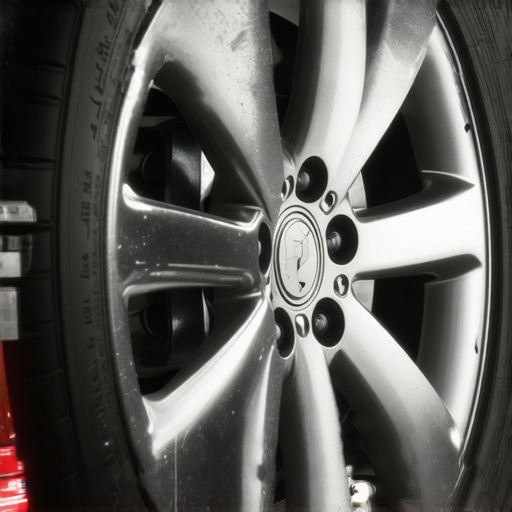
If your tires are perfectly balanced and you still have a shake, we look at the wheels themselves. Potholes are the natural enemy of the modern alloy rim. A hard hit can bend the inner lip of the wheel. The frustrating part is that this bend is often on the inside of the rim, making it invisible from the curb. A bent wheel will never balance perfectly because its geometry is compromised.
Another common but overlooked issue is hub-centricity. Most factory wheels are designed to fit snugly over the center hub of the axle. This hub carries the weight of the car. If you’ve bought aftermarket wheels, they might be “lug-centric,” meaning they rely on the lug nuts to center the wheel. If the wheel isn’t perfectly centered on the hub, it will rotate in a slight oval pattern, causing a massive shake at 60 mph. Maintaining the structural integrity and “profile” of your vehicle’s wheel assembly is much like how modern businesses use local seo automation and Viper Tools to maintain their digital profiles – consistency and centering are key to smooth performance.
Without the proper centering rings, no amount of balancing will fix a hub-centric mismatch. It’s a technical detail that general shops often miss, but an ASE Master Tech will catch it every time.
Suspension and Steering: The “Magnifiers” of Vibration
It is important to understand that suspension components like tie rods, ball joints, and control arm bushings rarely *cause* a vibration on their own. Instead, they act as “magnifiers.” In a perfect world, your suspension absorbs the minor imperfections of the road and the rotating assembly. However, when your bushings are dry-rotted or your ball joints have “play” in them, they lose their ability to dampen movement.
A tiny tire imbalance that you wouldn’t normally feel becomes a violent shake because the worn suspension allows the wheel to move uncontrollably. If you notice that your car feels loose or you’ve wondered Why Your Suspension Clunks over Small Bumps but Not Big Ones, your suspension is likely failing to isolate you from the natural vibrations of the road. When we perform a Live Drive diagnostic – a real-time assessment of the vehicle’s behavior under load – we can often see the control arms oscillating in response to a high-speed vibration that should have been dampened.
Worn shocks and struts also play a role. Their job is to keep the tire pressed firmly against the pavement. If they are worn out, the tire can actually begin to “hop” at high speeds, a phenomenon known as cupping. This creates a rhythmic vibration that increases in intensity as you go faster.
Drivetrain Dramas: CV Joints and Driveshafts
If the shake only happens when your foot is on the gas pedal at 65 mph, but disappears when you coast, you aren’t looking at a tire issue – you’re looking at the drivetrain. In front-wheel-drive cars, the inner CV (Constant Velocity) joints are a frequent culprit. When the grease inside the CV boot dries out or the joint wears down, it develops “play.” Under the heavy torque of highway acceleration, the joint wobbles, sending a shudder through the entire front end.
In rear-wheel-drive or all-wheel-drive vehicles, the driveshaft is a major factor. The driveshaft is a long, heavy metal tube that spins at several thousand RPMs. Like a tire, it must be perfectly balanced. If a universal joint (U-joint) starts to seize or a balance weight falls off the shaft, the resulting high-speed vehicle vibration can be so intense it feels like the car is going to shake apart. Just as Viper Tools provide a comprehensive suite of digital diagnostic and optimization solutions, a technician must use a suite of physical diagnostic tools – including electronic vibration analyzers – to determine if the frequency of the shake matches engine speed or wheel speed.
Differentiating between a wheel-speed vibration and a driveshaft-speed vibration is one of the most critical steps in a professional diagnosis. A driveshaft spins much faster than a wheel, so its vibration is a higher-pitched “buzz” rather than a lower-frequency “shimmy.”
Diagnostic Checklist: How to Pinpoint the Source
If your car is currently suffering from a highway-speed shake, you can do some detective work before you even head to the shop. Pay close attention to where you feel the vibration and under what conditions it occurs.
- Where do you feel it? If the steering wheel is shaking in your hands, the problem is almost certainly in the front end (tires, wheels, or front suspension). If you feel the shake in your seat or the floorboards, it’s usually coming from the rear tires or the drivetrain.
- Does it happen only when braking? If you’re cruising at 70 mph and the car is smooth, but it shakes the moment you touch the brakes, you have warped brake rotors. You should read more about What to Do When Your Steering Wheel Shakes While Braking to understand how heat-warped metal affects your steering.
- Is there a noise associated with it? A low-frequency hum that changes pitch when you turn the wheel could indicate a wheel bearing. It’s vital to How to Diagnose a Bad Wheel Bearing Before It Locks Up, as a seized bearing at 60 mph is a catastrophic safety risk.
- Does it change with engine RPM? If you shift into neutral at 60 mph and the shake remains, it’s a wheel or tire issue. If the shake disappears, it’s likely an engine or transmission mounting problem.
Professional shops today use advanced gmb ranking software and rank google business profile tools to ensure they are visible to customers in need, but the best shops are the ones that combine that digital visibility with old-school mechanical expertise. When you search for a “mechanic near me,” look for those who emphasize diagnostic technology like Road Force Balancing, which simulates the weight of the car on the tire while it spins.
Conclusion: Don’t Ignore the Shiver
A high-speed vehicle vibration is more than just a nuisance; it is your car’s way of telling you that something is wrong. Ignoring a shake at 60 mph can lead to accelerated wear on your tires, premature failure of your suspension components, and in extreme cases, a loss of control. Whether it’s a simple wheel balancing vs alignment issue or a complex drivetrain failure, getting an ASE-certified technician to look at it is the only way to ensure your safety.
Remember, your car is a high-performance machine designed to operate within specific tolerances. When those tolerances are exceeded, the physics of motion will let you know. If you’re interested in the intersection of high-tech diagnostics and automotive repair, or if you’re a shop owner looking to improve your digital reach, I invite you to explore the technical insights at seovipertools.com. In the meantime, keep your tires balanced, your suspension tight, and never ignore the shiver in your steering wheel. Stay safe out there on the open road.