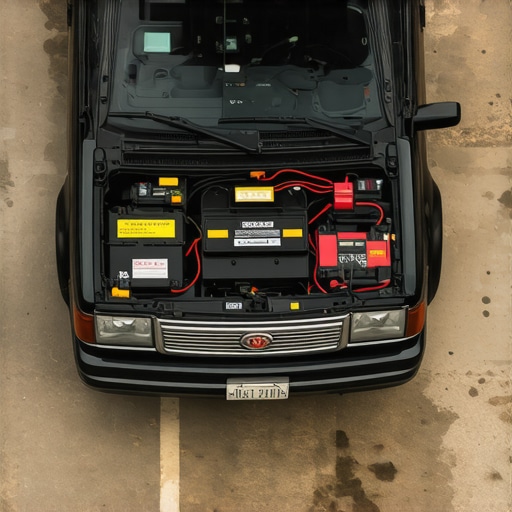
The Real Reason Your Battery Keeps Dying Overnight
It was a chilly morning, and as I reached for my keys, I noticed my car wouldn’t start. The battery was dead again. Frustration set in, and I remembered a lightbulb moment I had during one of those endless Google searches: many of us unknowingly fall into the same trap, letting small electrical issues drain our batteries overnight. If you’ve ever experienced that sinking feeling of waking up to a dead car, you’re not alone. Today, I’ll share how I uncovered the real reasons behind this common annoyance and, more importantly, how you can prevent it.
Uncovering the Hidden Drain on Your Battery
Have you ever left your car parked only to find it completely dead the next morning? It turns out, several sneaky factors can cause your battery to drain overnight. The most common culprits include interior lights left on, malfunctioning electrical components, or parasitic draws from aftermarket devices. While these seem like minor oversights, over time, they can significantly shorten your battery’s lifespan. Early in my troubleshooting, I made the mistake of blaming the battery alone, but I later discovered that even a perfectly good battery can succumb to these hidden drains if there’s a persistent electronic leak. Interestingly, a study by AAA found that a typical parasitic draw of just 50 milliamps—about the current consumed by a clock—can drain a battery in less than a week if the vehicle isn’t driven regularly (AAA Newsroom, 2023). Understanding this was a game-changer.
Is Overthinking the Issue Worth It?
You might be skeptical. After all, isn’t a dead battery just that—dead? I used to think so too, until I learned that many battery failures are actually caused by unseen electrical problems rather than the battery’s age itself. If you’re constantly replacing batteries without fixing what’s causing the drain, you’re just throwing money away. For a clearer picture, I recommend having a professional check your vehicle’s electrical system — especially if you’re unsure where to start. Curious about what expertise involves? Find out more about the significance of ASE certification in vehicle maintenance [here](https://autofixclinic.com/what-does-an-ase-certification-mean-for-your-cars-maintenance).
This personal experience was a wake-up call, and I bet you’ve faced similar frustrations. Recognizing the real reason your battery keeps dying gives you the power to address it once and for all. Ready to dive into the easy ways to diagnose and fix this problem? Let’s get started.
Test the Battery Voltage with a Multimeter
Start by grabbing a digital multimeter—think of it as the health checker for your battery. Connect the probes to the battery terminals, positive to positive, negative to negative. A healthy, fully charged car battery should read around 12.6 volts. I once borrowed a multimeter from a local auto parts store—I learned the hard way that even a slight dip below 12.4 volts indicates a weak charge. This quick test helps determine if your battery is truly dead or just needs a boost.
Inspect for Parasitic Electrical Drains
Methodically disconnect fuses one by one
Next, identify hidden drains by turning off your car and removing the key. Using your multimeter set to amps, connect it in series with the negative battery cable and the battery terminal. Carefully pull fuses one at a time, watching for a significant drop in current draw. For instance, I found a fuse related to my interior lighting that was causing a slow drain—reminded me to double-check all switches before leaving the car overnight. This approach pinpoints electrical components that are subconsciously draining your battery.
Use a Clamp Meter for quick readings
If you have access to a clamp meter, it simplifies this process. Clamp it around the negative cable and observe the current flow. Anything above 50 milliamps signifies parasitic drain. My neighbor once discovered a faulty aftermarket alarm module that kept drawing power—costly to replace, but worth catching early. Regular use of these tools demystifies electrical troubles and prevents dead batteries.
Conduct a Load Test to Verify Battery Capacity
Hold off on replacing your battery until you perform a load test. Many auto parts stores offer this service free of charge—like a stress test for your battery. Fit the tester according to its instructions, usually applying a load for about 15 seconds. The battery should maintain at least 9.6 volts during this period. Once, I watched my local mechanic demonstrate this, revealing my battery’s true weakness—saving me from unnecessary replacement. Performing this step ensures you’re not chasing ghosts, and your wallet stays in shape.
Check Alternator and Charging System
Your battery doesn’t work alone; the alternator keeps it charged while you drive. Use your multimeter to test voltage with the engine running—aim for 13.8 to 14.4 volts. If it’s lower, your alternator may be slipping, or its wiring could be faulty. I once neglected this and bought a new battery only to find the alternator was the real culprit. Ensuring the charging system functions properly prevents future battery failures and keeps your car humming.
Correlate Findings and Act
Pull all these tests together. If your battery voltage is low and the charging system checks out, it’s time to replace that battery. If parasitic drains were detected, locate and repair or replace faulty wiring or devices. Remember, a car’s electrical system is like a mini city—each component has a role, and faulty wiring or malfunctioning parts can cause power outages. Regular diagnostics, like those I performed, extend your battery’s life and save you from unexpected breakdowns. For advanced diagnostics, consider consulting a professional with ASE certification—think of it as hiring a doctor for your car’s electrical health [here](https://autofixclinic.com/what-does-an-ase-certification-mean-for-your-cars-maintenance).
Breaking the Myth: Transmission Services Aren’t Just About Fluid Changes
Many believe that a simple transmission fluid change is all a car needs to stay smooth. But in my experience, this approach ignores the complex interplay of components like valves, seals, and the precise fluid type required for optimal performance. Rushing to replace fluid without addressing these nuances can accelerate wear, especially if incompatible additives or synthetic blends are used improperly which could cost more in the long run.
Oil Changes Are More Than Just Ticking a Box
Contrary to popular belief, it’s not just about swapping out oil. The quality of oil, filter type, and service interval all play roles in engine health. Many overlook that neglecting to replace small but critical components like the oil filter seal can lead to catastrophic damage. I’ve seen engines ruined by ignoring simple maintenance tasks that, on paper, seem trivial. Don’t make the mistake of assuming every oil change is the same—it’s about precision and understanding the nuances.
Impressing with ASE Certification — Is It Enough?
Everyone touts ASE certification as a gold standard, but here’s the twist: certification alone doesn’t guarantee expertise. The real skill lies in ongoing training and hands-on experience, especially when diagnosing complex issues like transient torque converter problems or interpreting error codes beyond the usual scanner readout. In fact, some of the best mechanics I’ve encountered are continually updating their skills, emphasizing that ASE certification is merely a starting point. To ensure you’re in capable hands, verify their actual experience and ongoing training, not just the badge. Find out more about what ASE certification truly signifies here.
What Advanced Diagnostic Techniques Elude Many Technicians?
Mastering basic maintenance isn’t enough in today’s sophisticated automotive landscape. Techniques like advanced scan tool diagnostics or vibration analysis require specialized training. Mechanics who rely solely on generic codes might miss subtle signs of issues like torque converter slip or micro-pitting in gears. Staying ahead requires a commitment to continuous learning and understanding the nuances of modern vehicle systems. Have you ever fallen into this trap? Let me know in the comments.
Investing in the Right Equipment for Long-Term Success
Maintaining your vehicle’s performance requires precision tools that stand the test of time. I personally rely on a high-quality digital multimeter, like the Fluke 115, because it provides accurate voltage readings essential for diagnosing electrical issues. For examining air leaks or vacuum system integrity, I use a dedicated smoke machine—such as the one from OBDLink—helping me identify tiny leaks that traditional methods might miss. In my experience, these tools streamline diagnostics, saving both time and money, and are indispensable for any serious DIY enthusiast or professional ASE-certified technician.
Effective Software for Diagnostics and Monitoring
Modern vehicles communicate extensively through electronic control units (ECUs), making diagnostic software crucial. I recommend using manufacturer-specific scanning tools like Autel Maxisys or Snap-On Verus for comprehensive data. These allow me to view real-time sensor outputs, interpret complex trouble codes, and even update firmware when necessary. Additionally, I utilize diagnostic apps connected via Bluetooth OBD-II adapters for quick checks on the go. This combination ensures that I catch issues early, preventing costly repairs and maintaining optimal vehicle health over time.
How do I maintain my tools over time?
Regular calibration and proper storage are key. I keep my multimeter and smoke generator in a dedicated toolbox, using silica gel packs to prevent moisture. Calibration of my multimeter is performed annually, following the manufacturer’s guidelines, to ensure ongoing accuracy. Maintaining my diagnostic software involves installing updates and backing up data periodically. As automotive technology advances, staying image-conscious about necessary upgrades ensures my tools remain reliable—allowing me to diagnose vehicles accurately, especially as newer models incorporate more digital systems. Looking ahead, I predict that AI-driven diagnostic platforms will become standard, further simplifying complex troubleshooting tasks.
Tools That Stand Up to the Test of Time
Choosing durable, dependable equipment is essential. I favor tools with stainless steel components and reinforced housings, which resist wear in busy workshops or serious DIY environments. For example, my torque wrench from Snap-On has provided consistent torque settings for over five years, ensuring safety and proper assembly. Maintenance of these tools involves regular cleaning, lubrication, and periodic calibration, which not only extends their lifespan but also guarantees precision during critical tasks.
Scaling Maintenance Efforts Effectively
As your fleet or personal garage grows, so does the need for scalable solutions. Automating routine checks with advanced code readers or installing remote monitoring systems can vastly improve efficiency. I’ve integrated OBD-II fleet management platforms that centralize vehicle data, allowing me to oversee maintenance schedules and identify issues proactively. This proactive approach minimizes downtime and maximizes vehicle lifetime, aligning smoothly with future technology trends. For tips on selecting the right service approach for your needs, check out this resource.
The Hidden Truths that Transformed My Approach to Car Care
One of the most valuable lessons I learned was that diagnostics are often about reading between the lines. I once dismissed a vehicle’s odd starting behavior as a simple battery issue, but a deeper dive revealed a failing alternator that wasn’t charging properly. This experience taught me the importance of comprehensive testing before jumping to conclusions. The next time you face unexpected car troubles, remember that patience and thoroughness can save you time and money.
Tools and Resources That Revolutionized My Workflow
Over the years, I’ve come to rely on key tools that have made diagnostics more accurate and less stressful. My go-to multimeter, the Fluke 115, provides precise readings essential for electrical troubleshooting. A dedicated smoke machine from OBDLink helps identify tiny vacuum leaks that can cause drivability issues. Additionally, subscribing to up-to-date diagnostic software like Autel Maxisys ensures I stay ahead of complex modern systems. These tools have become indispensable in my toolkit, and I trust them because they deliver consistent results, which is critical for effective vehicle maintenance.
Keep Going: Your Journey Beyond Basic Maintenance
Every repair or maintenance call is an opportunity to learn and improve. Don’t shy away from complex issues or new technology—embrace them. Whether it’s mastering advanced scan tools or understanding the nuances of synthetic oils, every step you take elevates your skillset. Investing in ongoing education, like courses on ASE-certified diagnostics, empowers you to tackle problems confidently. Remember, the road to becoming a proficient DIY mechanic or a top-tier professional is paved with curiosity and persistence. So, what’s the next skill you’re excited to learn about? Share your thoughts below and keep pushing your automotive knowledge forward!