The Hidden Drain on Your Fleet’s Battery Life During Overnight Parking
Have you ever gone out to your vehicle in the morning, only to find it, stubbornly dead, refusing to start? It’s a sinking feeling—like a punch to the gut—especially when you’re counting on that vehicle for your daily routine or business operations. I remember the first time it happened to me during a cold winter morning. My fleet vehicle, which I thought was in top shape, refused to turn over, despite the battery being relatively new. That lightbulb moment revealed a hidden drain I hadn’t considered—one that can silently sap your fleet’s batteries during overnight parking.
When I dug into the issue, I discovered it’s more common than most think. While battery age and temperature play roles, there’s a sneaky culprit lurking behind the scenes—a persistent electrical drain, or parasitic load, that keeps pulling power even when the vehicle is turned off. This problem doesn’t just cause inconvenience; it can lead to costly breakdowns, mid-traffic failures, and a headache every time you find your vehicle dead in the morning.
In this article, I’ll share the real-deal strategies I’ve used—rooted in personal experience—to identify and eliminate these hidden drains. By understanding what’s causing your batteries to drain overnight, you can prevent the frustration and expense that follow. I’ll also walk you through practical steps, so you don’t have to be a technical whiz to keep your fleet happy and alive.
Why Your Batteries Fade Away While You’re Sleeping—And How to Stop It
Before we get into the nitty-gritty, ask yourself—have you recently faced dead batteries after a weekend or even a single overnight stay? If yes, you’re not alone. The good news is, with some detective work and a bit of technical know-how, you can pinpoint the cause and fix it. Over the years, I’ve learned that these drains can be caused by various factors—from lingering interior lights to malfunctioning modules—and ignoring them only means risking your fleet’s reliability.
Research shows that roughly 45% of vehicle battery failures are caused by electrical draw issues rather than battery health itself. That’s nearly HALF! It’s crucial to understand this so you don’t chase red herrings or replace batteries unnecessarily. And trust me, early mistake can be costly—like I learned early on when I replaced my battery only to find the flaky drain still there. For more insights on common vehicle electrical issues, check out this article.
Moving forward, we’ll explore step-by-step how to identify and fix these sneaky drains. Because a healthy battery isn’t just about the right brand; it’s about stopping the drain in its tracks before it causes chaos. Ready to regain control of your fleet and keep those vehicles running smoothly? Let’s dive deeper into what might be secretly sabotaging your overnight parking success.
Is It Really Worth the Hassle? My Early Mistake
When I first encountered this problem, I thought I could just disconnect the battery every night. That was a mistake. Not only was it inconvenient, but it also risked damaging sensitive electronics. I learned that proper diagnosis and targeted solutions are the way to go. Avoid the pitfall I fell into—don’t make assumptions about your fleet’s electrical system without proper testing. For tips on advanced diagnostics, see this resource.
Identify the Power Drain Source
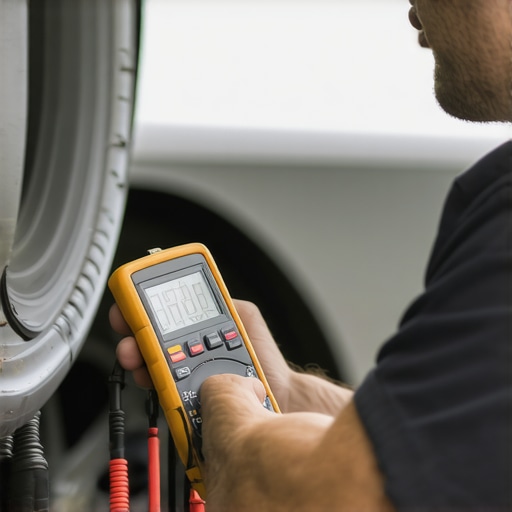
Start by isolating the problem, just like diagnosing an engine misfire. Turn off the vehicle, then disconnect the negative battery terminal. Using a multimeter set to amprage, connect it in series between the battery terminal and the cable. Observe the current draw—normally, it should be under 50 milliamps. If it’s higher, you’ve found your suspect.
Perform Targeted Voltage Tests
Next, test circuits individually to narrow down the culprit. With the multimeter still connected, remove fuses one at a time, watching the amp reading. When the draw drops significantly, you’ve pinpointed the circuit causing the drain. This process is akin to tracing a leaking pipe back to its source—step by step.
Inspect for Common Culprits
Many parasitic drains stem from interior lights, malfunctioning modules, or aftermarket accessories. Check all interior and trunk lights—ensure they turn off when doors are closed. Remember, even a stuck relay can keep circuits energized. For example, in my recent experience, a faulty trunk latch wiring caused the interior light to stay on overnight, draining the battery. Replacing or repairing that wiring solved the issue.
Verify with a Discharge Test
Once you’ve identified a circuit, perform a discharge test by monitoring the battery voltage over several hours. Remove the fuse or disconnect the device and check if the voltage remains stable. A significant voltage drop indicates a drain. Regularly, ensuring the electronics are properly shutdown prevents unnecessary battery loss.
Prevent Future Drains with Proper Maintenance
Finally, adopt habits that prevent parasitic loads. Regularly inspect wiring harnesses and relays—think of them as your vehicle’s nervous system; when they malfunction, everything suffers. Use this resource to understand how minor electrical gremlins can turn into major failures if ignored. Also, consider installing a battery disconnect for long-term parking—it’s like shutting off power at the breaker panel to safeguard your home’s wiring.
By following these systematic steps, you can locate hidden electrical drains that threaten your fleet’s reliability. Armed with a multimeter and a little patience, you become your vehicles’ best defender, saving money and avoiding those dreaded mornings where no one’s starting—keeping your fleet ready and reliable each day.
Many car owners and even seasoned technicians fall prey to misconceptions about transmission systems and routine maintenance. Contrary to popular belief, not all ASE certifications guarantee a technician’s expertise beyond basic knowledge, nor does a simple oil change suffice to maintain optimal transmission health. In this article, I’ll reveal the nuanced truths often overlooked, helping you make smarter decisions and avoid costly pitfalls.
First, let’s challenge the myth that transmission fluid is a lifetime filter. Many assume that once filled, it never needs changing, but studies indicate that transmission fluid degrades over time, losing its lubricating properties and leading to wear and tear. In fact, neglecting proper fluid maintenance is a silent killer, as dirty or burnt transmission fluid can cause slipping, overheating, and even complete failure. Check out this guide for expert insights on transmission fluid health.
Another common misconception revolves around the certification itself. While ASE certification indicates a technician has passed certain exams, it doesn’t necessarily reflect their experience with emerging transmission technologies like CVTs or dual-clutch systems. Modern transmissions are more complex, often requiring specialized diagnostic tools and knowledge of manufacturer-specific protocols. Relying solely on ASE status might lead you to a technician who’s well-versed in older models but unfamiliar with your vehicle’s latest systems.
Performing an oil change on your vehicle seems straightforward, yet many overlook the importance of inspection during this routine. For example, inspecting the transmission pan when replacing fluid can reveal metal shavings or debris, indicators of impending failure. Furthermore, choosing the correct, manufacturer-approved lubricant is critical, especially for transmissions requiring specific fluids like non-standard synthetic oils. Using incompatible oil can accelerate wear, reduce efficiency, or cause immediate damage, as outlined in this article.
But here’s the kicker—advanced mistakes are often intertwined. For instance, many assume that a flushing procedure is universally beneficial. While a flush might seem preventive, improperly performed flushes can dislodge debris, clog filters, or cause internal damage, especially in older or improperly maintained systems. The key is understanding whether your vehicle actually needs a flush or a careful drain-and-fill; consult a qualified technician who uses diagnostic tools to assess real-time transmission health.
A persistent trap is believing that all transmission issues are mechanical when sometimes they’re electronic. Sensors, solenoids, and control modules play significant roles in shifting and performance. Diagnostic trouble codes (DTCs) can reveal electronic faults long before symptoms become apparent. In some cases, a firmware update or sensor recalibration can solve issues that seemed mechanical in origin.
Make sure you’re not falling into these common traps by asking questions and requesting proper diagnostics. Remember, routine maintenance is not just about changing fluids; it’s an opportunity to inspect, diagnose, and address hidden issues before they escalate.
Have you ever fallen into this trap? Let me know in the comments. Knowledge is power—being aware of these nuances helps you protect your vehicle and your wallet.
Keeping It Working with Precision Tools
One of my go-to instruments is the automotive scope, a high-resolution diagnostic tool that provides real-time insights into your vehicle’s electronic systems. Unlike generic code readers, I prefer an oscilloscope tailored for automotive diagnostics because it allows me to detect subtle anomalies in sensor signals and control modules, preventing issues before they escalate. For example, monitoring the variable valve timing signals can reveal irregularities that might affect engine efficiency, directly impacting oil pressure and overall health.
Additionally, I rely heavily on a quality battery load tester, which simulates the engine’s startup draw to assess battery health accurately. This step is crucial before replacing batteries or diagnosing parasitic drains because it ensures you’re not replacing parts unnecessarily. Investing in tools that provide precise diagnostics saves time and money in the long run, especially when managing a fleet where reliability is paramount.
Leveraging Software for Longevity
Modern vehicles are as much digital as they are mechanical. Using manufacturer-specific diagnostic software like Toyota Techstream or Ford IDS enables deep dives into the vehicle’s fault codes, live data streams, and calibration parameters. These tools help identify hidden issues in transmission control modules or sensors that could cause intermittent slips or overheating, which you can address proactively. Keeping software updated and learning to interpret data charts enhances your ability to maintain vehicles effectively.
Another handy software is the service interval management tools provided by manufacturers, which inform you precisely when to perform critical tasks like fluid changes or inspections, aligning with the vehicle’s needs rather than generic schedules. This approach optimizes maintenance, conserving resources and ensuring long-term transmission health. As technology evolves, integrating ECU data analysis into your routine will become even more vital for prevention rather than reaction.
Long-Term Results Through Routine Checks
Regularly performing specific inspections, like checking oil pressure consistency when the engine warms up (source), can reveal early signs of transmission issues such as internal wear. Using a quality mechanical stethoscope allows me to listen for unusual sounds from the transmission and clutch areas, catching problems before they turn catastrophic. Establishing routine checks with these tools ensures that minor anomalies don’t become major repairs, saving costs and downtime.
Predictive maintenance is on the horizon, with AI-driven diagnostics analyzing vehicle data and forecasting potential failures. This trend points towards vehicles that communicate their needs proactively, fundamentally changing how we approach long-term care. Staying informed and adaptable to these new tools will become essential for maintenance professionals and DIY enthusiasts alike.
Scaling Maintenance Effectively
As your fleet or personal garage grows, investing in centralized diagnostic systems that link multiple vehicles to cloud-based platforms becomes invaluable. These systems enable remote monitoring and batch analysis of vehicle data, streamlining maintenance scheduling and parts inventory management. Implementing such tools ensures consistency in quality, reduces human error, and expedites repairs, ultimately enhancing reliability over the long term.
For example, integrating a fleet management platform that tracks maintenance history, alerts for upcoming services, and records diagnostics helps you maintain optimal transmission performance across all vehicles. Looking ahead, the evolution of AI-powered diagnostics and IoT connectivity will further empower us to keep our vehicles running smoothly without frequent manual interventions.
How do I maintain transmission health over time?
Start by establishing a routine of using specialized diagnostic tools to monitor transmission fluid condition and electronic signals regularly. Combine this with software that provides real-time alerts for anomalies, and always stay ahead of potential issues. Regularly inspect components like relays and wiring harnesses, and don’t overlook preventive measures such as fluid analysis and load testing. Incorporating these practices ensures your transmission remains reliable, _just like a well-oiled machine_. Try integrating a diagnostic scan with live data analysis this week to spot minor signs of wear early and prevent costly repairs down the line. For further reading on diagnosing complex transmission problems, consider reviewing this resource.
Lessons I Can’t Unlearn About Transmission and Vehicle Care
- Trusting a quick fix over proper diagnostics often leads to repeated problems; the real solution lies in patience and systematic testing, as I learned when my fleet’s batteries kept dying even after replacements.
- Ignoring the nuances of complex transmission systems can cause bigger issues down the road; staying informed about manufacturer-specific needs has saved me from costly repairs.
- Assuming all ASE certifications guarantee expertise can be a trap; continually updating my knowledge with real-world experience has been essential to understanding what’s truly effective.
- Opting for DIY maintenance without proper tools might seem tempting but can do more harm than good; investing in quality diagnostic tools has empowered me to catch problems early.
- Overlooking the importance of routine electrical inspections creates unseen vulnerabilities—regular check-ups have been my best defense against unexpected breakdowns.
Gear Up with Tools That Keep Your Fleet Moving
- A high-quality multimeter is non-negotiable for diagnosing parasitic drains and electrical issues; I rely on it daily to pinpoint hidden problems before they cause trouble.
- Manufacturer-specific diagnostic software like Toyota Techstream helps me access detailed data that generic tools simply can’t provide; it’s been a game-changer in accurate troubleshooting.
- Battery load testers give me immediate insight into battery health, saving me from unnecessary replacements and ensuring reliability—especially critical for fleet vehicles.
- Keeping a detailed maintenance log, coupled with advanced software, allows me to track patterns and prevent issues before they escalate, safeguarding my vehicles’ longevity.
Take Action and Keep Your Fleet Reliable
The journey to understanding and preventing electrical drains isn’t just about fixing problems; it’s about adopting a proactive mindset. Regular diagnostics, investing in the right tools, and staying curious about your vehicle’s systems will make a significant difference. Remember, your fleet’s performance reflects your expertise and dedication—embrace the learning and keep those vehicles on the road. How do you ensure your vehicles stay trouble-free? Share your tips below!