How to Spot a Leaking Strut Before It Ruins Your New Tires
I remember the moment it hit me like a ton of bricks. I was pulling out of my driveway after a quick oil change, the smell of fresh oil lingering in the air, when I noticed a small, pinkish puddle forming under my front wheel. At first, I brushed it off—maybe just a spilled fluid. But as days went on, that tiny stain grew larger, and my ride suddenly felt bumpier, more unpredictable. That was my lightbulb moment that I was ignoring a potential catastrophe—my suspension’s leaking strut was silently sabotaging my new tires and compromising my safety.
If you’re like I was, maybe you’ve experienced a similar uneasy feeling when your car reacts differently on the road, or you’ve noticed a small puddle in your driveway that you’ve dismissed as insignificant. The truth is, a leaking strut is often a sneaky foe—silent until it’s too late. Today, I want to share how you can recognize the signs of a leaky strut before it ruins your tires or causes a dangerous blowout. Trust me, catching it early can save you a lot of money, stress, and maybe even prevent an accident.
Why Spotting a Leaking Strut Early Matters
The suspension system is the unsung hero of your vehicle—absorbing shocks, maintaining tire contact with the road, and ensuring a smooth ride. When a strut develops a leak, its ability to perform diminishes, leading to uneven tire wear and compromised handling. If left unchecked, the leak can cause your tires to wear out prematurely or even fail catastrophically, especially during emergency maneuvers. According to Auto Fix Clinic, ignoring small fluid leaks like a leaking strut can escalate into more complex and costly repairs—sometimes even risking your safety.
Early detection is key. But here’s the catch—how do you identify the signs without crawling under your car after every drive? I made the mistake early on of only visiting the mechanic when I saw obvious damage, which often meant costly repairs and unnecessary replacements. Now, I know better. I’ve learned to spot the subtle indications of a leaky strut—saving myself money, time, and worry. So, have you ever noticed a weird wobble or a suspicious puddle underneath your vehicle? If so, you’re not alone. Let’s dive into how you can detect this sneaky problem before it gets out of hand.
Get Under Your Car Safely and Prepare Your Tools
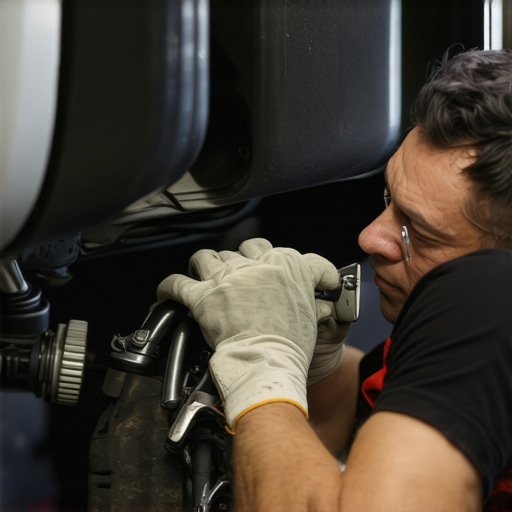
First, ensure your vehicle is on a flat surface, parking brake engaged, and the engine is off. Use wheel chocks to prevent movement. Grab a flashlight, a pry bar, and some gloves. I recall the time I jacked up my car for a routine inspection—wearing gloves kept me clean, and a flashlight illuminated hidden spots. This preparation helps you spot leaks accurately without risking injury.
Identify Visible Signs of a Leak
Look closely at the suspension components, especially around the coil spring and strut assembly. Pinkish or translucent oil residue on the outer surface indicates a leak. I once noticed a faint smear of fluid during a routine tire check, prompting me to investigate further. Remember, a healthy strut shouldn’t have any fluid on it; if you see fluid, it’s a red flag that it’s leaking.
Check the Condition of the Coil Spring and Surrounding Components
Inspect the spring for corrosion, cracks, or unusual wear. Also, examine the dust cover—the rubber or plastic cover protects the piston rod. If damaged or missing, dirt can cause abrasions, accelerating leak development. I learned this the hard way after a dusty drive, which caused early corrosion on my suspension components.
Look for Puddles or Drips After a Short Drive
Park your vehicle overnight and examine the area beneath it for pinkish fluid puddles, similar to what I found one morning. Sometimes, fluid leaks only appear after the strut warms up and the fluid expands. For a quick check without crawling underneath, sprinkle some talcum powder or chalk around the suspected area and watch for wetness or discoloration.
Test for Unexpected Handling Changes
Take your car for a slow drive over bumps or uneven surfaces. Notice if there’s excessive bouncing or a loose feel. I once ignored a slight wobble, and it worsened over time, leading to costly repairs. If your vehicle feels unstable, it might be a sign that your struts are failing, often due to leaks.
Use a Mirror to Inspect Hard-to-Reach Areas
Slide a mirror under the suspension after the vehicle has cooled down. This helps you examine hidden spots without jacking up the car repeatedly. During my own inspection, a mirror revealed a tiny leak that wasn’t visible from above, saving me unnecessary disassembly.
Evaluate the Age and Mileage of the Suspension
If your vehicle has over 50,000 miles, suspension parts are more prone to leaks. Regular maintenance history records can also indicate if the struts haven’t been replaced in a long time. I checked my service logs and realized that timely replacements could have prevented the leak from worsening.
Understand When to Seek Professional Help
If you notice any signs—fluid on the strut, handling issues, or puddles—consult an ASE-certified mechanic. They can perform a comprehensive diagnostic, including testing the suspension’s pneumatics if applicable. Remember, early intervention can prevent a small leak from turning into a dangerous blowout, as explained in this detailed guide.
Many car owners believe that simple oil changes or routine service appointments are enough to keep their vehicles in top shape, but let’s dig deeper into some widespread misconceptions that might be costing you in the long run. For instance, the notion that all oils and fluids are interchangeable is a myth. Each engine and transmission system has specific requirements, and using the wrong type of oil or transmission fluid can accelerate wear or cause unusual symptoms. According to experts, following manufacturer specifications is critical—simply topping off with any oil isn’t sufficient.
Another common myth revolves around ASE certifications. Many assume that an ASE-certified mechanic is automatically qualified for every type of repair. While ASE certification indicates a certain level of professionalism and testing, it doesn’t guarantee expertise in all vehicle systems, especially with the rapid evolution of hybrid and electric models. It’s essential to ask about specific experience and ongoing training, especially for complex tasks like diagnosing transmission issues or advanced driver-assistance systems.
Now, consider this: neglecting the advanced nuances of modern vehicle systems can lead to costly mistakes. For example, some believe that a simple oil change addresses all engine health concerns. However, if your vehicle has high mileage or sensor issues, you need a more comprehensive approach—like checking for leaks that might seem minor but cause major damage over time. Regularly overlooking subtle signs of wear, such as tiny fluid puddles, can lead to severe harm, so stay vigilant.
Advanced automotive diagnostics have revealed that many issues often stem from overlooked critical factors. For example, a small leak in your transmission system might seem harmless at first but can turn into a dangerous failure if not addressed promptly. This is where proper diagnostic tools and expert knowledge come into play. The importance of understanding the hidden costs of skipping routine services became clear when I reviewed cases of neglected maintenance, illustrating how small leaks evolve into expensive repairs, as detailed in [this article](https://autofixclinic.com/the-danger-of-leaving-a-small-transmission-leak-untreated).
Speaking of myths, some still believe synthetic oils last forever, leading to extended oil change intervals. Reality check: even the best synthetic oils degrade over time, especially under heavy load or high mileage, which can lead to engine sludge and wear. Recognizing this nuance can extend your engine’s life and improve performance.
Furthermore, advanced technicians know that tools and diagnostic methods matter. For instance, using the wrong sensor cleaner or neglecting proper procedures when inspecting under-hood sensors can cause more harm than good. This emphasizes the importance of educating oneself about the sophisticated systems in modern vehicles.
Curious about how to recognize a truly qualified ASE-certified mechanic or how to diagnose subtle signs of transmission problems yourself? These are questions that could save you thousands. Regularly updating your knowledge and questioning common myths will empower you to make better decisions about your vehicle’s health. After all, proactive care is the key to longevity.
Have you ever fallen into this trap? Let me know in the comments.
Keep It Running with Precision Tools
Maintaining your vehicle over time demands the right equipment to diagnose issues early and perform effective repairs. I personally rely on a high-quality like the BLUEDriver. It connects effortlessly via Bluetooth to my smartphone, providing real-time data and code interpretations for a wide range of systems. Unlike basic scanners, this model offers advanced diagnostics for ABS, transmission, and hybrid components, giving me insight into hidden problems before they escalate. This tool has saved me from costly emergency repairs multiple times, especially when I suspect transient engine issues.
In addition to electronic diagnostics, I swear by a sturdy digital torque wrench like the Tekton. Proper torque application during replacements ensures components like wheel bearings or suspension parts stay within manufacturer specifications, greatly extending their longevity. I’ve seen too many problems stem from over- or under-tightening, which can cause leaks or premature part failure. Regular calibration of your torque wrench is critical for accuracy — I recommend sending it to a professional calibration service once a year.
Implement Smart Maintenance Strategies
Adopting a preventative maintenance schedule is essential for long-term reliability. I use a detailed digital log combining vehicle-specific data from the manufacturer’s manual with maintenance reminders on my smartphone. Apps like MyCarfax sync this info and notify me about upcoming oil changes, filter replacements, and fluid flushes based on actual driving conditions. As I plan my maintenance ahead, I schedule tasks like transmission fluid replacement well before the recommended interval, reducing the risk of costly failures such as transmission leaks.
Tools That Future-Proof Your Vehicle
Looking ahead, I believe the future of long-term car care involves shared diagnostic platforms and AI-driven maintenance software that learns your driving habits and predicts failures. Companies are developing solutions that continuously analyze data from various sensors, alerting you to issues like rolling bearing wear or coolant system risks before symptoms are obvious. For now, integrating a reliable OBD-II scanner with your routine checks provides a significant advantage — I suggest a model that offers live data streaming and advanced fault code analysis to catch problems early.
How do I keep my car performing over time?
Combine routine inspections with precise tools like a quality scanner and torque wrench, backed by consistent maintenance logs. This approach doesn’t just troubleshoot problems; it helps you anticipate and prevent damage, saving money and ensuring safety. For instance, regularly checking for signs of a failing wheel bearing with a diagnostic tool like the test method can prevent dangerous failures on the road. Experiment with advanced tips like calibrating your torque wrench annually, and you’ll extend your vehicle’s life significantly. Try this for your next brake job or suspension overhaul — the benefits will be evident in smoother drives and fewer surprise repairs.
Lessons That Changed My Approach to Car Care
One of the most profound insights I gained is that not all repairs are created equal—especially when it comes to suspensions and leaks. Early in my journey, I assumed a small fluid puddle was minor, but discovering it was a leaking strut taught me the importance of trusting your instincts and doing routine checks. Moreover, I learned that myths about oils, filters, and certifications can be misleading—making me realize that ongoing education and skepticism are vital for any dedicated vehicle owner. Lastly, I realized the value of investing in quality diagnostic tools, which empowered me to catch issues like a failing wheel bearing before they turned catastrophic, saving both money and peace of mind.