Why your safety sensors fail after a standard windshield replacement
Why Your Safety Sensors Fail After a Standard Windshield Replacement
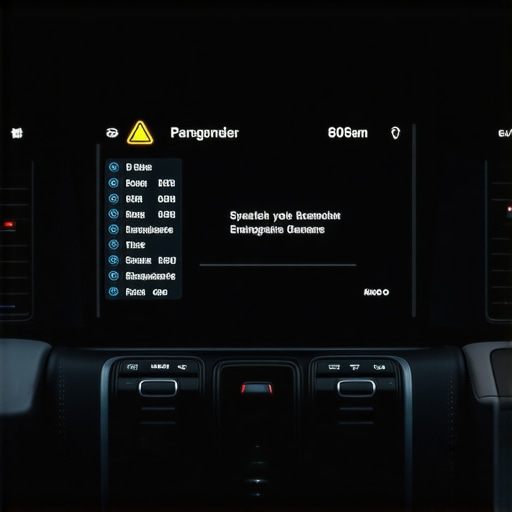
It is a scenario I see far too often in the bay: a customer comes in with a brand-new, crystal-clear windshield, only to find that their dashboard has lit up like a Christmas tree. Features they rely on every day – lane-keep assist, adaptive cruise control, and automatic emergency braking – are either malfunctioning or completely disabled. As an ASE Master Automotive Diagnostic Technician and ADAS Programming/Calibration Specialist with over 20 years of experience, I can tell you that the glass is rarely the problem; the issue lies in what happened (or didn’t happen) during the installation. If you are searching for a mechanic near me to solve these mysterious electronic gremlins, you are likely dealing with a calibration failure. Modern vehicles are no longer just mechanical machines; they are rolling supercomputers, and the windshield has become a primary mounting point for the car’s “eyes.” Understanding the intersection of glass and safety technology is essential for any modern driver seeking an auto repair near me.
The Invisible Tech Behind the Glass: What is ADAS?
To the average driver, a windshield is simply a transparent barrier designed to keep wind, rain, and debris out of the cabin. However, in the world of modern automotive engineering, the windshield is a high-precision mounting platform for Advanced Driver Assistance Systems (ADAS). These systems are the backbone of vehicle safety, utilizing a suite of sensors, cameras, and LiDAR units to monitor the environment around the car. When you search for a qualified auto repair shop, you aren’t just looking for someone to turn a wrench; you are looking for someone who understands the digital architecture of your vehicle.
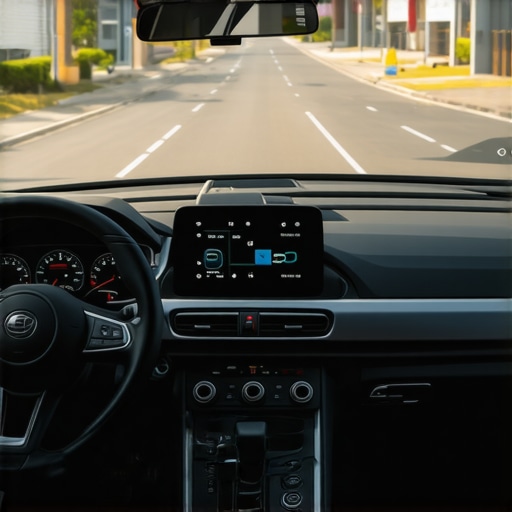
Most ADAS features rely on a forward-facing camera mounted directly to the interior of the windshield, usually behind the rearview mirror. This camera is responsible for several critical functions:
- Lane Keep Assist (LKA): Identifying lane markings to prevent the vehicle from drifting.
- Automatic Emergency Braking (AEB): Detecting pedestrians or stopped vehicles to mitigate or prevent collisions.
- Adaptive Cruise Control (ACC): Maintaining a safe following distance by “seeing” the vehicle ahead.
- Traffic Sign Recognition: Reading speed limits and road signs to inform the driver.
These systems rely on “millimeter-perfect” alignment. Because the camera is looking through the glass at the road ahead, any change in the angle, height, or clarity of that glass can fundamentally alter the data the camera receives. This is why ADAS calibration is not an optional “add-on” – it is a mandatory safety requirement.
The “Standard” Replacement Trap: Why a Simple Swap Isn’t Enough
The traditional model of windshield replacement is built on speed and convenience. A technician arrives at your home or office, pops out the old glass, glues in the new one, and leaves. While this worked for a 2005 sedan, it is a recipe for disaster for a 2024 SUV. When a technician removes the old glass, they must unclip the camera bracket from the windshield. The physical disturbance of removing and reinstalling this bracket is the first point of failure. Even if the technician uses the exact same bracket, a shift of just one degree can render the system useless or, worse, dangerous.
Furthermore, the glass itself matters. Aftermarket glass often has different refractive properties than Original Equipment (OE) glass. A microscopic difference in glass thickness or a slight “wave” in the laminate can distort the camera’s field of vision. When Choosing the Right Car Service for Your Vehicle’s Needs, you must ensure they have the diagnostic tools to verify sensor health. A “standard” glass shop often lacks the expensive electronic equipment required to reset these systems. This is why it is vital to take your vehicle to a specialized auto repair shop that offers comprehensive ADAS calibration services following any glass work.
The Math of Safety: How a 1-Degree Error Becomes a 50-Foot Disaster
Many drivers ask me, “Nate, if the camera is only off by a tiny bit, does it really matter?” The answer is found in basic trigonometry. Think of the camera as a flashlight beam. At the source (the windshield), a 1-degree shift is almost invisible to the naked eye. However, as that beam travels 100 yards down the road, that 1-degree error expands exponentially. A camera tilted just a fraction of a degree can result in a projected “path” that is off by several feet by the time it reaches the car ahead of you.
This “angular deviation” causes the car to “see” a lane line where there isn’t one, or – more dangerously – miss a car braking ahead because the sensor is effectively looking over the top of it or to the side. In some cases, this leads to “ghost braking,” where the car slams on the brakes for a shadow or a bridge because it misinterprets the distorted visual data. This is why professional ADAS calibration is non-negotiable. You can learn more about these specialized services at AAC of NH, where we prioritize the mathematical precision required for modern safety systems.
Static vs. Dynamic Calibration: What Your Mechanic Should Be Doing
Not all calibrations are created equal. Depending on your vehicle’s make and model, your technician will perform one of two types – or sometimes both. Understanding these is key when looking for a mechanic near me.
Static Calibration: This takes place inside the shop. We use specialized targets, lasers, and level floors to create a controlled environment. The vehicle is positioned perfectly in front of these targets, and the onboard computer is told to “re-learn” its center point based on these fixed markers. This requires a significant investment in space and equipment, which many mobile glass installers simply do not have.
Dynamic Calibration: This involves connecting a handheld diagnostic tablet to the vehicle and driving it on the road. The vehicle must be driven at specific speeds on well-marked roads for a set amount of time while the camera “learns” to identify real-world objects like lane lines and guardrails. Some manufacturers, like Honda and Acura, often require a complex “aiming” process that can be highly sensitive to weather conditions and road quality.
Expert insight: What Does an ASE Certification Mean for Your Car’s Maintenance? It means your tech knows which of these processes your specific car requires. Using the wrong method or skipping the static portion when required can lead to a system that appears to work but fails in a critical moment.
Why Your Wheel Alignment Affects Your Windshield Sensors
This is a concept that surprises many car owners: your rear wheels can cause your windshield camera to fail. This is due to something called the “Thrust Angle.” If your vehicle’s rear wheels are not perfectly aligned with the front, the car will “crab” or drift slightly to the side while moving straight down the road. You might notice this if you find Why Your Steering Wheel is Off-Center While Driving Straight.
The ADAS camera is hard-mounted to the chassis. It assumes that “straight ahead” for the body of the car is the direction of travel. If the car is crabbing due to a poor alignment, the camera is looking in one direction while the car is moving in another. This discrepancy causes the ADAS software to trigger an error code and shut down. If you are seeking an alignment near me, ensure you visit a shop like AAC of NH that understands how alignment geometry interacts with electronic safety suites. Misalignment doesn’t just cause The Reason Your Tires Are Wearing on the Inner Edge Only; it can also disable your emergency braking system.
Symptoms of a Failed or Missing Calibration
How do you know if your glass installer dropped the ball? The symptoms are usually immediate, but some can be subtle. Watch for these red flags after a windshield replacement:
- Warning Lights: Messages like “Check ADAS System,” “ACC Unavailable,” or “Lane Departure Malfunction.”
- Steering Tugging: The Lane Keep Assist feels like it’s fighting you or pulling you toward the edge of the road rather than the center.
- Ghost Braking: The car abruptly applies the brakes when no obstacles are present.
- Inaccurate Following Distance: The Adaptive Cruise Control follows too closely or stays too far back.
- Diagnostic Trouble Codes (DTCs): During a pre-scan, a technician might see “No Communication” or “Axis Deviation” errors.
If you experience any of these, you need a professional diagnostic. How a Certified Tech Diagnoses a Faulty Wheel Speed Sensor is similar to how we diagnose ADAS – we use high-level scanners to talk to the car’s modules and see exactly what the sensors are “seeing.” Never ignore a warning light after glass work; your safety systems are likely offline.
Conclusion: Don’t Gamble with Your Safety
The days of a windshield being just a piece of glass are over. In the modern automotive landscape, a windshield replacement is both a structural and an electronic repair. If your safety sensors fail after a replacement, it is almost certainly because the critical step of ADAS calibration was skipped or performed incorrectly. As technology continues to advance, the margin for error shrinks.
Don’t settle for a “standard” swap that leaves your family’s safety to chance. Ensure that any glass work is followed by a professional scan and calibration by a certified mechanic near me. If you are in the New Hampshire area, visit AAC of NH for expert service. Remember, your car’s safety systems are only as good as their last calibration. Stay safe, stay calibrated, and always trust your vehicle to those who understand the math behind the machine.