How to Verify an ASE Certification Number Online
Ever had that sinking feeling when you hand over your keys to a mechanic, wondering if they’re really ASE certified? I remember the frustration — trusting someone with your car’s health is nerve-wracking enough. One day, after a less-than-stellar oil change, I started questioning everything. It was a wake-up call that led me down the rabbit hole of verifying ASE credentials online.
Why Verifying ASE Certification Online Is a Must for Every Car Owner
As a regular person just trying to keep my car running smoothly, I learned that not all mechanics are what they claim to be. ‘ASE Certified’ sounds reassuring, right? But how do you really know if that badge is legit? The truth is, checking an ASE certification number online is more straightforward than you might think, yet many overlook this simple step. Skipping it can leave you vulnerable to unqualified repair work, which might end up costing a fortune in repairs or, worse, compromise your safety.
Early in my own journey, I made a mistake — I trusted a mechanic based solely on a shiny badge and a friendly smile. Turns out, that was a mistake. Authentic ASE certification can be verified in seconds if you know where to look. According to the National Institute for Automotive Service Excellence, verifying credentials helps ensure technicians are qualified, which directly impacts the quality of your vehicle’s service. This small check can save you from costly mishaps and give you peace of mind.
Have you ever faced the dilemma of whether that mechanic’s badge was genuine? If so, you’re not alone. Let’s explore how you can verify an ASE Certification number online quickly and confidently, so you never have to second-guess again.
Gather the Necessary Information
Before you begin, obtain the mechanic’s full name and the certification number if available. During a recent visit, I asked the shop for their technician’s ASE ID; having this info makes the verification process smoother. Think of this step as collecting your tools before fixing a car — essential for a successful job.
Access the Official ASE Credential Verification Platform
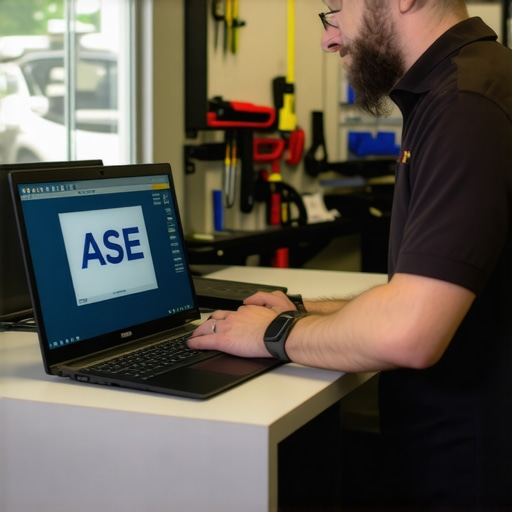
Navigate to the ASE verification portal. This official site is the gold standard, much like using the right oil filter for your engine. Enter the certification number or technician’s name to initiate the check. This step is akin to cross-checking a part number; reliability is key.
Enter Accurate Details Carefully
Type in the exact certification number or full name to ensure precise results. I once mistyped a number, which led me down a rabbit hole of false positives. It’s like entering a PIN — accuracy saves time and avoids confusion. Double-check your entries before hitting ‘Search.’
Review the Verification Results
After submitting, the platform displays the technician’s credentials, including the certification status and expiration date. If the details align with what the mechanic provided, you gain confidence in their expertise. Think of this as performing a quick test drive after a service — confirming everything feels right.
Assess the Authenticity and Take Action
If the credentials are valid, you’ve confirmed their qualification. If not, consider asking for proof or seeking a different technician. I learned the hard way when I questioned a mechanic’s badge, only to find it was fake. This step ensures you’re not just trusting appearances but verifying substance—preventing costly mistakes like being misled about an oil change quality or transmission repairs. For more insights on service quality, visit this guide. Remember, verifying credentials is like checking the oil level with a dipstick — simple but critical for peace of mind.
Many car owners fall prey to misconceptions that can compromise vehicle performance and safety. One prevalent myth is that all ASE-certified technicians guarantee perfect service; in reality, certification confirms skill but doesn’t ensure attention to detail, which is crucial in complex systems like transmissions. Advanced issues often stem from overlooked nuances, such as the type of oil used or subtle sensor failures that even seasoned technicians might miss. For example, relying solely on synthetic oil without considering vehicle-specific requirements can accelerate engine wear, as discussed in [this detailed analysis](https://autofixclinic.com/why-your-synthetic-oil-is-turning-black-faster-than-usual).
A common trap is believing that an oil change is a simple task with little room for error. However, improper oil viscosity or neglecting to replace the oil filter can lead to accelerated engine degradation, especially in modern engines with tight tolerances. Also, many underestimate the importance of verifying actual technician credentials beyond ASE certification, as some may carry outdated or counterfeit badges. It’s wise to cross-verify online before services.
When it comes to transmission maintenance, a hidden nuance is the importance of fluid quality over the frequency of changes alone. Modern CVT or dual-clutch transmissions need specialized fluids; using generic or worn-out fluid can cause hesitation or slipping, which warrants immediate professional attention—more on this can be found in [these expert tips](https://autofixclinic.com/why-your-2026-gdi-engine-carbon-clogs-faster-than-you-think).
**Why do many overlook the importance of sensor health in overall vehicle diagnostics?** Advanced diagnostics reveal that failing sensors can cause cascading issues, like misfires or improper shifting, that aren’t immediately obvious. A recent study by automotive researchers shows that sensor errors account for over 30% of misdiagnosed service issues, highlighting the need for meticulous testing during routine maintenance.
To avoid falling into these pitfalls, always question the assumptions about what constitutes proper service. Ensure your mechanic verifies credentials thoroughly and that your vehicle’s unique needs are considered—avoiding one-size-fits-all approaches. Confirm that the correct fluids and parts tailored for your vehicle’s make and model are used, especially with complex transmission systems. This diligence can prevent costly repairs or even dangerous failures.
Have you ever fallen into this trap? Let me know in the comments! Remember, understanding these hidden nuances empowers you to make smarter decisions about your car’s health, ultimately saving you time and money in the long run.
Investing in Precision Tools for Reliable Maintenance
To ensure your vehicle remains in top condition, I rely on a few specialized tools that have proven their worth over time. One essential device is an infrared thermometer, which helps me quickly assess engine component temperatures, ensuring proper operating ranges and detecting overheating issues before they escalate. I personally use the Fluke 62 MAX+, appreciated for its durability and accuracy, especially in the demanding environment of automotive work.
Additionally, a high-quality digital multimeter is indispensable for diagnosing electrical issues, such as sensor faults or wiring problems. I prefer the Klein Tools MM6000 because of its wide testing range and robust build, which allows me to accurately verify circuit integrity without second-guessing.
Leveraging Software for Diagnostics and Longevity
Modern maintenance heavily depends on diagnostic software. I use the AutoEnginuity Scan Tool for comprehensive vehicle analysis, including reading manufacturer-specific codes and live data streams. This helps me pinpoint transmission glitches or sensor errors that might otherwise go unnoticed, ensuring precise repairs and contributing to long-term vehicle health.
Complementing hardware, I recommend vehicle maintenance apps like OBDeleven, which offers convenient access to coding, reset functions, and maintenance scheduling. These tools empower you to monitor your vehicle’s health proactively and avoid unexpected breakdowns.
Consistent Oil Analysis for Enhanced Engine Life
Beyond routine oil changes, I perform periodic oil analysis using kits from Poly-Tech Labs. Sending small samples for detailed contamination and wear metal content reports allows me to catch early signs of engine deterioration. This proactive approach translates into extended intervals between major overhauls and preserves engine performance.
Predicting Service Needs with Advanced Techniques
One trend shaping future maintenance is the use of predictive analytics grounded in sensor data. By integrating data from your vehicle’s onboard diagnostics (OBD-II) with cloud-based platforms, you can forecast potential failures before they happen. Although still evolving, this method signals a shift toward truly preventive maintenance—saving time and money long-term.
How do I maintain transmission health over time? Take action with regular fluid checks and sensor verification. For example, testing transmission fluid with a simple visual and calling upon specialized diagnostic tools can prevent costly repairs down the line.
If you’re looking to enhance your maintenance workflow, I highly recommend trying the detailed transmission fluid test. Combining precise tools with proactive assessments ensures your vehicle remains dependable mile after mile—just like mine.
Be proactive in your maintenance routine and consider investing in these specialized tools. They might seem costly initially, but the long-term savings and peace of mind they provide make it well worth the investment. Preparing for the future now means your car can handle the road ahead confidently.
How I Realized the Power of Personal Verification
One of my toughest lessons was discovering that not every mechanic claiming to be ASE certified truly is. This eye-opener taught me that trusting appearances isn’t enough; authentic verification can save both money and safety. The moment I took the time to verify credentials online, I felt empowered and more confident in my vehicle’s maintenance.
Why Relying on Visual Cues Can Be a Risk
Early on, I believed a shiny badge or a friendly smile guaranteed expertise. But I learned that genuine ASE certification is only verifiable through official channels. This realization shifted my approach from assumptions to action, emphasizing that the right tools and steps are essential to ensure quality service. For instance, using the ASE verification portal is a simple yet powerful way to confirm a mechanic’s credentials.
The Value of a Small Investment in Verification
Spending a few minutes to verify credentials may seem trivial, but it often prevents costly mistakes. An ASE-certified technician can diagnose complex transmission issues correctly, avoiding unnecessary parts replacements. Remember, a quick online check can prevent frustration and safeguard your vehicle’s performance. If you’re curious about other signs of quality service, this guide offers helpful tips.
Mastering the Hidden Nuances of Quality Maintenance
Beyond certifications, understanding subtle vehicle needs—like proper synthetic oil use or accurate sensor diagnostics—can make a difference. Often, I found that trusting my instincts and verifying facts led to better maintenance decisions. For example, ensuring the right transmission fluid type is crucial to prevent hesitation or slipping, especially in complex systems like those in 2026 models. Dive deeper into these nuances with specialized insights in the linked resources.
The Gear That Turns Knowledge into Care
Investing in specific tools—like infrared thermometers or advanced diagnostic scanners—transformed my maintenance approach. These devices helped me detect overheating or misfires early, saving money and ensuring safety. Combining hardware with official verification, like confirming ASE credentials online, gives a comprehensive shield against subpar service. Find out more about essential tools that can improve your vehicle care here.
Moving from Reactive to Preventive Maintenance
Embracing proactive strategies, such as regular oil analyses or sensor checks, turns car care into a science, not just reaction. Integrating data from onboard diagnostics with cloud platforms foresees failures before they worsen. This shift towards prevention underscores the importance of authentic credentials and proper tools, harmonizing knowledge with action. Staying ahead is easier when you combine verified expertise with innovative tech solutions.
Insider Wisdom for Car Owners
- Never underestimate the power of a quick online credential check—it’s a simple step that can prevent costly errors.
- Certifications matter, but verifying their authenticity online is what truly safeguards your vehicle.
- Investing in specialized diagnostic tools enhances your capacity to catch issues early, especially in complex systems like transmission and GDI engines.
- Understanding the subtle signs of poor maintenance can save you from dangerous failures down the line.
Tools That Keep My Drive Smooth and Safe
- Fluke 62 MAX+: Reliable infrared thermometer for preventing overheating.
- Klein Tools MM6000: Versatile digital multimeter for electrical diagnostics.
- AutoEnginuity Scan Tool: Deep diagnostic insights for complex fault troubleshooting.
- Maintenance apps like OBDeleven for proactive health monitoring.
Keep Your Car’s Future Bright and Secure
The road to reliable, safe vehicle ownership is paved with attention, verification, and smart investments. By verifying ASE certifications online and equipping yourself with the right tools, you’re not just reacting to problems—you’re preventing them. The horizon of car maintenance is evolving, and you’re now part of the vanguard, ready to face challenges with confidence.
Your Turn to Lead
Have you ever taken the step to verify a mechanic’s credentials online? Share your experience below and inspire others to prioritize verified expertise in their car care journey.